The right mixer can make a podcast studio easier to control, cleaner to record, and more flexible for interviews, livestreams, and remote guests. The best choice depends on your microphone setup, monitoring needs, effects, and production workflow.
We compared 10 popular options across connection types, channel counts, onboard controls, portability, and value to help you choose an audio mixer that fits your studio today and leaves room to grow.
Best 10 Audio Mixer for Podcast Studio Picks for 2026
Best Flexible Starter

- 11 customizable sound pads
- 48V phantom power and up to 60 dB gain
- Supports microphones, instruments, and streaming devices
Best For: Home podcasters and livestreaming creators
Best Compact Production Hub
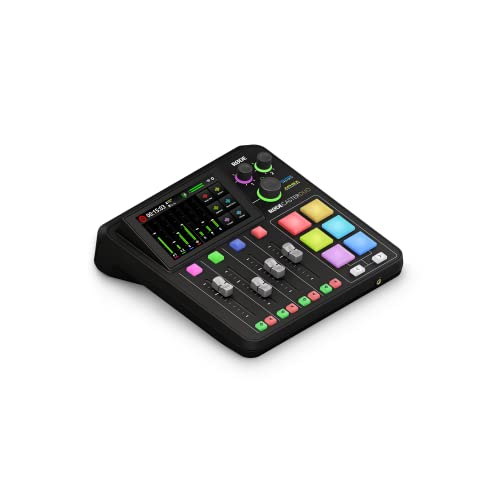
- Two combo microphone and instrument inputs
- Four faders and six SMART pads
- APHEX processing with touchscreen control
Best For: Small podcast studios and solo creators
Best Traditional Mixer

- 10-input layout for multiple sources
- USB and SPX digital effects
- EQ, high-pass filters, and compressors
Best For: Multi-source podcast and music setups
Best Standalone Podcast Console

- Four XLR inputs and studio preamps
- Eight SMART pads for live show control
- Records to computer, microSD, or USB drive
Best For: Podcast teams and standalone recording
Versatile Starter

- One XLR mic input with 48V phantom power
- Individual controls for four audio channels
- Mute, monitoring, effects, and RGB lighting
Best For: Solo podcasters and streamers using an XLR microphone
Co-Host Pick

- Two XLR combo inputs with up to 60dB gain
- Eight customizable sound-effect buttons
- USB-C, Bluetooth, loopback, and up to 8-hour battery
Best For: Co-hosted podcasts and flexible mobile or computer setups
Compact Control

- Four individually adjustable audio channels
- XLR input with 48V phantom power
- Mute, monitoring, effects, RGB, and USB plug-and-play
Best For: Beginners building a solo podcast or streaming setup
Best All-in-One Starter

- Two microphones and suspension arms included
- USB-C connectivity for computers and mobile devices
- Built-in noise reduction and voice effects
Best For: Beginners who want a complete podcast and streaming setup
Best for Flexible Studio Inputs

- Eight channels for microphones and stereo sources
- +48V phantom power and three-band channel EQ
- Bluetooth streaming and USB-A MP3 playback
Best For: Studios needing several inputs and traditional mixer controls
Best Value Effects Mixer
6-Channel Bluetooth Audio Interface

- Six inputs with four XLR microphone channels
- 16 DSP effects plus three-band EQ
- Bluetooth and USB playback support
Best For: Small studios wanting built-in effects and flexible source connections
Best Flexible Starter – MAONO AME2 Podcast Mixer
The MAONO AME2 is a versatile audio mixer for podcast studio setups that need microphone control, sound pads, and instrument connectivity in one compact interface. It supports XLR condenser and dynamic microphones, offers USB-C connectivity, and includes features for streaming, voice-overs, and content creation.
Best For: Home podcasters, livestreamers, and creators who want customizable sound effects and support for microphones, instruments, smartphones, and computers.
Pros:
- Supports up to 60 dB of mic gain, 48V phantom power, and independent microphone controls.
- Includes 11 customizable sound pads, reverb modes, auto-tune, tone controls, and pitch adjustment.
- Works with XLR, 6.35mm, and 3.5mm microphones plus guitar and bass inputs.
Cons:
- USB microphones are not supported.
- Its many controls and effects may require time to learn.
The AME2 stands out when flexibility matters more than a strictly traditional mixer layout. Its sound pads and live-streaming connections make it especially useful for interactive podcast production.
Best Compact Production Hub – RØDECaster Duo
The RØDECaster Duo is a compact audio mixer for podcast studio work that combines microphone and instrument inputs, physical faders, sound pads, and onboard processing. Its touchscreen and broadcast-oriented effects are designed for recording, streaming, music production, and content creation.
Best For: Solo creators and small podcast teams seeking a polished all-in-one production unit with intuitive controls and high-quality preamps.
Pros:
- Two Neutrik combo inputs accept microphones and instruments.
- Revolution Preamps provide up to 76 dB of gain with low-noise performance.
- Includes four faders, a touchscreen, six SMART pads, and APHEX processing.
Cons:
- Provides two combo inputs and four broadcast-quality faders, so larger productions may need more I/O.
- It is a corded-electric unit rather than a portable battery-powered mixer.
Choose the RØDECaster Duo if you want a streamlined studio centerpiece with physical mixing controls and built-in vocal processing. It offers a focused feature set for smaller productions without requiring a separate interface.
Best Traditional Mixer – Yamaha MG10XU
The Yamaha MG10XU is a traditional 10-input audio mixer for podcast studio and recording applications. It combines USB connectivity with SPX digital effects, three-band EQ, high-pass filters, and one-knob compressors for hands-on control over vocals, instruments, and other connected sources.
Best For: Podcasters, musicians, and studio users who prefer a conventional mixer layout with multiple inputs and physical channel processing.
Pros:
- Provides 10 inputs for handling multiple microphones and audio sources.
- Includes USB connectivity and SPX digital effects.
- Offers three-band EQ, high-pass filters, and one-knob compressors.
- Uses a rugged, impact-resistant powder-coated metal chassis.
Cons:
- It does not list dedicated podcast-focused features such as sound pads or touchscreen control.
- At 7.7 pounds, it is heavier than the other listed production consoles.
The MG10XU is a strong fit for buyers who value input capacity and familiar mixer controls over specialized podcast automation. Its EQ, filtering, compression, and effects provide practical tools for shaping a live or recorded mix.
Best Standalone Podcast Console – RØDECaster Pro II
The RØDECaster Pro II is a dedicated audio mixer for podcast studio production with four XLR microphone inputs, headphone outputs, sound pads, and built-in effects. It can record to a computer, microSD card, or USB drive, allowing creators to work standalone or integrate it into a broader setup.
Best For: Podcast teams and streamers who want multiple microphone inputs, live show control, and recording without depending on a computer.
Pros:
- Includes four studio preamps and four XLR microphone inputs.
- APHEX processing provides one-tap broadcast-oriented voice presets.
- Eight customizable SMART pads can trigger music, sound effects, and mix-minus phone calls.
- Supports multitrack recording to a computer, microSD card, or USB drive.
Cons:
- Microphones are not included.
- Its larger feature set may be more than a simple two-person podcast requires.
The Pro II is the most complete standalone option in this group for structured podcast production. Its four mic inputs, show-control pads, and computer-free recording make it well suited to recurring shows and live sessions.
Versatile Starter – FIFINE Ampligame SC3
The FIFINE Ampligame SC3 is a practical audio mixer for podcast studio setups built around one XLR microphone. It combines individual channel controls with monitoring, mute, phantom power, and selectable sound effects, making it useful for podcasting, streaming, and other voice-focused recording.
Best For: Solo podcasters and streamers using an XLR microphone who want simple hands-on control and built-in entertainment features.
Pros:
- One XLR input with built-in 48V phantom power for compatible condenser microphones.
- Four independent controls for microphone, line-in, headphone, and line-out levels.
- Front-facing mute and monitoring buttons support quick adjustments during recording or live use.
- Includes customizable sound-effect buttons, voice changing modes, auto-tune options, and RGB lighting.
Cons:
- Designed for one microphone rather than co-host recording.
- Not compatible with USB microphones.
- XLR cable is not included, and cable quality can affect audio performance.
Choose this model if you want an accessible, feature-rich mixer for a solo audio workflow. Its one-mic design is limiting for a multi-person podcast studio, but its tactile controls and monitoring features are convenient for streaming and individual recording.
Co-Host Pick – MAONO E2 Gen2 Podcast Mixer
The MAONO E2 Gen2 is a strong audio mixer for podcast studio use when two people need to connect microphones. Its two XLR combo inputs, 60dB preamps, noise reduction, sound-effect pads, and broad computer and mobile connectivity make it suited to podcasts, streaming, and studio recording.
Best For: Co-hosted podcasts and creators who want dual XLR inputs, flexible routing, and portable operation.
Pros:
- Two XLR combo inputs and preamps offering up to 60dB of gain.
- Noise reduction is designed to help reduce unwanted sounds such as fan noise.
- Eight customizable sound-effect buttons support recordings of up to 20 seconds each.
- Includes mute, monitoring, loopback, Bluetooth, USB-C, mobile connectivity, and a built-in battery rated for up to 8 hours.
Cons:
- The supplied notes do not specify the complete package contents beyond the audio interface and USB cable listing.
- Its many routing and effect features may be more than a basic solo setup requires.
For a growing podcast studio, the E2 Gen2 offers the most adaptable input and connection arrangement in this group. The dual preamps and mobile-friendly I/O are especially useful when recording with a co-host or switching between computer and phone-based workflows.
Compact Control – FIFINE Ampligame SC3W
The FIFINE Ampligame SC3W is a compact audio mixer for podcast studio and streaming setups that need straightforward physical controls. It provides four individually adjustable channels, an XLR microphone input with 48V phantom power, monitoring, mute, and entertainment-oriented effects in a small corded unit.
Best For: Beginners and solo creators who want an uncomplicated XLR mixer for podcasting, recording, or live streaming.
Pros:
- Four individually adjustable channels help balance connected audio sources.
- XLR microphone input and built-in 48V phantom power support compatible microphones.
- Provides mute, volume adjustment, and real-time monitoring for practical recording control.
- Supports USB plug-and-play use, dual-PC setups, voice changing, sound buttons, and RGB lighting.
Cons:
- The supplied details identify one XLR microphone input, so it is not intended for multiple XLR microphones.
- Its entertainment features may be unnecessary for a purely production-focused studio.
- It uses corded electric power rather than a built-in battery.
The SC3W is a sensible entry-level choice when compact size and direct controls matter more than advanced studio routing. It can handle a basic solo podcast or streaming arrangement, while its four-channel layout adds flexibility for other connected audio sources.
Best All-in-One Starter – V8SS Podcast Equipment Bundle
For creators seeking an audio mixer for podcast studio work without assembling a separate setup, this V8SS bundle combines a two-channel mixer, two condenser microphones, suspension arms, and podcast-focused controls. USB-C connectivity supports computers, smartphones, and tablets, while built-in processing adds noise reduction and voice effects.
Best For: New podcasters, livestreamers, and creators who want microphones, mixer functions, and vocal effects in one package.
Pros:
- Includes two condenser microphones with anti-vibration suspension arms.
- USB-C plug-and-play connectivity supports PC, smartphones, iPad, and multiple operating systems.
- Offers noise reduction, four voice variations, and 10 sound effects.
- Accepts electric guitar, bass, and electronic drum inputs.
Cons:
- With two channels, it is less suited to larger multi-microphone productions.
- Battery-powered operation requires charging before initial use or after extended storage.
- Driver installation may require contacting the manufacturer if it does not start automatically.
This is a convenience-focused bundle rather than a large studio console. Its included microphones, cross-platform connectivity, and live effects make it a practical entry point for podcasting and streaming.
Best for Flexible Studio Inputs – Pyle PMXU83BT 8-Channel Mixer
The Pyle PMXU83BT is a practical audio mixer for podcast studio setups that need more input capacity than a compact two-channel interface. It provides eight channels, XLR and 1/4-inch inputs, Bluetooth streaming, USB playback, and channel-level three-band EQ for shaping microphones and other sources.
Best For: Podcast studios, live shows, karaoke setups, and creators mixing several microphones or stereo sources.
Pros:
- Eight channels provide room for multiple microphones and line-level sources.
- +48V phantom power supports compatible condenser microphones.
- Bluetooth enables wireless music streaming from a smartphone.
- Includes USB-A MP3 playback, DSP effects, LED peak indicators, and three-band EQ on channels.
Cons:
- Its listed connectivity centers on Bluetooth, USB-A, 1/4-inch TRS, and XLR rather than USB-C.
- It is corded electric, so it is less convenient for mobile recording.
- The supplied notes do not specify a warranty period.
Choose this model when channel count and conventional mixer controls matter most. Its rugged steel chassis and broad input selection suit a fixed studio or performance-oriented workspace.
Best Value Effects Mixer – 6-Channel Bluetooth Audio Interface
This six-channel console is a useful audio mixer for podcast studio, karaoke, streaming, and recording applications where onboard effects and source flexibility are priorities. It combines four XLR inputs, 1/4-inch connections, +48V phantom power, Bluetooth, USB playback, three-band EQ, and 16 DSP effects.
Best For: Small studios and creators who want several input options with built-in reverb, delay, and playback controls.
Pros:
- Six channels include four XLR inputs plus 1/4-inch connections for instruments and other sources.
- +48V phantom power supports compatible condenser microphones.
- Bluetooth and USB support wireless streaming and USB-stick or MP3 playback.
- Provides three-band EQ and 16 built-in DSP effects, including reverb and delay.
Cons:
- It is a traditional analog mixer rather than a computer-focused software interface.
- The manufacturer lists a 90-day warranty, shorter than many studio products.
- At 2.3 kg, it is less portable than a compact battery-powered mixer.
This model fits buyers who want hands-on controls and integrated effects without moving to a larger console. Its six inputs offer useful expansion for microphones, instruments, and playback sources in a small studio.
How We Picked the Best Audio Mixer for Podcast Studio
We focused on the features that matter most in real podcast workflows: microphone compatibility, XLR inputs, phantom power, headphone monitoring, USB connectivity, channel control, onboard effects, routing flexibility, and ease of use. We also considered whether each mixer suits solo recording, co-hosted shows, interviews, livestreaming, or more demanding production setups.
The selection includes compact podcast interfaces, traditional analog mixers, gaming-focused sound boards, and all-in-one production studios. Because needs vary widely, we evaluated versatility and workflow fit rather than treating the most expensive model as automatically superior.
Quick Comparison
| Best For | Look For | Typical Advantage |
|---|---|---|
| Solo podcasters | Simple USB interface and one or two mic inputs | Fast setup and lower cost |
| Two-person shows | Multiple XLR inputs and independent monitoring | Easy co-host recording |
| Live podcasts | Mix-minus, sound pads, and flexible routing | Better guest and broadcast control |
| Music and multi-source studios | More channels, phantom power, and effects | Room to connect instruments and playback devices |
Key Buying Factors for an Audio Mixer for Podcast Studio
Inputs and Microphone Compatibility
Count how many microphones you will use at once, then allow extra capacity for guests or future upgrades. XLR inputs are important for standard dynamic and condenser microphones. If you use condenser microphones, verify that the mixer supplies 48V phantom power and that it can provide adequate gain without excessive noise.
USB Recording and Routing
USB connectivity lets the mixer act as an audio interface for a computer. Check whether it supports the operating system and recording software you use. Advanced routing features can separate microphones, music, calls, and effects into independent channels, which is especially useful for livestreams and post-production.
Monitoring, Effects, and Controls
Look for dedicated headphone outputs, independent volume controls, mute buttons, and clear level meters. Built-in reverb, voice effects, sound pads, or compression can simplify live production, but they are less important if you plan to edit everything later in a digital audio workstation.
Size, Power, and Workflow
A compact unit is convenient for small desks and mobile recording, while a larger mixer may provide more hands-on control. Consider whether you need Bluetooth playback, battery operation, multiple computer connections, or a standalone workflow that can function without a computer.
Who Should Buy Which Audio Mixer for Podcast Studio?
Choose a compact podcast interface if you want straightforward recording, a small footprint, and only a few microphones. These models are often the easiest starting point for solo creators and small shows.
Choose an all-in-one production studio if you livestream, host remote guests, trigger sound effects, or want hands-on control over a finished broadcast. The added routing and automation can justify the higher price for frequent creators.
Choose a traditional mixer if you need several inputs for microphones, instruments, playback devices, or a broader studio setup. Analog-style controls are intuitive, though you should confirm how USB recording and multitrack routing work before buying.
Choose a gaming-oriented sound board if voice chat, quick effects, and streaming controls matter more than advanced multitrack production. These mixers can be convenient for casual podcasts and hybrid gaming broadcasts, but may offer less flexibility for professional studio workflows.
