A compact bread machine can make fresh loaves, dough, and specialty recipes without taking over a small countertop. The best models balance footprint, loaf capacity, controls, and cleanup.
We compared 10 popular options across size, versatility, ease of use, and baking features to help you find the right fit for your kitchen and routine.
Best 10 Bread Machines for Small Kitchens Picks for 2026
Compact Programmable Pick

- Three loaf sizes up to 2 pounds
- 12 programs, including gluten-free
- 13-hour delay start and paddle alert
Best For: Flexible everyday baking in a compact kitchen
Smallest Loaf Specialist

- Compact 8.5-inch width
- Bakes 1-pound loaves
- Quick-bake cycle under two hours
Best For: Singles and couples with limited counter space
High-Menu Value Pick
Elite Gourmet 2 Lb Bread Maker
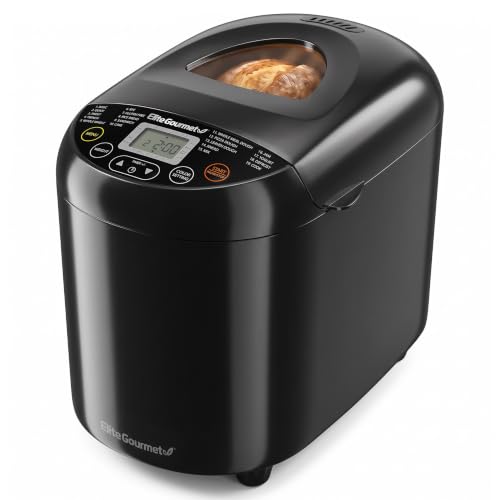
- 19 one-touch programs
- Three loaf sizes up to 2 pounds
- 15-hour delay timer and ceramic pan
Best For: Beginners seeking broad preset variety
Most Customizable Pick
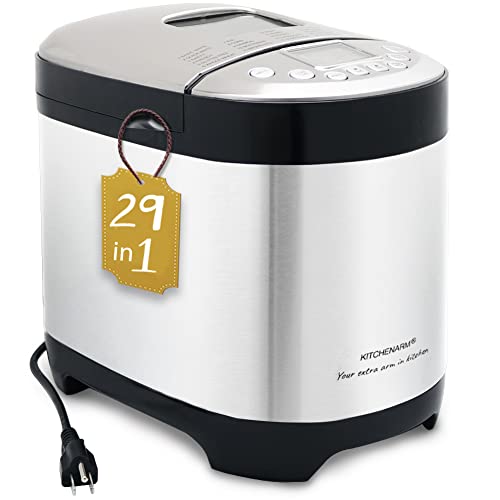
- 29 automatic menus plus Homemade cycle
- Four personalized menus
- Supports specialty and dietary recipes
Best For: Experimenters who want detailed recipe control
Best Compact Pick

- Compact size for two or three people
- 19 programs with gluten-free and specialty options
- 1- and 1.5-pound loaves with delay timer
Best For: Couples and small households with limited counter space
Best for Custom Recipes
KITCHENARM Handy Bread Machine

- Programmable Homemade cycle for recipe control
- 1-, 1.5-, and 2-pound loaf options
- Recipe book, recipe cloud, and mix support
Best For: Beginners and bakers who customize recipes
Best for Even Baking

- 2-pound capacity for five to six people
- Dual heaters for surrounding baking
- 20 programs and ceramic nonstick pan
Best For: Families wanting larger loaves and varied programs
Best All-Around Pick
Hamilton Beach Digital Bread Maker
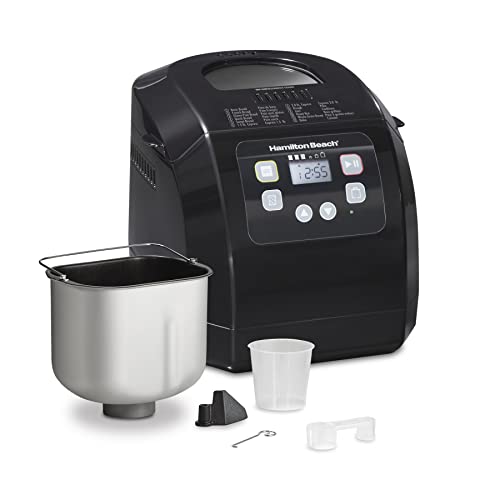
- 14 settings include gluten-free, dough, cake, jam, and artisan dough
- Makes 1-, 1.5-, or 2-pound loaves with three crust shades
- PFAS-free pan, add-in alert, and one-hour keep-warm function
Best For: Home bakers wanting flexible loaf sizes and broad program selection
Best for Families

- 2.2-pound capacity serves larger households
- 16 programs include yogurt, jam, gluten-free, and homemade modes
- 15-hour delay timer and operation below 50dB
Best For: Families wanting larger loaves and overnight scheduling
Best Program Variety

- 25 programs cover bread, gluten-free, cake, yogurt, and jam
- Narrow 8.3-inch width suits limited counters
- 700W dual heaters, 15-hour delay, and power recovery
Best For: Experimenting bakers needing many programs in a narrow machine
Compact Programmable Pick – Cuisinart CBK-110NAS
For bread machines for small kitchens, the Cuisinart CBK-110NAS offers a compact footprint while still handling loaves up to 2 pounds. Its automatic programs, adjustable crust settings, and overnight timer make it a practical choice for fresh bread without a lengthy hands-on process.
Best For: Small households wanting flexible loaf sizes, gluten-free baking, and scheduled fresh bread.
Pros:
- Supports 1-, 1.5-, and 2-pound loaves with three crust shades.
- Includes 12 programs, including gluten-free, artisan dough, jam, and cake.
- Offers a 13-hour delay start, 60-minute keep-warm function, and paddle-removal alert.
Cons:
- Hand washing is recommended for care.
- Its vertical design may produce a taller loaf shape than some bakers prefer.
The CBK-110NAS balances useful customization with a relatively compact 13.25-inch width. It is a strong all-around option when counter space matters but a 1-pound-only machine would be too limiting.
Smallest Loaf Specialist – Zojirushi Home Bakery Mini
The Zojirushi Home Bakery Mini is especially suited to bread machines for small kitchens because it makes compact 1-pound loaves and measures just 8.5 inches wide. It focuses on smaller batches while adding quick-bake, dough, cake, jam, and delayed-start functions.
Best For: Individuals or couples who prefer small fresh loaves and need a narrow countertop appliance.
Pros:
- Bakes 1-pound loaves for households that do not need family-size bread.
- Includes a quick-bake cycle that runs in under two hours.
- Features a 13-hour delay timer, viewing window, carrying handle, and nonstick pan and kneader.
Cons:
- Its 1-pound capacity is less suitable for larger households.
- It has nine programs, fewer than several larger-capacity alternatives.
- The included warranty is one year.
With its narrow footprint and small batch size, this model avoids taking over a limited counter. Choose it when compactness and portion control matter more than maximum menu variety or loaf capacity.
High-Menu Value Pick – Elite Gourmet 2 Lb Bread Maker
The Elite Gourmet 2 Lb Bread Maker is a versatile option among bread machines for small kitchens, combining a compact design with 19 one-touch programs. It can make anything from a 1-pound loaf to a 2-pound loaf and includes a ceramic CERALAST pan, delayed start, and keep-warm function.
Best For: Beginners who want multiple bread, dough, dessert, and jam settings in one appliance.
Pros:
- Offers 19 programs, including gluten-free, rye, pizza dough, cake, and jam.
- Accommodates 1-, 1.5-, and 2-pound loaves with three crust shades.
- Includes a 15-hour delay timer and 60-minute keep-warm feature.
- The supplied notes identify the pan as dishwasher safe.
Cons:
- At 13.98 inches tall, it may need more vertical clearance than shorter models.
- The supplied notes do not specify a warranty.
This model delivers broad preset coverage without requiring separate appliances for dough, cake, or jam. Its 15-hour timer is particularly useful for planning breakfast bread around a busy schedule.
Most Customizable Pick – KITCHENARM 29-in-1
For shoppers comparing bread machines for small kitchens who want precise control, the KITCHENARM 29-in-1 offers an unusually broad set of automatic and programmable options. It supports three loaf sizes, stores settings for repeat recipes, and includes a fully customizable Homemade cycle.
Best For: Enthusiastic home bakers who want specialized menus and control over kneading, rising, fermentation, and baking.
Pros:
- Provides 29 menus, including sourdough, brioche, ciabatta, keto, salt-free, and sugar-free options.
- Allows up to four personalized Homemade menus with cycle-level adjustments.
- Includes 77 recipes, a 15-hour delay timer, one-hour keep-warm function, and power-interruption recovery.
- Supports 1-, 1.5-, and 2-pound loaves with three crust colors.
Cons:
- Its 14.2-inch depth may be challenging on shallow counters.
- At 9.6 pounds, it is heavier than the other listed models.
- The advanced customization may be more than beginners need.
The KITCHENARM stands out for recipe experimentation rather than minimal controls. Its relatively narrow 8.9-inch width helps on crowded counters, but measure the available depth before buying.
Best Compact Pick – Briskind 1.5 lb Bread Maker
If counter space is your main concern, the Briskind is a practical choice among bread machines for small kitchens. Its 1.5-pound capacity is sized for households of two or three, while the carrying handle, 19 programs, and simple controls keep everyday baking manageable.
Best For: Couples, small households, and shoppers who want a compact bread maker with flexible specialty settings.
Pros:
- Compact 12-by-9-by-10.5-inch design with a carrying handle.
- Offers 19 settings, including gluten-free, low-carb, sourdough starter, jam, yogurt, and dough.
- Supports 1- and 1.5-pound loaves, three crust colors, and a 15-hour delay timer.
- Includes a spare kneading paddle, measuring tools, recipes, and a two-year warranty.
Cons:
- The 1.5-pound maximum capacity is less suitable for larger families.
- It is designed for 120-volt use and is not applicable to 230-volt areas such as the UK and EU.
The Briskind prioritizes a small footprint without reducing menu variety. Its smaller loaf sizes and automatic keep-warm function make it especially convenient when you want fresh bread without storing a larger appliance.
Best for Custom Recipes – KITCHENARM Handy Bread Machine
The KITCHENARM Handy combines a relatively compact footprint with unusually broad control, making it a strong option for bread machines for small kitchens. It handles 1-, 1.5-, and 2-pound loaves, supports packaged mixes, and includes a programmable cycle for adapting recipes.
Best For: Beginners who want guided recipes now and detailed control over homemade bread later.
Pros:
- Offers 19 menus, including gluten-free, sourdough, yogurt, jam, dough, and a fully programmable Homemade cycle.
- Supports three loaf sizes and three crust colors for flexible batch sizing.
- Includes 57 recipes, access to a recipe cloud, and saved settings for one-press repeat baking.
- Features a 15-hour delay timer, add-nuts and remove-paddle alarms, and two-year warranty coverage.
Cons:
- At 13.9 inches deep and 11.7 inches tall, it is larger than the smallest model in this roundup.
- The 2-pound capacity and broader controls may be more than occasional bakers need.
For a small kitchen, the KITCHENARM offers a useful balance between footprint and capability. Its saved settings and recipe support simplify routine baking, while the Homemade menu gives experienced users room to fine-tune kneading, rising, and baking cycles.
Best for Even Baking – Neretva 20-in-1 Bread Maker
The Neretva brings a 2-pound capacity and dual-heater design to the small-kitchen category. Its 20 programs cover bread, dough, desserts, yogurt, jam, and more, while the ceramic pan and claimed under-40-decibel motor noise add practical appeal.
Best For: Families wanting larger loaves, varied automatic programs, and features intended to promote even baking.
Pros:
- Provides 20 programs, including gluten-free, sugarless, pizza dough, ferment, yogurt, and homemade settings.
- Supports 1.65- and 2-pound loaves, suitable for serving approximately five to six people.
- Uses top and bottom heaters for 360-degree surrounding baking and includes three crust colors.
- Includes a ceramic nonstick pan, spare paddle, heat-resistant mitt, delay timer, and keep-warm function.
Cons:
- The listed height is 23.5 inches, so shoppers should verify vertical clearance before choosing it for a small kitchen.
- Its larger capacity may be excessive for one- or two-person households.
- The control panel locks during operation and requires holding Start/Pause/Stop for three seconds to unlock it.
The Neretva is most compelling when you need more bread per batch without giving up program variety. Its dual heaters and ceramic pan are useful differentiators, but the unusually tall listed dimensions deserve careful placement planning.
Best All-Around Pick – Hamilton Beach Digital Bread Maker
For shoppers comparing bread machines for small kitchens, the Hamilton Beach Automatic Bread Maker offers a practical balance of adjustable loaf sizes, automatic programs, and a compact countertop footprint. It can make 1-, 1.5-, or 2-pound loaves, with three crust settings and a countdown display for straightforward scheduling.
Best For: Home bakers who want flexible loaf sizes and familiar bread-making controls.
Pros:
- Offers 14 settings, including gluten-free, whole grain, express, dough, cake, jam, and artisan dough options.
- Supports 1-, 1.5-, and 2-pound loaves with light, medium, or dark crust settings.
- Includes an add-in reminder, one-hour automatic keep-warm function, measuring tools, and recipes.
- Uses a PFAS-free nonstick pan and has a listed dishwasher-safe care instruction.
Cons:
- Its 11.4-inch width and 13.9-inch depth may require careful countertop or cabinet planning.
- The listed 12-program specification differs from the 14 settings described in the product features.
- At 11.9 pounds, it is not the lightest option to move between uses.
The Hamilton Beach is a versatile choice when you want one machine to handle everyday loaves and specialty settings without giving up adjustable portion sizes. Measure your available counter depth before buying.
Best for Families – SUMSATY 2.2-Lb Bread Maker
Among bread machines for small kitchens, the SUMSATY combines a relatively narrow 10.75-inch width with a larger 2.2-pound capacity. Its 16 programs, delay timer, and low-noise operation make it useful for households that want bigger loaves without constant hands-on baking.
Best For: Families needing larger loaves, varied automatic programs, and overnight scheduling.
Pros:
- Provides 16 programs, including basic, whole wheat, gluten-free, cake, jam, yogurt, and homemade modes.
- Offers 1-, 1.5-, and 2.2-pound loaf sizes with three crust settings.
- Includes a 15-hour delay timer, one-hour keep-warm function, and claimed operation below 50dB.
- The nonstick pan is described as free of PTFE and PFOA for easier release and cleanup.
Cons:
- The 2.2-pound capacity may be more than needed for individuals or couples.
- Care instructions specify hand washing only.
- Its beige finish and 12.99-inch depth may not suit every kitchen layout.
The SUMSATY stands out for pairing a family-sized loaf with scheduling and specialty modes. It is a strong fit if you have the counter depth and prefer to wake up to freshly baked bread.
Best Program Variety – Rosewill 25-in-1 Bread Maker
For compact kitchens where one appliance needs to cover multiple baking tasks, the Rosewill 25-in-1 offers an unusually broad menu in an 8.3-inch-wide body. Its 2-pound capacity, dual heaters, delay timer, and quiet operation give small-space bakers plenty of control without a wide countertop footprint.
Best For: Experimenting bakers who want maximum menu variety in a narrow machine.
Pros:
- Includes 25 automatic programs, with gluten-free, cake, yogurt, jam, and other options.
- Uses top and bottom 700W heaters for claimed 360-degree surround baking.
- Offers a 15-hour delay start, one-hour keep-warm function, and 40-minute power recovery.
- Has a 2-pound capacity, three crust colors, a PFAS- and BPA-free pan coating, and noise below 50dB.
Cons:
- Its 13.1-inch depth still requires sufficient front-to-back counter space.
- Hand washing is specified for product care.
- The extensive 25-menu layout may be more functionality than occasional bakers need.
The Rosewill is particularly appealing when program variety and a narrow width matter more than the smallest overall footprint. Its power-recovery feature also adds flexibility for households where baking may be interrupted.
How We Picked the Best Bread Machines for Small Kitchens
We focused on countertop-friendly bread makers that offer useful everyday performance without requiring a large dedicated appliance space. Our comparison considered overall footprint, loaf-size flexibility, program selection, control simplicity, pan and paddle design, cleanup, and features such as gluten-free cycles, delay timers, custom settings, and dual heating elements.
Because small kitchens often require appliances to serve multiple purposes, we also gave attention to machines that can prepare more than standard white bread, including whole-wheat loaves, dough for rolls or pizza, cakes, jams, and smaller portions. Product capacity and published specifications were compared carefully, but available countertop space and storage habits should remain central to your decision.
Quick Comparison
| What to Compare | Why It Matters |
|---|---|
| Loaf capacity | Smaller models suit couples or limited storage; 2-pound machines offer more servings. |
| Programs | More cycles can support dough, gluten-free recipes, cakes, jam, and specialty breads. |
| Custom control | Homemade or manual cycles help experienced bakers adjust kneading, rising, and baking. |
| Pan and paddle | Removable, nonstick, or ceramic-style components can simplify release and cleanup. |
| Countertop design | Measure height, depth, lid clearance, and storage space—not just the listed width. |
Key Buying Factors for Bread Machines for Small Kitchens
Footprint and Storage
Measure the available counter area before buying, including room to open the lid and remove the bread pan. A carrying handle or lighter body is useful if you plan to store the machine between uses. Also check whether the control panel is easy to read from its intended position.
Loaf Size and Household Needs
A 1-pound machine can reduce leftovers and may be easier to store, while 1.5- to 2-pound models are more practical for families or batch cooking. Adjustable loaf sizes are especially valuable when kitchen space is limited because one appliance can handle different serving needs.
Programs and Controls
Look beyond the total preset count. Prioritize settings you will actually use, such as basic, whole wheat, rapid, dough, gluten-free, and delayed start. A homemade cycle is helpful if you want precise control, but straightforward buttons may be better for beginners.
Cleanup and Baking Results
Removable pans and dishwasher-safe accessories can reduce maintenance, although manufacturer instructions should always take priority. A viewing window, interior light, keep-warm function, and dual heaters may improve convenience or consistency, but they can add cost and complexity.
Who Should Buy Which Bread Machines for Small Kitchens?
Choose a mini 1-pound model if you have very limited storage, bake for one or two people, or want the smallest practical footprint. Select a compact 1.5- to 2-pound machine if you need flexible serving sizes and broader everyday utility. Models with many presets suit households that want dough, jam, cake, and specialty-bread options from one appliance.
Beginners should favor clear controls, dependable basic cycles, removable components, and a useful recipe guide over an overwhelming preset list. More experienced bakers may prefer a programmable homemade cycle and multiple loaf-size settings. If gluten-free baking is a priority, confirm that the machine includes a dedicated cycle and follow recipes designed for bread machines.
