The best channel strips for podcasting can make spoken-word audio easier to record, mix, and understand by combining microphone gain with tools such as compression, gating, de-essing, and tone shaping.
This roundup covers dedicated voice processors, tube and solid-state channel strips, USB-equipped options, and compact mixer-style alternatives for different studio setups and budgets.
Best 10 Channel Strips for Podcasting Picks for 2026
Best All-in-One Voice Processor

- Compression, de-esser, enhancer, and expander/gate
- XLR and 1/4-inch inputs with loop-out support
- 1U rackmount design with status LEDs
Best For: Hardware vocal processing for podcast recording
Best Tube-and-EQ Combination

- Class A vacuum tube preamplifier
- Variable VCA compressor
- Three-band parametric EQ in a 1U chassis
Best For: Tone shaping with tube preamp character
Best Digital-Ready Channel Strip

- Tube preamp with compressor, expander, de-esser, and gate
- ADAT, AES/EBU, S/PDIF, TOSLink, and USB connectivity
- Digital outputs support up to 192 kHz
Best For: Flexible analog and digital studio workflows
Best Portable Podcast Mixer

- Six inputs with +48V phantom power
- USB recording, playback, and Bluetooth connection
- 99 DSP effects with portable mixer design
Best For: Live podcasting, streaming, and multi-input setups
Premium Analog Control

- Discrete preamp with Lundahl I/O transformers
- Built-in compressor and transient designer
- Tube saturation for additional tone shaping
Best For: Single-mic podcast studios seeking extensive analog processing
Complete Tube Recording Bundle

- Class A tube preamp with variable VCA compressor
- Three-band parametric EQ and 80 Hz high-pass filter
- Includes boom arm, isolation shield, and two XLR cables
Best For: New podcast setups needing processing and core accessories
Compact Multi-Input Mixer
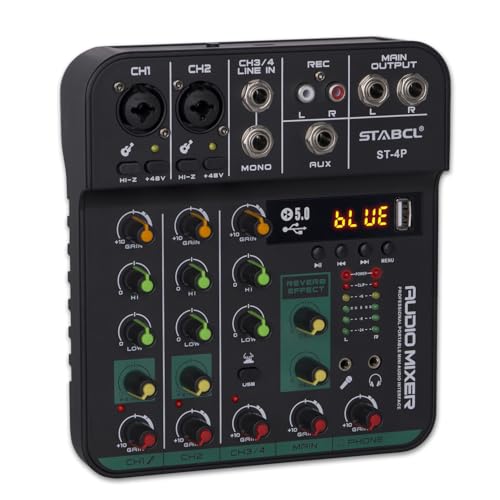
- Two XLR inputs with 48V phantom power
- USB, Bluetooth, RCA, TRS, and auxiliary connectivity
- Two-band EQ, gain, echo, and delay controls
Best For: Small podcast and livestream setups with multiple sources
Tube Tone Control

- Mono tube channel strip
- Selectable Opto/FET compression
- 4-band semi-parametric EQ
Best For: Hands-on vocal shaping in a permanent podcast studio
USB Podcast Hub

- One-channel mic/line preamp
- Built-in USB audio interface
- Compressor, gate, and de-esser
Best For: Single-host computer-based podcasting
Analog Noise Control

- Analog noise gate and expander
- Designed for post-preamp use
- Compact, lightweight enclosure
Best For: Reducing ambient noise after a microphone preamp
Best All-in-One Voice Processor – dbx 286s
For podcasters looking for channel strips for podcasting, the dbx 286s combines a microphone preamp with compression, de-essing, enhancement, and expander/gate processing in a single rackmount unit. Its dedicated voice-processing stages and status LEDs make it practical for shaping spoken-word audio before recording or mixing.
Best For: Podcasters who want comprehensive, hardware-based vocal processing from one channel strip.
Pros:
- Includes compression, de-esser, enhancer, and expander/gate sections.
- Accepts microphone, instrument, and line-level sources through XLR and 1/4-inch inputs.
- Loop-out and insert connections support additional processors.
- Rackmountable 1U design with metering LEDs for monitoring levels and processor status.
Cons:
- It is a single-channel processor rather than a multichannel unit.
- Requires corded AC power and rack space for a permanent setup.
The dbx 286s is a particularly focused choice for spoken-word recording because its processing sections address dynamics, sibilance, and vocal detail in one workflow. It is less suited to buyers seeking built-in digital connectivity or multiple channels.
Best Tube-and-EQ Combination – PreSonus Studio Channel
The PreSonus Studio Channel is a straightforward option among channel strips for podcasting, pairing a Class A vacuum tube preamplifier with variable VCA compression and a three-band parametric EQ. It suits creators who want to shape a microphone signal with preamp character, dynamics control, and tone adjustment.
Best For: Podcasters who prioritize tube preamp coloration alongside compression and parametric equalization.
Pros:
- Uses a Class A vacuum tube preamplifier.
- Provides variable VCA compression for dynamics control.
- Includes a three-band parametric EQ for tonal shaping.
- Fits a standard 1U rack space.
Cons:
- The supplied notes do not list digital, USB, or wireless connectivity.
- It provides one channel, which may limit multi-microphone setups.
With its tube preamp, compressor, and three-band EQ, the Studio Channel focuses on the core stages needed to prepare a voice signal. Choose it when analog-style signal shaping matters more than an extensive effects section or digital outputs.
Best Digital-Ready Channel Strip – ART VoiceChannel
The ART VoiceChannel is a versatile pick for channel strips for podcasting when both analog processing and digital integration are important. Its tube preamp is paired with compressor, expander, de-esser, and gate controls, while ADAT, AES/EBU, S/PDIF, TOSLink, and USB options support varied recording setups.
Best For: Podcasters and recording creators who need a tube-based voice channel with flexible digital outputs.
Pros:
- Combines an ART tube preamp with compressor, expander, de-esser, and gate processing.
- Offers ADAT, AES/EBU, S/PDIF, and TOSLink digital outputs.
- Includes USB direct connection to a computer or laptop.
- Supports sample rates up to 192 kHz and carries a two-year warranty.
Cons:
- It is a single-channel unit.
- The broad connectivity may be more than needed for a simple analog-only podcast setup.
The VoiceChannel stands out for combining extensive voice processing with unusually broad digital connectivity. It is a strong fit for studios that may route a processed microphone into different interfaces or digital systems, though simpler rigs may not need all its connection options.
Best Portable Podcast Mixer – 6-Channel Audio Mixer
This six-channel mixer is a practical alternative to traditional channel strips for podcasting when a creator needs several inputs, USB recording, Bluetooth playback, and built-in effects. It provides four mono mic/line inputs, one stereo input, two-band EQ, and +48V phantom power for compatible condenser microphones.
Best For: Live podcasts, streaming, meetings, and small productions that need multiple inputs and playback features.
Pros:
- Offers six inputs, including four mic/line mono inputs and one stereo input.
- Includes +48V phantom power, two-band EQ, gain controls, and 99 DSP effects.
- Supports USB playback and recording, plus Bluetooth device connection.
- Portable format suits live broadcasts, Zoom meetings, and small events.
Cons:
- Its 90-day warranty is shorter than the warranties listed for some dedicated channel strips.
- Computer recording may require a noise-filter cable, which is not included.
- It is a mixer rather than a dedicated single-channel preamp and processor.
The Kmise mixer is best viewed as a flexible podcasting hub rather than a conventional rack channel strip. Its input count, Bluetooth, USB functions, and effects make it useful for interactive or live formats, while the two-band EQ provides less detailed tone control than a dedicated parametric channel strip.
Premium Analog Control – SPL Channel One MK3
The SPL Channel One MK3 is a high-end mono option for channel strips for podcasting when you want extensive analog control over one microphone signal. Its discrete preamp, Lundahl input/output transformers, compressor, transient shaping, and tube saturation provide a broad set of recording and tone-shaping tools.
Best For: Single-microphone podcast setups and creators who want premium analog processing.
Pros:
- Combines a discrete preamp, compressor, and transient designer in one unit.
- Lundahl I/O transformers are included for the signal path.
- Tube saturation offers an additional tone-shaping option.
Cons:
- It is a mono channel strip, so it handles one channel at a time.
- At 16.78 pounds, it is a substantial piece of hardware.
The Channel One MK3 is best suited to a permanent or carefully planned studio rig. It prioritizes comprehensive analog processing over a compact, entry-level footprint.
Complete Tube Recording Bundle – PreSonus StudioChannel Bundle
This PreSonus StudioChannel package is a practical all-in-one choice among channel strips for podcasting. Along with the Class A vacuum-tube preamp strip, it includes a boom arm, isolation shield, and two 20-foot XLR cables for building a more complete recording position.
Best For: Podcasters who need a tube channel strip plus basic microphone mounting, isolation, and cabling.
Pros:
- Provides tube preamp gain and drive, a variable VCA compressor, and three-band parametric EQ.
- Includes an 80 Hz high-pass filter, 20 dB pad, phase invert, and analog VU meter.
- Bundle adds a 40-inch boom arm, isolation shield, and two 20-foot XLR cables.
Cons:
- The package includes several accessories, so it may be more than needed for an already equipped studio.
- The isolation shield is intended to reduce room ambience and off-axis sound, not replace room treatment.
For a new or expanding podcast setup, this bundle offers more than the channel strip alone. Its combination of tube processing and included accessories can simplify getting a microphone position ready to record.
Compact Multi-Input Mixer – 4-Channel Podcast Mixer
This compact four-channel mixer is a flexible entry point for channel strips for podcasting when you need multiple connections rather than a dedicated single-channel strip. It offers two XLR inputs with 48V phantom power, gain and EQ controls, USB and Bluetooth connectivity, and built-in echo and delay effects.
Best For: Small podcast, livestream, and desktop setups connecting microphones, computers, and playback devices.
Pros:
- Two XLR inputs include 48V phantom power for compatible microphones.
- USB, Bluetooth, RCA, TRS, and auxiliary connections support varied sources.
- Provides two-band EQ, gain control, echo, delay, and an LED peak indicator.
Cons:
- It provides a compact mixer format rather than the deeper processing of a premium mono channel strip.
- The supplied notes do not specify software update support.
This mixer makes sense when routing and connectivity are the priorities. Its four-channel layout and computer-friendly connections suit simple podcasting or live broadcasting rigs that need more than one input source.
Tube Tone Control – ART Pro Channel III
The ART Pro Channel III is a substantial mono tube channel strip for podcasters who want several stages of hands-on vocal shaping before recording. Its selectable compression voicings and semi-parametric EQ make it a flexible option among channel strips for podcasting.
Best For: Podcasters seeking tube-based processing, selectable compression character, and detailed EQ control.
Pros:
- Combines a mono tube channel strip with microphone impedance selection.
- Offers selectable Opto and FET compression voicings.
- Includes a 4-band semi-parametric EQ for targeted tonal adjustments.
Cons:
- Its 10.61-pound weight and 21.9-inch width require meaningful desk or rack space.
- The feature set may be more involved than needed for a simple podcast setup.
Choose this model when you want analog-style tone shaping and more control over compression and EQ. Its larger footprint makes it better suited to a permanent studio than a compact mobile rig.
USB Podcast Hub – Behringer Ultravoice UV1
The Behringer Ultravoice UV1 combines a one-channel mic/line preamp with a USB audio interface, making it a practical all-in-one choice for computer-based podcasting. Its compressor, gate, and de-esser provide useful voice-processing tools without requiring separate hardware for each function.
Best For: Solo podcasters who want one-channel analog processing and direct USB connectivity to a computer.
Pros:
- Combines a mic/line preamp and USB audio interface in one unit.
- Includes compressor, gate, and de-esser functions for voice processing.
- Supports USB connectivity and sample rates up to 192 kHz.
Cons:
- Provides only one channel, limiting multi-microphone setups.
- Computer compatibility is listed for Windows 10 and Mac OS X 10.4 or higher.
This is a straightforward pick for a single-host podcast workstation that connects directly to a computer. Consider another setup if you need multiple channels or a more expansive analog signal path.
Analog Noise Control – Rodweil RO05 Noise Gate
The Rodweil RO05 is a compact analog noise gate and expander designed to follow a microphone preamp or sit in a line-level signal chain. For podcasters comparing channel strips for podcasting, it is best understood as a focused noise-control processor rather than a complete mic preamp.
Best For: Home-studio podcasters who need analog ambient-noise and preamp-floor reduction after a suitable mic preamp.
Pros:
- Uses a fully analog circuit with no signal conversion.
- Designed to reduce ambient background noise and inherent preamp noise.
- Compact 3.35-by-2.95-by-1.97-inch form factor and lightweight 10.6-ounce design.
Cons:
- It must be placed after a mic preamp or in a line-level chain.
- A microphone should not be connected directly because the raw signal is too weak.
- Its higher power consumption and slight power-off circuit echo are noted characteristics.
The RO05 makes sense as a targeted add-on for noisy home recording environments, not as a standalone channel strip. Pair it with an appropriate preamp and place it correctly in the signal chain for its intended use.
How We Picked the Best Channel Strips for Podcasting
We evaluated these products by looking at the features that matter most for spoken-word recording: microphone preamp performance, useful dynamics processing, noise control, ease of setup, connection options, and overall flexibility. A good podcast channel strip should help you capture a clean, controlled signal without forcing you to buy several separate processors.
We also considered different recording workflows. Some models are designed for an analog interface or mixer, while others include USB connectivity, digital outputs, or bundled accessories. Because podcast studios vary widely, the list includes both focused vocal processors and more versatile channel-strip or mixer solutions.
Quick Comparison
| Best For | What to Prioritize | Typical Advantage |
|---|---|---|
| First home studio | Simple controls and low setup complexity | Fast, repeatable recording |
| Professional voice quality | Quiet preamp and precise dynamics | More polished, consistent speech |
| USB recording | Built-in audio interface | Direct connection to a computer |
| Multi-person podcasts | Multiple inputs or expandable routing | More flexible session setup |
| Live and portable use | Compact design and practical connectivity | Easy mobile or event recording |
Key Buying Factors for Channel Strips for Podcasting
Preamp Gain and Noise
Dynamic microphones often need substantial clean gain, while condenser microphones require phantom power. Check the available gain range, 48V phantom power, and noise performance before buying. A quiet preamp is especially important when recording soft voices or using aggressive compression.
Dynamics and Voice-Shaping Controls
Compression helps keep speech at a consistent level, a gate or expander can reduce room noise between phrases, and a de-esser can tame harsh “s” sounds. Enhancer, equalization, and tube-saturation controls can add character, but they are less important than clean, controllable processing.
Connections and Workflow
Confirm whether the unit uses XLR, line-level outputs, USB, or digital connections. A traditional channel strip usually feeds an audio interface, whereas a USB model may connect directly to a computer. Make sure the output format matches your existing equipment and software.
Controls and Monitoring
Front-panel metering, headphone monitoring, bypass switches, and adjustable thresholds make setup easier. For live podcasting, prioritize quick access to gain and level controls. For studio work, detailed processing controls may be worth the added learning curve.
Who Should Buy Which Channel Strips for Podcasting?
Choose a Dedicated Voice Processor for Straightforward Podcasting
If your main goal is clearer speech with minimal software processing, choose a channel strip with a microphone preamp, compressor, de-esser, and gate or expander. These features address the most common podcast recording problems in one unit.
Choose a Premium Channel Strip for Maximum Control
Experienced users who want refined preamp tone, flexible dynamics, and more precise signal shaping should consider a higher-end mono channel strip. These models are best suited to treated rooms, quality microphones, and interfaces with appropriate line inputs.
Choose a USB or Mixer-Style Model for Flexible Setups
A USB-equipped channel strip or compact mixer makes sense when you want direct computer recording, live streaming, Bluetooth playback, or multiple input sources. Verify driver support, USB routing, and monitoring features before purchase.
Finally, remember that a channel strip cannot fully correct a noisy room, poor microphone placement, or an unsuitable microphone. Treat the recording space first, set conservative processing, and leave enough headroom for editing and final mastering.
