Compact audio interfaces make it easy to turn a laptop, phone, or tablet into a capable recording setup without adding bulk or complexity. They are a smart choice for solo musicians, podcasters, streamers, and anyone building a small home studio.
In this roundup, we focused on sound quality, input flexibility, portability, and everyday usability so you can choose a model that fits your workflow and budget.
Best 10 Compact Audio Interfaces Picks for 2026
Starter Recording
Focusrite Scarlett Solo 3rd Gen USB-C Audio Interface

- Bright mic preamp with switchable Air mode
- 24-bit/192kHz recording and low-noise outputs
- Includes software bundle and three-year warranty
Best For: Solo vocals, guitar, and beginner home recording
Creative Mini Rig
Arturia MiniFuse USB Audio & MIDI Interface, MiniFuse 1
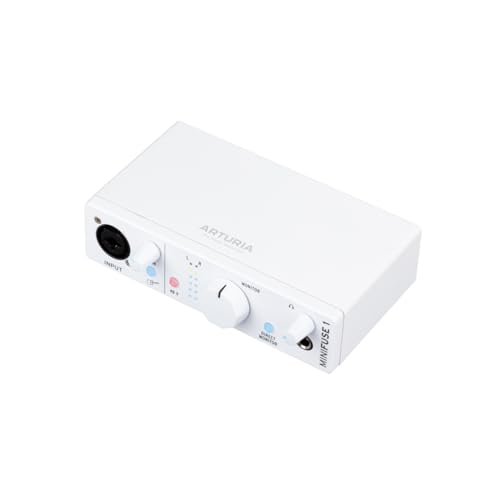
- Compact USB interface with plug-and-play setup
- Loopback, MIDI I/O, and USB hub included
- Five-year warranty with bundled creative software
Best For: Creators who want compact recording plus MIDI and loopback
Portable 2-Channel

- USB-C bus-powered and class-compliant setup
- 24-bit/192kHz recording with zero-latency monitoring
- Two combo inputs plus 3.5mm headphone jack
Best For: Portable laptop recording and simple home studio setups
Rugged Value Pick
Mackie Audio Interface, Onyx Artist 1X2 USB Audio Interface (Onyx Artist 1-2)

- 24-bit/192kHz recording with Onyx mic preamp
- Hi-Z input for guitar and bass
- Bus-powered design with zero-latency monitoring
Best For: Solo recording and mobile use where durability matters
Portable Creator Pick
Focusrite Scarlett Solo 4th Gen

- 1 XLR mic preamp and 1 Hi-Z input
- 24-bit/192kHz with 120dB dynamic range
- Includes Air mode and recording software
Best For: Solo songwriters and basic mic-plus-guitar recording
Budget-Ready Bundle
PreSonus AudioBox 96 25th Anniversary
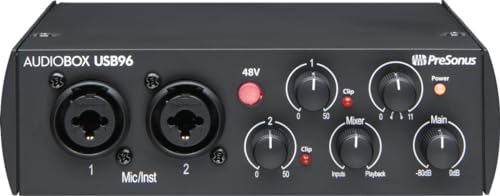
- Two Class-A mic preamps and two instrument inputs
- USB bus-powered with MIDI I/O
- Up to 24-bit/96kHz recording
Best For: Beginners who want value, portability, and MIDI support
Feature-Packed 2-Channel
Focusrite Scarlett 2i2 4th Gen
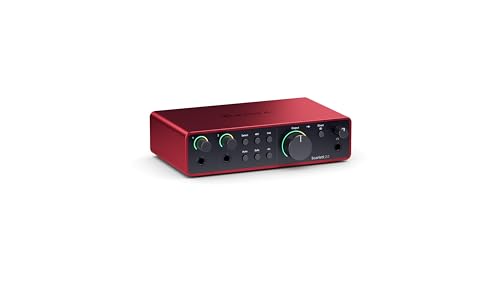
- Two mic preamps and two Hi-Z inputs
- Auto Gain and Clip Safe for easier tracking
- 24-bit/192kHz with 120dB dynamic range
Best For: Solo artists who want dual inputs and simple level control
Portable 2-Channel Starter
M-AUDIO M-Track Duo USB Audio Interface

- Two combo XLR/line/instrument inputs
- Zero-latency USB/direct monitoring
- Includes MPC Beats software
Best For: Creators needing an affordable compact interface for podcasts, vocals, and guitar.
Creator Routing Hub
MAONO P1 USB Audio Interface with 70dB Gain
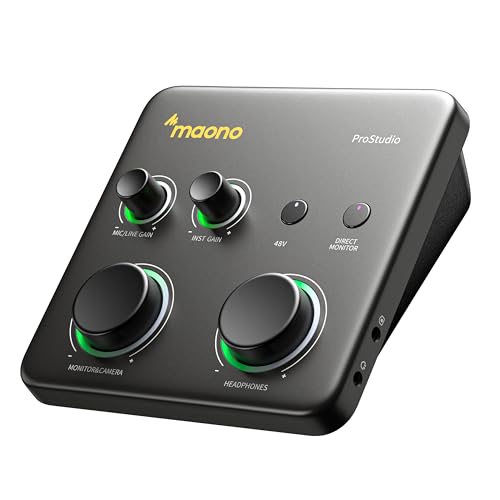
- Up to 70dB gain for dynamic mics
- Dual USB with phone and computer support
- Loopback, auto-gain, and direct monitoring
Best For: Creators who want a compact interface with powerful gain and routing tools.
Starter Recording – Focusrite Scarlett Solo 3rd Gen USB-C Audio Interface
If you want a straightforward pick among compact audio interfaces, the Scarlett Solo 3rd Gen keeps things simple while still delivering pro-level recording quality. It’s a strong fit for solo vocals and guitar, with a bright-sounding mic preamp, switchable Air mode, and clean 24-bit/192kHz conversion.
Best For: Solo singers, guitarists, and podcasters who want an easy USB-C interface with polished sound.
Pros:
- High-performance mic preamp with switchable Air mode for extra clarity
- 24-bit/192kHz recording and low-noise balanced outputs
- High-headroom instrument input helps avoid clipping on guitar or bass
- Includes recording software and a three-year warranty
Cons:
- Only one mic input, so it’s not built for multi-source recording
- Best suited to basic solo setups rather than larger home studios
Overall, this is one of the easiest compact audio interfaces to recommend if you want reliable sound quality without extra complexity. It covers the essentials well and gives beginners a solid path into recording.
Creative Mini Rig – Arturia MiniFuse USB Audio & MIDI Interface, MiniFuse 1
The MiniFuse 1 stands out in the compact audio interfaces category for creators who want recording, MIDI, and extra utility in one small box. It’s designed for voice, guitar, synths, and content creation, with class-compliant USB operation, loopback, and a useful USB hub.
Best For: Bedroom producers, content creators, and musicians who want a compact interface with MIDI and loopback.
Pros:
- Compact USB interface with plug-and-play workflow
- Loopback feature is useful for voiceovers and in-app or in-game audio capture
- Includes MIDI I/O and a USB type A hub for extra connectivity
- Backed by a five-year warranty and bundled software
Cons:
- One-channel design limits it to simple recording setups
- Some included software may be more than casual users need
If you value versatility in a small footprint, the MiniFuse 1 is an easy interface to build around. It brings together practical features and strong software support, making it especially appealing for creative multi-use setups.
Portable 2-Channel – Audio Interface, 2X2 24-bit/192kHz Interface for High-Fidelity, Studio Quality PC/Mac/iOS Recording, XLR/TRS Combo Input, Monitor Mix/Loopback Function, One-Cable Setup(Alloy Red)
For buyers comparing compact audio interfaces for laptop or mobile use, this 2×2 model focuses on simple setup and high-resolution recording. It offers class-compliant USB-C connectivity, 24-bit/192kHz fidelity, zero-latency monitoring, and a flexible pair of combo inputs.
Best For: Mobile creators and home recordists who want a bus-powered, no-driver interface with flexible input options.
Pros:
- USB-C, bus-powered, and class-compliant for easy plug-and-play use
- 24-bit/192kHz converters for detailed, low-noise recording
- Two combo jacks support vocals, microphones, and Hi-Z guitar input
- Direct monitor feature and 3.5mm headphone jack for practical tracking
Cons:
- Windows compatibility is the only operating system explicitly listed in the notes
- Smaller feature set than some interfaces aimed at more advanced studios
This is a practical compact interface if you want a clean one-cable setup without extra adapters or a power supply. The feature mix is aimed squarely at portability and straightforward recording.
Rugged Value Pick – Mackie Audio Interface, Onyx Artist 1X2 USB Audio Interface (Onyx Artist 1-2)
Among compact audio interfaces, the Onyx Artist 1×2 is a solid choice if you want a durable, bus-powered unit with high-resolution recording. It pairs a boutique-style Onyx preamp and Hi-Z input with straightforward direct monitoring, making it practical for quick tracking sessions.
Best For: Solo musicians who want a rugged, simple interface for guitar, bass, and vocal recording.
Pros:
- 24-bit/192kHz recording with a boutique-quality Onyx mic preamp
- Hi-Z 1/4-inch input works well for guitar and bass
- Zero-latency direct monitoring with dedicated outputs
- Bus-powered USB design and rugged build for mobile use
Cons:
- Windows 10 is the only operating system specifically listed in the notes
- Included software support is narrower than some competing interfaces
For a no-frills compact interface, this Mackie model emphasizes reliability and useful core features over extras. It’s a sensible pick when durability and easy monitoring matter most.
Portable Creator Pick – Focusrite Scarlett Solo 4th Gen
If you want a compact audio interface for simple vocal-and-guitar recording, the Focusrite Scarlett Solo 4th Gen keeps the setup lean while still aiming for studio-quality sound. It offers one XLR mic preamp, one Hi-Z instrument input, USB-C connectivity, and 24-bit/192kHz recording with a 120dB dynamic range, making it a practical choice for writing, demoing, and basic home recording.
Best For: Songwriters and solo creators who want a small, easy-to-use interface for mic and guitar recording.
Pros:
- 1 XLR mic preamp and 1 Hi-Z instrument input for a streamlined two-source setup
- 24-bit/192kHz recording with 120dB dynamic range for high-quality capture
- Improved Air mode adds presence and harmonic drive to vocals and guitars
- Includes Pro Tools Intro+, Ableton Live Lite, Cubase LE, and Hitmaker Expansion
Cons:
- Only one mic input, so it is not built for multi-mic recording
- Smaller feature set than the 2i2 if you need more input flexibility
Overall, the Scarlett Solo 4th Gen is a strong fit when you want compact audio interfaces that stay simple without feeling basic. It focuses on clean recording, useful vocal enhancement, and a software bundle that helps you start producing right away.
Budget-Ready Bundle – PreSonus AudioBox 96 25th Anniversary
The PreSonus AudioBox 96 25th Anniversary is a compact audio interface built for portable 2-channel recording on a budget. It pairs two Class-A mic preamps, two instrument inputs, MIDI I/O, and up to 24-bit/96kHz conversion with USB bus power, so it works well as a simple desktop or travel-friendly recording hub.
Best For: Beginners and value-focused users who want a small interface with MIDI and flexible input options.
Pros:
- Two Class-A mic preamps and two high-headroom instrument inputs
- MIDI I/O adds extra flexibility for compatible gear
- USB bus-powered design keeps the setup mobile friendly
- Includes Studio One Artist, Ableton Live Lite, and Studio Magic Plug-In Suite
Cons:
- Max sample rate is 96kHz, which is lower than some competitors
- Bulkier than the smallest solo-style interfaces
For shoppers comparing compact audio interfaces, this model stands out for value and straightforward recording features. It is especially appealing if you want a portable interface with two mic preamps, MIDI support, and a solid software bundle included.
Feature-Packed 2-Channel – Focusrite Scarlett 2i2 4th Gen
The Focusrite Scarlett 2i2 4th Gen is one of the most capable compact audio interfaces in this group if you want more control over recording. It includes two mic preamps, two Hi-Z instrument inputs, USB-C connectivity, 24-bit/192kHz recording, and a 120dB dynamic range, plus Auto Gain and Clip Safe to help protect takes while you work.
Best For: Solo artists and small setups that want dual mic pres and helpful automatic level tools.
Pros:
- Two mic preamps and two Hi-Z inputs for more flexible recording
- Auto Gain helps set levels, while Clip Safe helps prevent clipping
- 24-bit/192kHz conversion with 120dB dynamic range
- Includes Pro Tools Intro+, Ableton Live Lite, Cubase LE, and Hitmaker Expansion
Cons:
- Larger than the Solo version, so it is less minimal for single-source recording
- No MIDI I/O listed in the supplied details
If you want compact audio interfaces with more recording flexibility than a solo model, the 2i2 4th Gen is the strongest all-rounder here. Its extra inputs and built-in level management make it a smart upgrade for anyone who records vocals and instruments regularly.
Portable 2-Channel Starter – M-AUDIO M-Track Duo USB Audio Interface
If you want compact audio interfaces that can handle podcasting, streaming, and simple music recording, the M-AUDIO M-Track Duo is built as a straightforward all-rounder. It offers 48kHz recording, two combo XLR/line/instrument inputs, and zero-latency USB/direct monitoring in a small desktop-friendly design.
Best For: Creators who need a compact, easy-to-use 2-channel interface for vocals, guitar, and livestreams.
Pros:
- Two combo XLR/Line/Instrument inputs with phantom power
- USB/direct monitoring for zero-latency playback control
- 48kHz audio resolution for everyday recording tasks
- Includes MPC Beats software for production and podcasting
Cons:
- Limited to 2 channels
- Maximum sample rate tops out at 48kHz
- No onboard DSP or advanced processing features
Overall, this is a practical choice if you need a compact interface that covers the basics without adding complexity. It is especially useful when you want one box for mic, guitar, and monitoring duties on a desktop setup.
Smart XLR Adapter – Shure MVX2U Gen 2 XLR-to-USB-C Audio Interface
Among compact audio interfaces, the Shure MVX2U stands out as a minimalist XLR-to-USB-C solution for people who already have a favorite microphone. It converts any XLR mic for desktop, tablet, or smartphone use, while adding onboard processing like Auto Level Mode, a real-time denoiser, and a popper stopper.
Best For: Anyone who wants a tiny XLR-to-USB-C interface with built-in processing for cleaner voice recording.
Pros:
- Works with any XLR microphone
- Onboard DSP includes Auto Level, denoiser, and popper stopper
- Up to +60 dB clean gain with 48V phantom power
- Compatible with desktop, smartphone, and tablet setups
Cons:
- Single-channel design only
- Requires an XLR microphone to use
- Best suited to vocal recording rather than multi-input setups
This is a smart pick if you want clean, consistent mic audio without a larger interface on your desk. Its portability and processing make it especially appealing for streaming, podcasting, and mobile recording.
Creator Routing Hub – MAONO P1 USB Audio Interface with 70dB Gain
If your priority is a compact audio interface with flexible routing, the MAONO P1 packs a lot into a small desk-friendly body. It supports computer and mobile recording, offers up to 70dB gain, and adds features like auto-gain, loopback, direct monitoring, and ProStudio2 routing software for creators who switch between recording and streaming.
Best For: Streamers, podcasters, and musicians who need a compact interface with strong gain and flexible audio routing.
Pros:
- Up to 70dB gain for demanding dynamic microphones
- Dual USB connectivity for computer and phone/iPad use
- Auto-gain, loopback, and direct monitoring for creator workflows
- Compact zinc-alloy build with a 15° tilt for desk use
Cons:
- Feature set may be more than casual users need
- Software routing adds some setup complexity
- Primarily aimed at solo creator and streaming workflows
For creators who want one interface to handle recording, streaming, and routing chores, the P1 is the most feature-rich option here. It is a strong fit when you need a compact unit that can manage both microphone gain and desktop audio workflow.
How We Picked the Best Compact Audio Interfaces
We looked for Compact Audio Interfaces that offer a practical mix of portability, dependable driver support, usable gain, and the connection options most buyers actually need. Priority went to models that balance size with real-world recording performance, not just headline specs.
We also considered compatibility with Mac, PC, and mobile devices, since many buyers want an interface that can move between a desktop setup and a portable rig.
Quick Comparison
For simple vocal or instrument recording, a one-input interface is often the easiest and most affordable route. If you plan to record two microphones, stereo sources, or guitar plus vocal at the same time, a 2-in/2-out model is usually the better fit. Some Compact Audio Interfaces also add MIDI, higher gain for low-output mics, or XLR-to-USB convenience for fast desktop use.
Key Buying Factors for Compact Audio Interfaces
Inputs and Workflow
Choose the number and type of inputs based on what you record now and what you may add later. Solo vocalists and streamers may be fine with one XLR input, while podcasters and duo musicians will usually benefit from two combo inputs.
Gain and Preamp Performance
Gain matters if you use dynamic microphones or record quiet sources. An interface with strong clean gain can reduce the need for an inline booster and help keep noise under control.
Resolution, Monitoring, and Latency
Most buyers should look for at least 24-bit recording and direct monitoring. Low-latency performance is especially important for tracking vocals, guitars, and software instruments without distracting delay.
Portability and Device Support
Bus-powered designs are ideal for travel and clutter-free desks. If you need to record on a phone or tablet, confirm that the interface supports your device and includes the correct cables or adapters.
Who Should Buy Which Compact Audio Interfaces?
If you want a straightforward starter setup, look for a compact interface with one or two inputs, simple controls, and solid software compatibility. If you are building a more flexible home studio, step up to a 2-in/2-out model with strong monitoring options and enough gain for a wider range of microphones.
For creators who prioritize portability, choose the smallest reliable option that still meets your input and connectivity needs. For musicians who plan to expand, pick an interface with room to grow rather than the absolute minimum feature set.
