The right monitor can make video editing more precise, comfortable, and efficient. Resolution, color coverage, connectivity, and screen size all affect how confidently you can judge footage and manage a timeline.
We compared 10 professional and creator-focused displays, from compact WUXGA models to 4K monitors and an ultrawide option, to help you match the screen to your editing setup and budget.
Best 10 Computer Monitors for Video Editing Picks for 2026
Best Color Accuracy
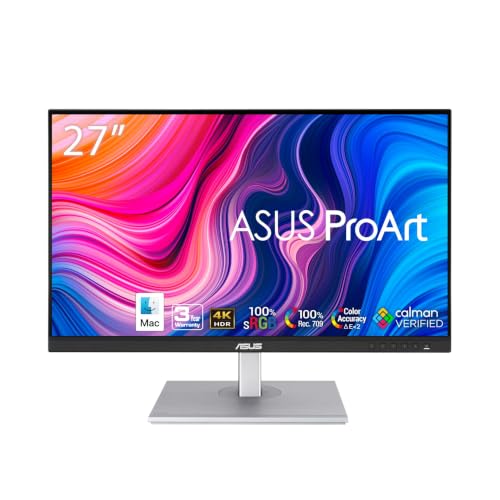
- 27-inch 4K IPS display
- 100% sRGB and Rec. 709 with Delta E < 2
- USB-C with 65W Power Delivery
Best For: Color-conscious video editors and content creators
Best Ultrawide Workspace

- 34-inch curved WQHD ultrawide display
- 99% sRGB and 95% DCI-P3 coverage
- USB-C with up to 65W Power Delivery
Best For: Editors needing extra horizontal timeline space
Best Midrange ProArt Choice

- 27-inch QHD IPS display
- Calman Verified Delta E < 2 and 100% Rec. 709
- USB-C 65W charging and DisplayPort daisy-chaining
Best For: Creators seeking calibrated color at QHD resolution
Best 4K Everyday Display

- 27-inch 4K IPS display with 99% sRGB
- 120Hz refresh rate with FreeSync Premium
- Adjustable stand and built-in speakers
Best For: Editors wanting 4K detail for work and entertainment
Best Color Accuracy Value

- Calman Verified Delta E < 2 accuracy
- 100% sRGB and 100% Rec. 709 coverage
- QHD IPS panel with adjustable stand and USB hub
Best For: Editors needing accurate standard-gamut color and flexible ergonomics
Best 4K Large-Screen Pick
Dell S3225QS 32-inch 4K Monitor

- 32-inch 4K UHD workspace
- 99% sRGB and 95% DCI-P3 coverage
- 120Hz refresh rate with 1500:1 VA contrast
Best For: Editors wanting a spacious 4K display with strong contrast and smooth motion
Best USB-C Monitor for Mac
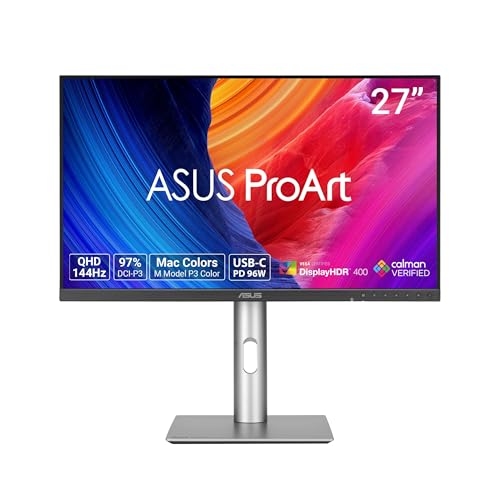
- 97% DCI-P3 and 100% sRGB coverage
- USB-C with up to 96W power delivery
- 144Hz, Auto KVM, and MacBook color matching
Best For: MacBook editors seeking accurate color and a streamlined multi-device setup
Best ColorPro All-Rounder

- 27-inch QHD IPS panel with 120Hz refresh rate
- Factory calibrated, 100% sRGB, and Pantone Validated
- 90W USB-C supports one-cable laptop setups
Best For: Editors wanting accurate sRGB color and flexible connectivity
Best Compact sRGB Monitor
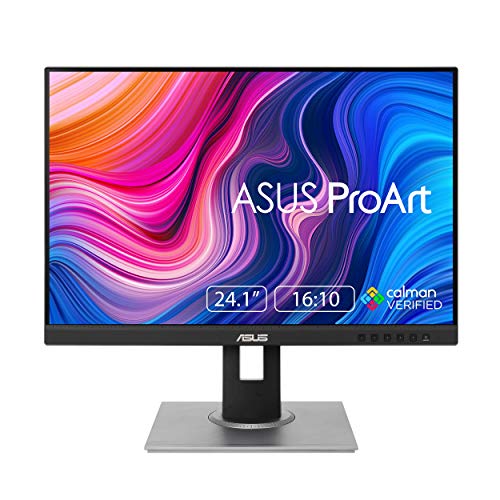
- 24.1-inch WUXGA IPS display with 16:10 aspect ratio
- 100% sRGB/Rec.709 and Calman Verified Delta E < 2
- Ergonomic stand with height, pivot, swivel, and tilt
Best For: Editors needing verified color in a compact workspace
Best 4K Wide-Gamut Monitor

- 27-inch 4K HDR display for detailed editing
- 99% DCI-P3 and 99% Adobe RGB coverage
- Factory calibrated, Calman Verified, and Delta E < 2
Best For: Professionals needing 4K detail and wide-gamut color
Best Color Accuracy – ASUS ProArt PA279CV
For editors prioritizing resolution and dependable color, the ASUS ProArt PA279CV is a strong choice among computer monitors for video editing. Its 27-inch 4K IPS display combines 100% sRGB and 100% Rec. 709 coverage with factory-calibrated Delta E < 2 accuracy, while USB-C connectivity adds up to 65W laptop charging.
Best For: Content creators who want a color-accurate 4K monitor with USB-C connectivity and ergonomic adjustments.
Pros:
- 4K UHD resolution provides a detailed editing workspace.
- Factory-calibrated, Calman Verified color accuracy with Delta E < 2.
- 100% sRGB and 100% Rec. 709 coverage support color-conscious workflows.
- USB-C with 65W Power Delivery, USB hub, height, pivot, swivel, and tilt adjustments.
Cons:
- 60Hz refresh rate is less suited to high-refresh gaming.
- The 27-inch screen may offer less timeline space than an ultrawide display.
The PA279CV is especially compelling when accurate color and 4K detail matter more than gaming speed. Its included calibration report, broad connectivity, and extended warranty further suit a long-term creative workstation.
Best Ultrawide Workspace – Dell S3425DW
The Dell S3425DW expands your editing workspace with a 34-inch curved WQHD panel and a 21:9 aspect ratio. Among computer monitors for video editing, it stands out for combining 99% sRGB, 95% DCI-P3 coverage, USB-C connectivity, and a 120Hz refresh rate in a single display.
Best For: Editors who want an ultrawide timeline, vivid color coverage, and a streamlined USB-C desk setup.
Pros:
- 34-inch 3440 x 1440 ultrawide format provides generous horizontal workspace.
- 99% sRGB and 95% DCI-P3 coverage support vibrant, detailed visuals.
- USB-C supports up to 65W Power Delivery through one cable.
- 120Hz refresh rate, FreeSync Premium, built-in speakers, and ComfortView Plus add everyday versatility.
Cons:
- WQHD resolution is less detailed than a 4K monitor.
- VA technology may not offer the same viewing characteristics as an IPS editing display.
- The curved, 21:9 format may not suit every multi-monitor or desk layout.
The S3425DW is a practical option when horizontal editing space is a priority. Its wide color coverage and single-cable laptop connection make it useful for editors who also value smooth general-purpose performance.
Best Midrange ProArt Choice – ASUS ProArt PA278CV
The ASUS ProArt PA278CV offers a useful balance of workspace, color accuracy, and connectivity for computer monitors for video editing. Its 27-inch QHD IPS panel is Calman Verified with Delta E < 2 accuracy, covers 100% sRGB and Rec. 709, and includes USB-C with 65W Power Delivery.
Best For: Video editors who want a professional color-focused display without moving to 4K resolution.
Pros:
- 27-inch 2560 x 1440 IPS panel offers a sharp, spacious workspace.
- Calman Verified Delta E < 2 accuracy and 100% sRGB and Rec. 709 coverage support editing work.
- USB-C provides 65W Power Delivery, while DisplayPort supports daisy-chaining up to four displays.
- Ergonomic stand includes height, tilt, swivel, and 90-degree pivot adjustments.
Cons:
- QHD resolution provides less pixel detail than a 4K display.
- 75Hz refresh rate is aimed more at productivity than high-refresh gaming.
- Its 27-inch panel offers less horizontal space than an ultrawide monitor.
The PA278CV is a well-rounded editing monitor for creators who value calibrated color, flexible positioning, and an organized USB-C setup. It is particularly suitable for a dual-monitor workstation thanks to DisplayPort daisy-chaining.
Best 4K Everyday Display – Dell S2725QS
The Dell S2725QS delivers a detailed 27-inch 4K IPS image in a versatile package for computer monitors for video editing. It combines 99% sRGB coverage, HDR readiness, a 120Hz refresh rate, and a fully adjustable stand for editors who also use their monitor for general productivity and entertainment.
Best For: Editors wanting a sharp 4K IPS display with smooth motion, built-in audio, and flexible positioning.
Pros:
- 4K UHD resolution provides detailed previews and a spacious 16:9 workspace.
- IPS technology and 99% sRGB coverage support vibrant, consistent-looking color.
- 120Hz refresh rate with FreeSync Premium makes scrolling and playback feel smoother.
- Built-in speakers and height, pivot, swivel, and tilt adjustments add convenience.
Cons:
- It lacks USB-C connectivity and USB hub features listed on some professional editing monitors.
- 99% sRGB coverage is specified, but the notes do not list Rec. 709 or DCI-P3 coverage.
- The included warranty is one year with Advanced Exchange and Premium Panel Exchange.
The S2725QS is a strong all-purpose 4K option for editors who want detail without giving up a high refresh rate. Its stand flexibility and built-in speakers make it easy to integrate into a conventional desktop setup.
Best Color Accuracy Value – ASUS ProArt PA278QV
For editors seeking practical computer monitors for video editing, the ASUS ProArt PA278QV combines a sharp 27-inch QHD IPS display with factory color calibration. Its 100% sRGB and 100% Rec. 709 coverage make it a strong fit for standard color-focused creative workflows.
Best For: Video editors and designers who want accurate standard-gamut color, ergonomic adjustment, and broad connectivity.
Pros:
- Calman Verified with Delta E < 2 accuracy and a factory color pre-calibration report.
- 100% sRGB and 100% Rec. 709 coverage support dependable creative work.
- QHD IPS panel offers 178-degree viewing angles and consistent color reproduction.
- Includes DisplayPort, HDMI, Mini DisplayPort, four USB ports, and a fully adjustable stand.
Cons:
- Its 75Hz refresh rate is less suited to users prioritizing very smooth motion.
- QHD resolution provides less workspace than a 4K monitor.
The PA278QV emphasizes accurate, predictable color and workstation flexibility rather than HDR or high-refresh performance. It is a sensible choice for editors working primarily in sRGB and Rec. 709.
Best 4K Large-Screen Pick – Dell S3225QS 32-inch 4K Monitor
The Dell S3225QS is one of the more spacious computer monitors for video editing, pairing a 32-inch 4K VA panel with 99% sRGB and 95% DCI-P3 coverage. Its large canvas can make timelines, previews, and editing controls easier to view at once.
Best For: Editors who want a large 4K workspace, strong contrast, and a smooth 120Hz experience for work and general entertainment.
Pros:
- 4K UHD resolution on a spacious 32-inch screen provides a detailed editing workspace.
- 99% sRGB and 95% DCI-P3 coverage support broad color-focused applications.
- VA panel, 1500:1 contrast ratio, and HDR readiness help add depth to images.
- 120Hz refresh rate, FreeSync Premium, built-in speakers, and height adjustment add versatility.
Cons:
- The VA panel may not provide the same viewing consistency as a professional IPS display.
- Connectivity is limited to DisplayPort and HDMI, without a listed USB hub.
- Its one-year Advanced Exchange and Premium Panel Exchange warranty is shorter than the ASUS alternatives listed here.
The S3225QS favors screen size, resolution, contrast, and fluidity. It is particularly attractive when a 32-inch 4K workspace matters more than specialized calibration features or extensive peripheral connectivity.
Best USB-C Monitor for Mac – ASUS ProArt PA278CGRV
The ASUS ProArt PA278CGRV is a versatile choice among computer monitors for video editing, especially for MacBook users. It combines a factory-calibrated 27-inch QHD panel with MacBook color matching, USB-C connectivity with up to 96W power delivery, and a built-in KVM switch.
Best For: MacBook-based editors who want one QHD monitor for color-conscious work, laptop charging, and multi-computer control.
Pros:
- Calman Verified factory calibration, Delta E < 2 accuracy, 100% sRGB, and 97% DCI-P3 coverage.
- USB-C provides up to 96W power delivery, while DisplayPort supports daisy-chaining.
- MacBook color-temperature matching helps align the monitor with a Mac display.
- 144Hz variable refresh rate, DisplayHDR 400, Auto KVM, and extensive ergonomic adjustment add flexibility.
Cons:
- QHD resolution offers less pixel workspace than a 4K display.
- Its 27-inch screen is smaller than the Dell’s 32-inch panel.
- HDR support is VESA DisplayHDR 400 rather than a higher-tier HDR specification.
The PA278CGRV is a well-rounded workstation monitor for creators who value accurate color and a streamlined laptop setup. USB-C power delivery and Auto KVM make it especially practical for switching between a MacBook and another computer.
Best ColorPro All-Rounder – ViewSonic VP2766-2K
For editors seeking practical computer monitors for video editing, the ViewSonic VP2766-2K combines a sharp 27-inch QHD IPS panel with factory-calibrated color, a 120Hz refresh rate, and a convenient USB-C connection. Its 100% sRGB coverage and Pantone Validated certification make it well suited to color-conscious creative work.
Best For: Editors who want accurate sRGB color, smooth on-screen motion, and one-cable laptop connectivity.
Pros:
- Factory calibrated with 100% sRGB coverage and Pantone Validated certification.
- QHD resolution and a 120Hz refresh rate provide a detailed, fluid workspace.
- USB-C delivers up to 90W of power, video, and data through one cable.
- Height, swivel, tilt, and portrait-pivot adjustments support flexible setups.
Cons:
- QHD resolution is less detailed than a 4K editing display.
- Its 100% sRGB coverage is more limited than monitors offering wider-gamut coverage.
The VP2766-2K is a balanced choice for video editors who value dependable sRGB color and a streamlined desk setup. Choose it over a 4K model if 120Hz motion and 90W USB-C convenience matter more than maximum pixel density.
Best Compact sRGB Monitor – ASUS ProArt PA248QV
The ASUS ProArt PA248QV is a compact option among computer monitors for video editing, using a 24.1-inch 16:10 WUXGA IPS display with 100% sRGB and Rec.709 coverage. Calman Verified Delta E < 2 performance is aimed at consistent color, while the ergonomic stand helps during long editing sessions.
Best For: Editors who need dependable sRGB and Rec.709 color in a smaller, height-adjustable monitor.
Pros:
- 100% sRGB and Rec.709 coverage supports common photo and video workflows.
- Calman Verified color accuracy with Delta E < 2 is suitable for color-sensitive work.
- 16:10 WUXGA resolution provides extra vertical workspace compared with 16:9 Full HD.
- Tilt, swivel, pivot, and height adjustments improve positioning flexibility.
Cons:
- Its 1920 x 1200 resolution offers less detail than QHD or 4K alternatives.
- The 75Hz refresh rate is less fluid than the 120Hz ViewSonic.
The PA248QV makes sense for editors prioritizing verified sRGB accuracy, a compact footprint, and an ergonomic stand. Its lower resolution and smaller screen are trade-offs, but the 16:10 format can be useful for timelines and editing controls.
Best 4K Wide-Gamut Monitor – ASUS ProArt PA279CRV
For detailed editing work, the ASUS ProArt PA279CRV stands out among computer monitors for video editing with a 27-inch 4K HDR display and broad color coverage. Factory calibration, Calman Verification, 99% DCI-P3 coverage, and 99% Adobe RGB coverage give it a strong specification for professional creative workflows.
Best For: Editors who need 4K detail and wide-gamut color for demanding photo and video projects.
Pros:
- 4K resolution provides a highly detailed 27-inch editing workspace.
- 99% DCI-P3 and 99% Adobe RGB coverage support wide-gamut creative work.
- Factory calibrated and Calman Verified to Delta E < 2.
- USB-C provides DisplayPort connectivity and up to 96W power delivery.
Cons:
- The 60Hz refresh rate is less smooth than the ViewSonic’s 120Hz rate.
- Its 4K resolution may require more scaling or system resources than lower-resolution displays.
The PA279CRV is the strongest fit here for editors who prioritize pixel density and wide-gamut coverage over high refresh rates. DisplayPort daisy-chaining, USB-C power delivery, and the adjustable stand further support a professional multi-device workspace.
How We Picked the Best Computer Monitors for Video Editing
We focused on displays suited to color-sensitive creative work, prioritizing resolution, panel quality, useful color features, ergonomic adjustability, connectivity, and long-session comfort. USB-C models received particular attention because they can simplify laptop workflows by carrying video, data, and—in some cases—power through one cable.
Refresh rate and adaptive sync were also considered, although they matter less for color-critical editing than consistent image quality and a practical workspace. We included 4K, QHD, ultrawide, and 16:10 options so different users can find an appropriate balance of detail, screen area, and price.
Quick Comparison
| Best For | Recommended Type | Why It Stands Out |
|---|---|---|
| 4K editing and detailed footage | 27-inch 4K monitor | Sharper preview and more workspace |
| Laptop-based production | USB-C professional monitor | Streamlined connectivity and charging potential |
| Timeline and multitasking space | 34-inch ultrawide | Wide layout without a dual-monitor setup |
| Value-focused editing | 27-inch QHD monitor | Good working space at a lower cost |
| Compact desks | 24-inch WUXGA monitor | Efficient 16:10 workspace in a smaller footprint |
Key Buying Factors for Computer Monitors for Video Editing
Resolution and Screen Size
A 27-inch 4K display is a strong all-purpose choice for detailed footage, sharp text, and comfortable scaling. QHD is easier to drive and often more affordable, while a 32-inch 4K screen can make fine timeline controls and previews easier to see. Ultrawide monitors are useful when you want bins, timelines, and preview windows visible together.
Color and Panel Performance
Look for a monitor with broad color coverage, a suitable picture mode, and dependable factory calibration when possible. IPS panels are commonly favored for consistent viewing angles, while VA panels can provide deeper contrast. For serious delivery work, use a colorimeter and calibrate the display rather than relying only on specifications.
Connectivity and Ergonomics
USB-C can reduce cable clutter for compatible laptops, but confirm the port’s video, data, and power-delivery capabilities. HDMI and DisplayPort are important for desktop systems. Height adjustment, tilt, swivel, and VESA compatibility can make a major difference during long editing sessions.
Refresh Rate and Comfort
Higher refresh rates make scrolling and general desktop use feel smoother, but they do not replace accurate color or resolution. Flicker-reduction features, low-blue-light modes, matte finishes, and suitable brightness can help reduce fatigue.
Who Should Buy Which Computer Monitors for Video Editing?
Choose a 27-inch 4K ProArt or similar professional display if you want a sharp, versatile editing monitor for UHD footage. A USB-C model is the better fit for MacBook and other laptop users who want a cleaner desk setup. Pick a 27-inch QHD monitor when value, easier graphics performance, and a balanced workspace matter most.
For editors who keep multiple panels open, a 34-inch ultrawide can replace two screens and simplify the layout. A 32-inch 4K display suits users who prefer a larger preview and text, while the 24-inch 16:10 option is best for smaller desks, secondary systems, or budget-conscious setups.
