The best condenser microphones for interviews help voices sound detailed, focused, and easier to understand—whether you record on a phone, camera, computer, or professional audio setup.
This roundup compares 10 options across wireless handheld, USB, shotgun, and XLR designs so you can match the microphone to your interview format, recording device, and working environment.
Best 10 Condenser Microphones for Interviews Picks for 2026
Best Wired Smartphone Reporter Mic
Compact Handheld Interview Microphone
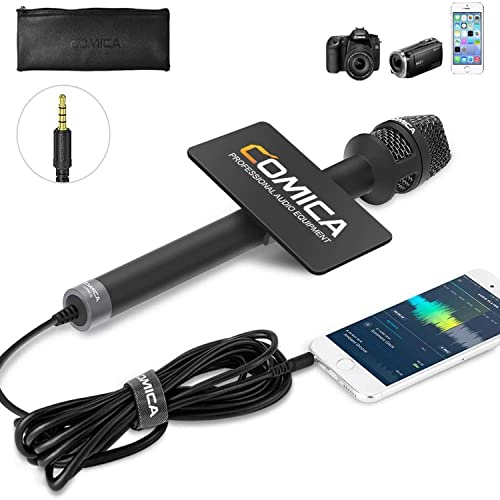
- Cardioid pickup focuses on the speaker
- All-metal body with low self-noise
- 3.5mm TRRS plug-and-play connection
Best For: Wired smartphone interviews and reports
Best Wireless Noise-Reducing Mic
Revo S Handheld Interview Microphone
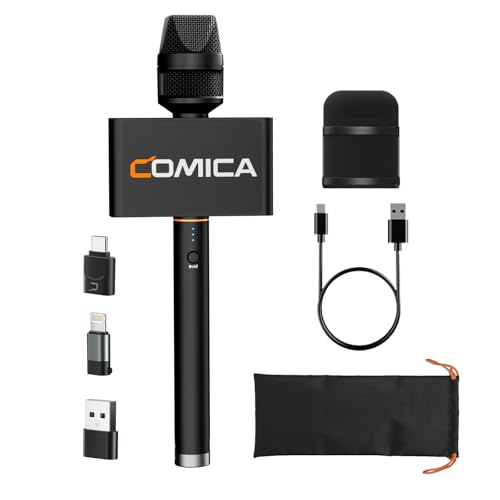
- Wireless digital output with plug-and-play setup
- 48kHz/24-bit recording and one-key denoise
- Up to 15 hours of battery use
Best For: Mobile interviews, podcasts, and video production
Best Shotgun Interview Mic
BY-BM6060 XLR Condenser Microphone

- Super-cardioid directional pickup
- XLR output with phantom or AA power
- Includes shock mount and wind protection
Best For: Camera-based interviews and broadcast production
Best Wireless Street Interview Mic
Revo S USB-C Reporter Microphone
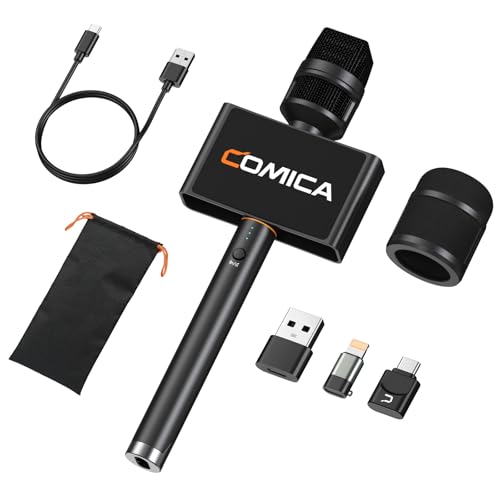
- Up to 65 feet of wireless range
- 48kHz/24-bit audio with noise reduction
- Three gain levels and up to 15-hour battery
Best For: Street interviews and mobile content creation
Field-Ready Shotgun Kit

- Super-cardioid pickup helps focus on interview audio.
- Includes mounts, wind protection, cables, and adapters.
- Battery-powered for camera and field use.
Best For: Camera-based indoor and outdoor interviews
Wireless Handheld Choice

- Broadcast-grade omnidirectional condenser capsule.
- Over 40 hours of onboard 32-bit float recording.
- GainAssist and timecode support with compatible gear.
Best For: Wireless interviews within the RØDE ecosystem
Desktop Interview Setup
FIFINE T669 USB Condenser Microphone

- Plug-and-play USB connection for PCs and laptops.
- Cardioid capsule focuses on front-facing speech.
- Includes boom arm, shock mount, pop filters, and cable.
Best For: Desk-based interviews, podcasts, and video calls
On-Camera Interview Pick

- Cardioid pickup focuses on the main speaker.
- Compact body helps stay outside the frame.
- Includes foam cap, stand, and long XLR cable.
Best For: Camera-mounted interviews and video production
USB Desk Interview Pick
FIFINE K669B USB Condenser Mic

- Plug-and-play USB setup for computers.
- Cardioid pickup supports clear voice capture.
- Includes tripod and built-in volume control.
Best For: Remote interviews, meetings, and podcasting
Simple Streaming Interview Pick

- Plug-and-play USB connection for PCs and laptops.
- Cardioid pickup helps limit background sound.
- Includes adjustable stand and one-tap mute.
Best For: Desktop interviews, streaming, and podcasting
Best Wired Smartphone Reporter Mic – Compact Handheld Interview Microphone
For shoppers comparing condenser microphones for interviews, the COMICA HRM-S is a straightforward wired option for smartphone recording. Its cardioid pickup pattern emphasizes sound in front of the microphone, while the metal construction and low self-noise support clearer speech capture.
Best For: Smartphone users recording interviews, speeches, reports, and social media videos with a 3.5mm TRRS connection.
Pros:
- Cardioid pattern helps reduce sound arriving from the sides.
- 60Hz–20kHz frequency response supports clear vocal recording.
- All-metal construction and low self-noise offer a durable, cleaner-recording design.
- Plug-and-play wired operation works with compatible laptops, tablets, and smartphones.
Cons:
- Its 3.5mm TRRS connection may require an original adapter for iOS and USB-C Android devices.
- Wired operation offers less mobility than a wireless handheld microphone.
The HRM-S makes sense when dependable, cable-based smartphone recording matters more than wireless convenience. Check your device connection before buying, especially if it lacks a standard TRRS jack.
Best Wireless Noise-Reducing Mic – Revo S Handheld Interview Microphone
The COMICA Revo S is a flexible choice among condenser microphones for interviews when you want wireless digital transmission and built-in recording controls. Its 14mm condenser capsule, cardioid pattern, 48kHz/24-bit recording, and one-key noise reduction are designed for detailed, intelligible speech.
Best For: Creators, reporters, and podcasters recording interviews on USB-C smartphones, tablets, laptops, or computers.
Pros:
- Wireless digital output avoids a cable between the handheld microphone and device.
- 14mm condenser capsule and cardioid pattern support focused vocal capture.
- 48kHz/24-bit recording and one-key CalMix denoise target clear, detailed audio.
- Built-in battery provides up to 15 hours of use, with three gain levels for adjustment.
Cons:
- Lightning devices require a USB-C-to-Lightning adapter that supports OTG.
- Wireless operation requires keeping the built-in battery charged.
Choose the Revo S if wireless convenience and quick audio adjustments are priorities. Its broad device compatibility is useful, but confirm the required receiver or adapter for your phone before recording.
Best Shotgun Interview Mic – BY-BM6060 XLR Condenser Microphone
For camera-based production, the BOYA BY-BM6060 offers a directional alternative to handheld condenser microphones for interviews. Its super-cardioid shotgun design is intended for video production, broadcast, documentaries, and outdoor recording, with an XLR output for compatible equipment.
Best For: Film crews, ENG/EFP work, camera operators, and creators using XLR-equipped cameras or audio gear.
Pros:
- Super-cardioid pickup is designed to focus on sound from the front.
- Supports 24–48V phantom power or one AA battery when phantom power is unavailable.
- Includes a shock mount, fur windshield, foam windshield, and cold-shoe mount.
- XLR connection suits compatible cameras and professional audio setups.
Cons:
- Requires XLR equipment or a suitable camera connection rather than a direct smartphone plug.
- Its shotgun form factor is less convenient for handheld street interviews than a reporter microphone.
The BY-BM6060 is the better fit when your interview workflow centers on a camera, boom, or XLR audio system. The included mounting and wind-protection accessories make it more production-oriented than a basic handheld mic.
Best Wireless Street Interview Mic – Revo S USB-C Reporter Microphone
The COMICA Revo S is one of the more mobile condenser microphones for interviews, combining wireless digital transmission with a handheld reporter format. It offers a stated range of up to 65 feet, 48kHz/24-bit recording, one-key noise reduction, and three gain settings for changing interview environments.
Best For: Street interviews, live events, content creation, podcasts, and reporting with USB-C smartphones or compatible computers.
Pros:
- Wireless range is listed at up to 65 feet for greater movement during recording.
- 14mm condenser capsule and cardioid pattern emphasize the speaker while reducing side and rear noise.
- One-key CalMix noise reduction helps suppress ambient sound.
- Up to 15 hours of battery life and included USB-C, Lightning, and USB-A adapters support varied setups.
Cons:
- Wireless use depends on charging the built-in 350mAh battery.
- Adapter compatibility should be checked for the specific phone or computer.
This version is particularly appealing for moving interviews where a cable would get in the way. Its gain controls, noise reduction, and included adapters make it a practical all-around kit for mobile creators.
Field-Ready Shotgun Kit – VidPro XM-55
For interviews recorded on cameras, boom poles, or field mixers, the VidPro XM-55 is a practical option among condenser microphones for interviews. Its super-cardioid shotgun design helps reduce off-axis sound, while the included mounts, cables, wind protection, and battery support varied indoor and outdoor setups.
Best For: Camera-based interviews, film shoots, and portable indoor or outdoor recording.
Pros:
- Super-cardioid pickup with off-axis signal attenuation for more focused voice capture.
- Includes shock and stand mounts, camera shoe adapter, wind muff, wind shield, and hand grip.
- Supports XLR, 3.5mm, and 6.3mm connections with included cables and adapter.
- Runs on one included AA battery and offers a 100 Hz–16 kHz response for intelligible speech.
Cons:
- Battery-powered operation requires carrying replacement AA batteries.
- Its shotgun form factor may be less convenient than a handheld microphone for walking interviews.
- The 2.4-pound kit is less lightweight than a minimal microphone-only setup.
The XM-55 stands out as a broadly equipped interview kit rather than a bare microphone. Choose it when connection flexibility and field accessories matter more than the smallest possible setup.
Wireless Handheld Choice – RØDE Interview PRO
The RØDE Interview PRO is designed for creators who want a handheld wireless option among condenser microphones for interviews. Its broadcast-grade omnidirectional capsule records rich voice audio, while built-in 32-bit float recording and GainAssist provide useful backup and level-management features.
Best For: Wireless handheld interviews with RØDE Series IV receivers, including Wireless PRO, Wireless GO II, Wireless ME, and compatible RØDECaster consoles.
Pros:
- Omnidirectional condenser capsule is designed for detailed, broadcast-grade voice recording.
- Over 40 hours of 32-bit float onboard recording provides a substantial backup.
- GainAssist automatically adjusts volume levels for balanced audio.
- Supports timecode synchronization with compatible receivers such as Wireless PRO.
Cons:
- Compatibility is centered on RØDE Series IV receivers and supported RØDECaster consoles.
- Its omnidirectional pattern can capture sound from around the microphone.
- Wireless operation requires charging its included lithium-ion battery.
This is the most specialized choice of the three: a handheld interview microphone with recording redundancy and RØDE-system integration. It makes the most sense for users already invested in compatible RØDE wireless equipment.
Desktop Interview Setup – FIFINE T669 USB Condenser Microphone
For desk-based conversations, podcasts, and online interviews, the FIFINE T669 offers a straightforward USB route among condenser microphones for interviews. Its cardioid capsule is intended to capture sound from the front while limiting ambient noise, and the included boom arm, shock mount, pop filters, and cable create a ready-to-use computer setup.
Best For: PC and laptop interviews, podcasts, video calls, voiceovers, and home-studio recording.
Pros:
- Plug-and-play USB connection works with PCs and laptops without additional drivers.
- Cardioid pickup focuses on front-facing speech and helps avoid ambient noise.
- Includes a boom arm, shock mount, double pop filter, and 8.2-foot USB cable.
- Wide 20 Hz–20 kHz frequency range and the ability to handle high SPLs support varied voice recording.
Cons:
- Designed for computer use and is incompatible with Xbox according to the supplied notes.
- USB connectivity is less suitable for traditional XLR field or mixer setups.
- The desktop boom-arm arrangement is not intended for handheld or outdoor interviews.
The T669 is a convenient value-oriented package for stationary interviews rather than location work. Its bundled accessories reduce setup effort, making it a sensible pick for a home office, podcast desk, or computer-based recording space.
On-Camera Interview Pick – Ruittos 11-Inch Shotgun Mic
For video teams seeking condenser microphones for interviews, the Ruittos is a compact shotgun option designed to focus on the primary speaker while helping reduce background sound. Its 11-inch body is intended to stay out of the camera frame when mounted on a compatible camcorder or DSLR.
Best For: On-camera interviews, conferences, and video production using compatible camera inputs.
Pros:
- Cardioid pickup pattern emphasizes the main sound source.
- Compact 11-inch design is unobtrusive on camera.
- Includes a stand, foam wind cap, and approximately 8-meter XLR cable.
- Battery operation provides about 26 hours from one battery.
Cons:
- Camera and battery are not included.
- Requires a compatible 3.5mm or 6.35mm input and may need a hot-shoe adapter for some Sony or Minolta cameras.
- Its shotgun form is more specialized than a desktop interview microphone.
The Ruittos makes the most sense when you record interviews directly through a camera and need a directional microphone with a long cable. Check your camera connections and plan for the required battery before buying.
USB Desk Interview Pick – FIFINE K669B USB Condenser Mic
The FIFINE K669B is a straightforward choice among condenser microphones for interviews conducted on a computer. Its plug-and-play USB connection, desktop tripod, cardioid pattern, and built-in volume control suit remote interviews, video conferences, and voice recording.
Best For: Computer-based interviews, Zoom meetings, podcasts, online courses, and voiceovers.
Pros:
- Connects directly to a computer through USB without requiring 48V phantom power.
- Cardioid condenser design focuses on the speaker and helps reduce background noise.
- Metal construction and included tripod provide a stable desktop setup.
- Built-in volume knob includes a zero setting for quick privacy muting.
Cons:
- Not compatible with Xbox or phones according to the supplied notes.
- Designed for desktop use rather than camera-mounted interviews.
- Some applications may need automatic volume adjustment disabled to avoid changing recording levels.
Choose the K669B if your interview workflow centers on a laptop or desktop and you want minimal setup. It offers useful controls on the microphone itself, though compatibility should be checked before using it with mobile devices or consoles.
Simple Streaming Interview Pick – Amazon Basics USB Mic
The Amazon Basics USB microphone is a practical desktop option for people comparing condenser microphones for interviews, streaming, and podcasting. It combines plug-and-play USB operation with a cardioid pickup pattern, adjustable stand, one-tap mute, and a built-in shock absorber.
Best For: PC-based interviews, online conferences, streaming, podcasting, and solo voice recording.
Pros:
- Large 14mm diaphragm is designed for clear sound pickup with low noise and distortion.
- Cardioid pattern helps isolate the speaker from background sound.
- 360-degree adjustable stand supports flexible desktop positioning.
- One-tap mute and plug-and-play USB setup simplify live sessions.
Cons:
- It is intended for USB-connected computers rather than direct camera use.
- The supplied notes list PC and laptop compatibility, so other device support should be verified.
- It has a desktop form factor and may be less suitable for mobile interview recording.
This model is a good fit for a stationary interview setup where convenience matters more than camera mounting. Its adjustable stand and mute control are especially useful for live online conversations, while the standard 5/8-inch thread allows attachment to compatible supports.
How We Picked the Best Condenser Microphones for Interviews
We focused on microphones suited to spoken-word recording rather than general-purpose music capture alone. The selection covers handheld reporter microphones, wireless systems, camera-mounted shotgun models, and USB desktop microphones. We considered connection type, directional pickup, power requirements, portability, recording quality, compatibility, and the practical needs of solo creators, journalists, podcasters, and video teams.
Because interview setups vary widely, no single microphone is ideal for every buyer. A compact phone mic may be the best choice for street reporting, while an XLR or wireless system can provide more control for professional productions.
Quick Comparison
| Interview setup | Best microphone type | Why choose it |
|---|---|---|
| Phone-based reporting | TRRS, USB-C, or wireless handheld | Portable and easy to connect directly to a smartphone |
| Camera or boom recording | Shotgun condenser | Helps focus on a subject from a short distance |
| Computer interviews and podcasts | USB condenser | Simple plug-and-play recording with a desktop setup |
| Professional field production | Wireless or XLR microphone | Offers greater flexibility, range, or integration with audio gear |
Key Buying Factors for Condenser Microphones for Interviews
Pickup Pattern
Cardioid and super-cardioid microphones reduce sound from behind and the sides, which can improve speech clarity in moderately noisy locations. A handheld interview mic is typically aimed at the speaker, while a shotgun model is positioned toward the subject from a camera or boom.
Connection and Compatibility
Check whether your device requires 3.5mm TRRS, USB-C, USB-A, XLR, or a wireless receiver. Some phones need an adapter, and camera-focused microphones may not work directly with computers or mobile devices.
Power Requirements
USB microphones draw power from the connected computer, while many XLR condenser microphones require 24V or 48V phantom power. Wireless models use rechargeable batteries, so consider runtime and charging convenience for long interview days.
Handling and Background Noise
For on-location interviews, prioritize a sturdy body, useful mounting accessories, wind protection, and low handling noise. Directional pickup can help, but it cannot eliminate nearby traffic, air conditioners, or room reflections.
Recording Workflow
Choose a microphone that fits how you edit and publish. Wireless and phone microphones speed up mobile filming, USB models simplify desk recording, and XLR systems are better suited to interfaces, mixers, and multi-microphone productions.
Who Should Buy Which Condenser Microphones for Interviews?
- Mobile journalists and street creators: Choose a handheld phone-compatible or wireless microphone for fast setup and easy movement.
- Video shooters: A directional shotgun condenser is a practical choice for mounting on a camera or using with a boom.
- Podcasters and remote interview hosts: USB condenser microphones offer straightforward computer connectivity and consistent desk-based recording.
- Professional production teams: Consider an XLR microphone or a higher-end wireless handheld system when you need dependable integration with field recorders, mixers, or cameras.
- Budget-conscious beginners: Start with a plug-and-play USB or compatible phone microphone, then upgrade once your recording environment and workflow are clear.
Before buying, confirm the connector, included accessories, device compatibility, and intended recording distance. The right microphone is the one that fits your complete interview workflow—not simply the model with the most specifications.
