The right DI box can make guitars, basses, keyboards, and other line-level sources easier to record cleanly at home. It balances impedance, sends a low-impedance signal to your interface or mixer, and can help reduce hum and ground-loop noise.
This roundup compares 10 passive DI options, including compact single-channel units, stereo boxes, dual-channel models, and designs with pads, ground lifts, or reamping features. Use the guide below to match the box to your instruments, interface, and studio workflow.
Best 10 Di Boxes for Home Studios Picks for 2026
Best Stereo Keyboard DI
Mackie MDB-2P Passive Stereo DI Box

- Dual 1/4-inch inputs for stereo sources
- 15 dB pads and ground lift
- Passive design with steel case
Best For: Stereo keyboards, DJ rigs, and backing tracks
Best Rugged Mono DI
Radial Pro DI Passive Direct Box

- Passive mono transformer design
- Rugged I-beam construction
- Two-year warranty listed
Best For: Mono instruments and professional console connections
Best Feature-Rich Stereo DI
Bolanle D2 Premium Passive Stereo DI Box

- Dual channels with thru outputs
- -15 dB pads and polarity switches
- Passive metal enclosure needs no power
Best For: Stereo instruments and flexible monitoring setups
Best Reamping DI
ART Dual RDB Reamping Direct Box
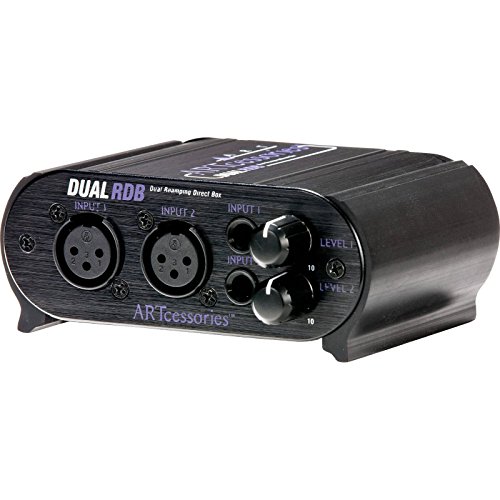
- Stereo/dual reamping interface
- Variable input pad
- Dual TRS and XLR balanced inputs
Best For: Reamping and multi-amp studio workflows
Premium Stereo Isolation

- Two passive DI channels
- Isolation transformer with ground lift
- 15 dB pad and XLR/1/4-inch connectivity
Best For: Stereo home-studio sources needing isolation
Flexible Dual-Channel Control

- Two passive transformer channels
- Three selectable attenuation levels
- Filter, phase, and ground-lift controls
Best For: Flexible dual-channel studio routing
Compact Budget Routing

- Passive mono direct box
- Balanced output with parallel thru jack
- Metal enclosure for instrument and mixer connections
Best For: Simple guitar, bass, and mixer routing
Best Dual-Channel Pick

- Two isolated channels for simultaneous instrument connections
- Per-channel ground lift and -30dB pad
- Balanced outputs with compact chassis
Best For: Recording or routing two instruments at once
Best Budget Hum Eliminator

- Connects instruments and consumer stereo sources
- Ground lift helps address buzz and hum
- Steel chassis with lightweight construction
Best For: Simple home-studio and effects-processing setups
Best Thru-Output Design

- Thru output feeds an amp and mixer simultaneously
- Ground lift and isolation transformer reduce hum
- 50KΩ impedance with broad source compatibility
Best For: Amp monitoring alongside studio or PA recording
Best Stereo Keyboard DI – Mackie MDB-2P Passive Stereo DI Box
For home studios needing reliable DI boxes for home studios, the Mackie MDB-2P is a practical stereo option for keyboards, DJ controllers, and backing-track rigs. Its passive design requires no power, while ground lift and pad controls help manage common studio noise and signal-level problems.
Best For: Stereo keyboards, DJ rigs, and backing-track setups.
Pros:
- Dual 1/4-inch high-impedance inputs accommodate stereo sources.
- Ground lift helps reduce ground-loop buzz.
- Independent 15 dB pads help handle hot signals without distortion.
- Passive, power-free design in a roadworthy steel case.
Cons:
- Designed for stereo sources rather than a dedicated reamping workflow.
- Its feature set may be more than needed for simple mono setups.
The MDB-2P is a sensible choice when you want two channels, basic signal protection, and hum control without adding another powered device to your studio setup.
Best Rugged Mono DI – Radial Pro DI Passive Direct Box
The Radial Pro DI is a straightforward passive choice among DI boxes for home studios, especially when you need to connect an instrument to a mixer, console, or snake system. Its custom transformer and rugged I-beam construction suit both studio and live applications.
Best For: Mono guitar, bass, keyboard, acoustic-instrument, and drum-machine connections.
Pros:
- Passive mono direct-box design uses a custom transformer.
- Rugged I-beam construction is suited to demanding use.
- Works with musical instruments and professional snake systems or consoles.
- Includes a stated two-year warranty.
Cons:
- Provides one channel for mono use.
- The supplied notes do not list a ground-lift or pad control.
Choose the Pro DI when durability and simple mono transformer isolation matter more than stereo operation or extra control switches.
Best Feature-Rich Stereo DI – Bolanle D2 Premium Passive Stereo DI Box
The Bolanle D2 packs useful controls into a two-channel format, making it a flexible option for DI boxes for home studios. It handles stereo instruments, offers per-channel attenuation and polarity reversal, and includes thru outputs for monitoring through an amplifier.
Best For: Stereo keyboards, synthesizers, active bass, church sound, DJ setups, and interfaces with XLR inputs.
Pros:
- Two passive channels require no batteries, charging, or phantom power.
- Independent -15 dB pads help manage hot signals.
- Ground lift and per-channel polarity reversal address hum and phase issues.
- Each channel includes a 1/4-inch thru output for amplifier monitoring.
Cons:
- At 1.94 pounds, it is heavier than some compact DI options.
- The supplied notes do not specify a warranty.
The D2 is compelling when a home studio needs stereo connectivity plus practical troubleshooting controls and thru outputs in one rugged metal enclosure.
Best Reamping DI – ART Dual RDB Reamping Direct Box
The ART Dual RDB stands apart from typical DI boxes for home studios because it is built for reamping as well as dual direct-box duties. Its stereo design and balanced inputs make it useful for routing recorded signals toward multiple amplifiers or adapting line-level sources to lower-level inputs.
Best For: Reamping workflows, multiple amplifiers, and stereo line-level or instrument connections.
Pros:
- Designed as a re-amping interface for multiple amplifiers.
- Provides two channels for stereo or dual-source operation.
- Variable input pad accommodates mic or instrument inputs.
- Offers dual 1/4-inch TRS and XLR balanced line-level inputs.
Cons:
- Its reamping-focused design may be unnecessary for basic instrument-to-mixer use.
- The supplied notes do not mention a ground-lift control.
If your home studio includes amp reamping or more complex routing, the Dual RDB offers a more specialized feature set than a conventional mono passive DI.
Premium Stereo Isolation – Radial ProD2
For home studios needing reliable stereo di boxes for home studios, the Radial ProD2 offers two passive channels with transformer isolation. Its pad and lift controls help accommodate different signal levels and grounding situations without requiring a power source.
Best For: Stereo keyboards, playback devices, and other line-level sources in a home studio setup.
Pros:
- Two-channel passive stereo design
- Isolation transformer and ground-lift switch
- 15 dB pad for handling stronger signals
- Compact stainless-steel enclosure with 1/4-inch and XLR connectors
Cons:
- Passive design does not provide additional gain
- More specialized for stereo use than a basic single-channel DI
The ProD2 is a practical choice when transformer isolation and two-channel operation matter more than the lowest possible price. Its compact size also makes it easy to place on a desktop or in a small rack-adjacent setup.
Flexible Dual-Channel Control – ART DualZDirect
The ART DualZDirect is a versatile option among di boxes for home studios, combining two passive channels with multiple signal-management controls. It converts high-impedance inputs to balanced outputs while offering attenuation, filtering, phase, and ground-isolation options.
Best For: Home studios that need flexible stereo or dual-channel routing for instruments, computers, and other source devices.
Pros:
- Dual-channel passive transformer design with no battery required
- Switchable 0, -20, and -40 dB input attenuation
- Low-pass filter and phase-invert controls
- Ground lift fully isolates inputs from the chassis and outputs
Cons:
- Tabletop form factor may take more desk space than a compact single-channel DI
- Its many switches may be more control than simple setups require
With its broad control set and balanced outputs, the DualZDirect is well suited to users who regularly connect varied sources. The three-year manufacturer’s defect warranty is an added consideration for longer-term ownership.
Compact Budget Routing – Behringer DI400P
The Behringer Ultra-DI DI400P is a straightforward choice for di boxes for home studios when you need to connect an instrument or unbalanced line source to a mixer. Its passive design provides impedance and signal matching, balanced mic-level output, and a parallel output for an amplifier.
Best For: Guitarists, bassists, and home-studio users who need simple instrument-to-mixer connections.
Pros:
- Passive operation for simple setup
- Converts unbalanced line-level signals to balanced mic-level output
- Thru/Out jack supports simultaneous amplifier and mixer routing
- Metal enclosure with TRS and XLR connectivity
Cons:
- Mono output limits it to single-channel use
- Supplied notes do not list adjustable attenuation, filtering, or phase controls
- Its passive design requires suitable external mixer or preamp gain
The DI400P focuses on the essential DI functions rather than extensive controls. It is a sensible fit for a compact home setup where preserving an amp feed and sending a balanced signal to the mixer are the main priorities.
Best Dual-Channel Pick – StudioMan DI-2
For home studios needing to connect two instruments at once, the StudioMan DI-2 is a versatile choice among DI boxes for home studios. Its two isolated channels, balanced outputs, ground switches, and pad controls suit guitar, bass, keyboard, and synth setups.
Best For: Home studios recording or routing two instruments simultaneously.
Pros:
- Two independent channels with 50KΩ input impedance.
- Per-channel ground lift and -30dB pad controls help manage hum and high-output sources.
- Balanced XLR/TRS connectivity, low distortion, and compact construction.
Cons:
- Its dual-channel design may be more than needed for a single-instrument setup.
- It is heavier than the other listed options at about 1.41 pounds.
The DI-2 stands out when flexibility and channel count matter. Its isolated dual-channel layout is particularly useful for multi-track recording, live streaming, or a compact home-studio rig handling several sources.
Best Budget Hum Eliminator – Pyle PDC21
The Pyle PDC21 is a straightforward option for home studios that need to connect unbalanced instruments or consumer audio sources to balanced equipment. As one of the more basic DI boxes for home studios, it focuses on impedance conversion, hum reduction, and durable construction.
Best For: Guitar, bass, keyboard, effects processors, and simple recording setups.
Pros:
- Supports guitars, basses, keyboards, processors, and consumer stereo sources.
- Ground-lift functionality and impedance transformation help reduce buzz and hum.
- Steel chassis offers a durable design in a compact 11.8-ounce unit.
Cons:
- The supplied notes do not specify detailed frequency-response or distortion figures.
- It is described as a single DI unit rather than a dual-channel model.
The PDC21 makes sense when you want a simple, rugged way to feed unbalanced sources into a mixer or PA. Its broad source compatibility also makes it useful for sampling consumer audio and connecting effects-based rigs.
Best Thru-Output Design – PRORECK DC21
The PRORECK DC21 is a practical pick for home studios and small live rigs that need simultaneous amp monitoring and balanced mixer output. Its thru connection, ground lift, and 50KΩ impedance make it one of the more flexible DI boxes for home studios.
Best For: Musicians routing an instrument to both an amplifier and a mixer or interface.
Pros:
- Thru output supports direct connection to an amplifier while sending a balanced signal onward.
- Ground lift and isolation transformer are designed to reduce ground-loop hum and buzz.
- Works with guitars, basses, keyboards, effects processors, submixers, and consumer audio sources.
Cons:
- The passive design may require suitable source levels and gain staging.
- It provides one DI channel, so multi-instrument recording requires additional units.
With its dual-output workflow, the DC21 is especially useful for guitarists and bassists who want an amp feed for monitoring while capturing a balanced signal in a mixer or recording setup. It also remains compact and lightweight at about 11.7 ounces.
How We Picked the Best Di Boxes for Home Studios
We focused on practical features that matter in smaller recording spaces: passive signal handling, input and output flexibility, ground-lift controls, attenuation options, channel count, build quality, and compatibility with common guitar, bass, keyboard, and audio-interface setups. We also included both single-channel and dual-channel models because the best choice depends on whether you record one instrument at a time or regularly capture stereo or two-source signals.
Because product specifications and availability can vary, confirm the current connector layout, impedance, pad range, and included accessories before purchasing.
Quick Comparison
| What You Need | Look For | Best Fit From This Roundup |
|---|---|---|
| Simple mono instrument recording | Passive design, 1/4-inch input, balanced XLR output | Radial Pro DI or Behringer DI400P |
| Stereo keyboards or playback devices | Two independent channels and stereo-friendly connectivity | Mackie MDB-2P or Radial ProD2 |
| Two-channel flexibility on a budget | Dual inputs, per-channel controls, and ground switches | ART DualZDirect or StudioMan DI-2 |
| Reamping applications | Dedicated reamping functionality and level control | ART Dual RDB |
| Hum and level problems | Ground lift and input attenuation | PRORECK DC21 or the Premium Direct Injection Audio Box |
Key Buying Factors for Di Boxes for Home Studios
Channel Count and Signal Type
A single-channel DI is usually enough for guitar or bass. Choose a dual-channel or stereo model for keyboards, drum machines, mixers, or any source with left and right outputs. Two channels can also simplify recording two instruments without constantly repatching cables.
Passive Versus Active Design
Passive DIs are generally straightforward, durable, and do not require batteries or phantom power. They are often a strong fit for high-output instruments and home studios that want a simple signal path. Check whether the selected model needs phantom power or offers transformer isolation.
Ground Lift and Attenuation
A ground-lift switch can help break unwanted hum caused by connected equipment sharing different electrical paths. A pad or input attenuator is useful when connecting hot signals, such as active basses, keyboards, mixers, or preamplified outputs. These controls are valuable, but they cannot fix every source of interference.
Connections and Impedance
Most studio DI boxes accept an unbalanced 1/4-inch input and provide a balanced XLR output for a microphone preamp or audio interface. Confirm that the input impedance suits your source and that your interface has an available XLR input with appropriate gain.
Who Should Buy Which Di Boxes for Home Studios?
Choose the Radial Pro DI or Behringer DI400P if you want a basic mono box for guitar or bass. Select the Mackie MDB-2P, Radial ProD2, or another dual-channel model for stereo instruments and two-source recording. The ART Dual RDB is the most specialized option for reamping workflows. If affordability and extra hum-control features are priorities, compare the ART DualZDirect, StudioMan DI-2, PRORECK DC21, Bolanle D2, and Premium Direct Injection models against your required connectors and channel count.
