The best foam cutting tool depends on what you’re cutting. A hot wire can shape polystyrene for crafts, while a long blade is better suited to cushion foam and a utility knife offers control over toolbox inserts.
These 10 options cover different materials and cutting styles. Use the buying guide below to narrow down the tool that fits your project, workspace, and budget.
Best 10 Foam Cutting Tool Picks for 2026
Best for Thicker Foam

- Two 6-inch and two 8-inch blades
- 16 adjustable heat settings
- Foldable safety stand
Best For: Thicker foam boards and compatible foam materials
Most Versatile Craft Kit

- Heads for cuts, curves, and grooves
- Replacement wires and cleaning brush
- Storage case and metal holder
Best For: Varied foam crafts and model-making details
Best for Pen-Style Detail Work

- Wire, holing, and engraving tips
- Designed for low-density foam
- Switch, LED, and cleaning pen
Best For: Small cuts and details in low-density foam
Best for Small Craft Projects

- Suited to softer, low-density foam
- 5 cm and 11 cm cutting tools
- Intended for small-scale work
Best For: Small foam crafts and detailed lettering
Best for Versatility
WINONS WFC0010 Four-Tip Foam Cutter

- Four tips for shaping, trimming, and engraving
- Hot-wire tips heat in about five seconds
- Includes replacement wire and work supports
Best For: Multi-stage foam craft and model-making projects
Best for Pattern Projects
4-in-1 Hot Wire Foam Cutter Kit

- Wire, engraving, and holing tip options
- Marker pen and cutter holder included
- Break recommended after 30 minutes
Best For: Marked foam patterns and DIY cutouts
Best for Straight and Bevel Cuts
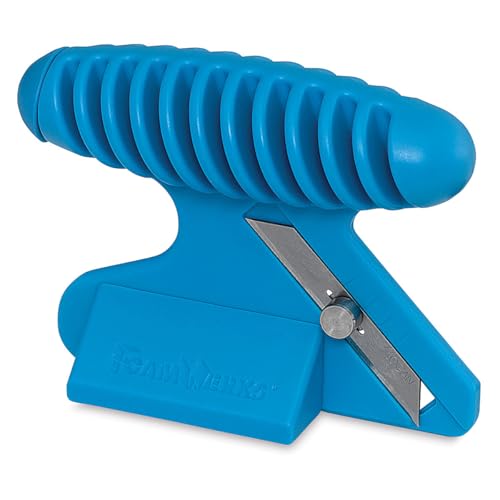
- Switches between straight and bevel cuts
- Adjustable blade depth
- Two blades and on-board storage
Best For: Guided foam board cuts for crafts and signs
Best for Upholstery Foam

- Six blades for replacement needs
- Hand-guided trimming and shaping
- Non-slip handle
Best For: Cushion resizing and upholstery foam repairs
Best for Craft Shapes
ORGANPRO 5-in-1 Hot Wire Cutter

- Multiple cutters for varied shapes
- Voltage settings for each cutter type
- 15 replacement hot wires
Best For: Models, displays, and compatible craft foams
Best for Toolbox Inserts

- Two utility knives and two scalpels
- Markers and template for layouts
- Replacement blades and gloves included
Best For: Custom toolbox and drawer foam inserts
Best for Thicker Foam – GONYTIA 190W Hot Knife
If you need a foam cutting tool for thicker pieces, this 190W hot knife includes two 6-inch and two 8-inch blades. Its 16 temperature settings let you adjust the heat for different materials.
Best For: Cutting thicker foam boards and shaping EPS, XPS, and other compatible foams.
Pros:
- Includes four stainless steel blades in two lengths.
- Adjustable heat and fast warm-up help match the cut to the material.
- Foldable stand provides a place to set the hot knife down during work.
Cons:
- A hot blade requires care when setting down or changing blades.
The longer blades make this the most practical choice here for substantial foam pieces, while the stand and included scraper add useful workbench convenience.
Most Versatile Craft Kit – 4-in-1 Hot Wire Foam Cutter
This foam cutting tool offers interchangeable heads for straight cuts, curves, grooves, and detailed designs. The kit also includes replacement wires, a cleaning brush, a metal holder, and a storage case.
Best For: Model making, decorations, and craft projects that call for several cutting shapes.
Pros:
- Multiple cutting heads support different shapes and details.
- Heated tips produce smooth edges with less loose foam debris.
- Case keeps the heads and accessories together between projects.
Cons:
- Switching between cut styles requires changing heads.
Choose this kit when flexibility matters more than sticking with one blade style; its organized accessories are especially useful for varied DIY projects.
Best for Pen-Style Detail Work – Cooltop 18W Foam Cutter
The Cooltop foam cutting tool uses three interchangeable tips—a hot wire, a holing tip, and an engraver tip—for shaping low-density foam. Its pen-style setup suits smaller cuts and decorative details.
Best For: Cutting, making holes, and engraving low-density foam board or blocks.
Pros:
- Three tips cover different detail tasks.
- Tips reach 100°C within 10 seconds, according to the product notes.
- ON/OFF switch, LED indicator, and included cleaning pen add convenience.
Cons:
- Not intended for very high-density, hard material.
- Manufacturer suggests a break after 30 minutes of use.
This is a sensible pick for light foam crafts where tip variety matters. Turn it off and let it cool before changing tips.
Best for Small Craft Projects – GOCHANGE 18W Hot Wire Kit
This 18W foam cutting tool is aimed at small-scale projects in softer, low-density materials such as EPS, EPP, pearl cotton, and KT board. Its different-length cutting wands help accommodate different foam thicknesses.
Best For: Small DIY crafts, foam carving, and detailed lettering in suitable low-density foam.
Pros:
- Heated cutting elements can make clean cuts while sealing foam edges.
- 5 cm and 11 cm tools offer options for different thicknesses.
- Product notes report a five-second warm-up to 160°C for both tools.
Cons:
- Not suitable for dense foam such as XPS or extruded boards.
- Intended for small-scale work, with breaks recommended during extended use.
Pick this kit for modest, detailed projects rather than dense boards or long cutting sessions. The supplied guidance also calls for ventilation while working.
Best for Versatility – WINONS WFC0010 Four-Tip Foam Cutter
If your foam cutting tool needs to handle both block shaping and surface detail, the WINONS WFC0010 offers two hot-wire tips and two straight tips in one 18W kit. The wire tips heat to 320°C in about five seconds, while the straight tips are intended for trimming and engraving.
Best For: Hobbyists and model makers who want to shape, trim, and engrave foam with one kit.
Pros:
- Four quick-change tips cover freehand cuts, detailed trimming, and engraving.
- Includes replacement wire, a scraper, a support frame, and table fixation.
- Hot-wire tips heat to 320°C in about five seconds.
Cons:
- Straight tips are not compatible with EVA.
- Use is limited to 40 minutes at a time before a cooling break.
The tip selection makes this a practical choice for projects that move from rough shapes to fine details. Plan for ventilation and safety goggles during use.
Best for Pattern Projects – 4-in-1 Hot Wire Foam Cutter Kit
This 18W foam cutting tool pairs a hot-wire tip with engraving and holing tips, giving DIY makers several ways to follow a pattern through foam board or blocks. A marker pen is included for drawing designs before cutting.
Best For: DIY foam projects that combine marked patterns, cutouts, and engraved details.
Pros:
- Four interchangeable tips include an 18cm hot wire and a 5cm holing tip.
- Includes a marker pen, replacement wire, and cutter holder.
- Has an on/off button and overheating protection.
Cons:
- The instructions recommend a break after 30 minutes of operation.
- Tips must cool after switching the tool off before they are changed.
The included marker makes this kit especially convenient when a project starts with a drawn outline. Allow time for heating and safe tip changes as you work.
Best for Straight and Bevel Cuts – Logan Foam Werks Cutter
For foam board rather than freehand hot-wire shaping, this manual foam cutting tool switches between straight and bevel cuts by rotating its angled base block. Adjustable blade depth helps tailor the cut to the board.
Best For: Crafters and sign makers who need guided straight or bevel cuts in foam board.
Pros:
- Rotating base changes between straight and bevel cutting.
- Adjustable blade depth and ergonomic handle.
- Includes two blades with on-board blade storage.
Cons:
- Designed for foam board cuts, not the freehand block shaping offered by a hot-wire tool.
- Requires a suitable straight edge for guided cuts.
Choose the Logan when clean, guided board cuts matter more than sculpting. Its manual blade design is a different fit from the heated tools above.
Best for Upholstery Foam – 8-Inch Sponge Cutting Knife
If your foam cutting tool needs to trim cushions rather than carve craft foam, this hand-guided knife is a practical option. Its 8-inch blade is intended for shaping sofa cushions, mattress foam, and similar materials.
Best For: Upholstery repairs, cushion resizing, and hand-trimming foam edges.
Pros:
- Six blades provide replacements for ongoing jobs.
- Hand-guided design helps with marked lines, corners, and small fit adjustments.
- Non-slip handle supports steady control.
Cons:
- Manual cutting takes more effort than a powered cutter.
- Cutting against hard surfaces can dull the blade.
Choose this set when you want a straightforward knife for soft foam and appreciate having spare blades on hand. Use a soft, non-metal work mat to help preserve the cutting edge.
Best for Craft Shapes – ORGANPRO 5-in-1 Hot Wire Cutter
For models, signs, and decorative shapes, this electric foam cutting tool offers several heated attachments instead of a single cutting edge. Its voltage controller has settings specified for the different cutter types, so setup matters before each accessory change.
Best For: Cutting and shaping compatible craft foams for models, displays, and DIY projects.
Pros:
- Includes bow, F-shaped, straight, and bending cutters for different cuts.
- Heated cutters melt through compatible foam while sealing edges.
- Comes with 15 replacement hot wires and a cleaning brush.
Cons:
- Not intended for plastic, high-density sponge, memory foam, or nylon fabric.
- Requires the appropriate voltage setting and periodic breaks during extended use.
This is the more versatile choice for detailed foam craft work, provided your material is compatible. Plan to adjust the voltage for each attachment and follow the stated 15-minute break after 30 minutes of continuous use.
Best for Toolbox Inserts – ONREVA Foam Cutting Kit
If you are building custom tool layouts, this foam cutting tool kit brings together knives, scalpels, markers, and a circle template for tracing and cutting insert shapes. It is designed for Kaizen foam, shadow foam, EVA foam, and polyethylene foam sheets.
Best For: Customizing foam inserts for toolboxes, drawers, service carts, and cases.
Pros:
- Includes 18mm and 9mm utility knives plus two scalpel handles for different cutout details.
- Replacement blades, deep-reach markers, and a circle template support layout work.
- Includes a pair of Level 5 cut-resistant gloves.
Cons:
- Manual cutting requires tracing and cutting each tool cavity by hand.
- Specialized around foam insert layouts rather than heated craft-foam shaping.
Pick this kit when the goal is organized, fitted tool storage: its included layout supplies make it more purpose-built for shadow-foam inserts than a standalone knife.
How We Picked These Foam Cutting Tools
We focused on the jobs buyers are most likely to tackle: shaping polystyrene for crafts, making straight or beveled cuts in foam board, trimming upholstery foam, and fitting foam inserts around tools. The selection includes heated-wire and hot-knife kits alongside unheated blades because no single cutting method handles every foam equally well. We considered each tool’s stated cutting method, included tips or blades, intended materials, and suitability for detailed versus long cuts. Treat a manufacturer’s material claims as a starting point, and check the instructions for your exact foam before cutting.
Quick Comparison: Match the Tool to the Job
Hot-wire or hot-knife kits suit polystyrene craft shapes, curves, and lettering when a clean, controlled cut matters. Kits with multiple tips offer more ways to carve or make straight cuts, though tip changes and warm-up add steps. Foam-board cutters are geared toward guided straight or beveled cuts. Long-bladed knives make more sense for thick sponge or cushion foam. Utility-knife kits provide the control needed to trace and remove layers from toolbox insert foam.
That distinction matters more than the number of attachments. A cutter intended for Styrofoam is not automatically the right choice for a sofa cushion, and a blade that trims an insert neatly may struggle with intricate polystyrene curves.
Key Buying Factors for a Foam Cutting Tool
Foam Type Comes First
Identify your material before comparing tools. EPS and similar polystyrene foams are common hot-wire applications, but not every foam is safe or practical to heat. For polyurethane cushion foam, EVA, and layered tool-insert foam, look for a tool that explicitly supports that material; a sharp manual blade is often the simpler choice. Never heat-cut unknown foam, and check for coatings or adhesives that could produce irritating fumes.
Cut Shape, Thickness, and Control
For curves and small details, consider wire shapes and carving tips. For repeatable straight edges or bevels, prioritize a guide or cutting tool designed for that purpose. Thick cushions call for adequate blade length and a steady cutting stroke. For shadow foam, look for control over cut depth so you can remove material in layers without slicing through the insert.
Workspace and Ongoing Costs
Heated cutters need a suitable work surface, ventilation, and time to cool before storage. Check the stated voltage and plug type, especially on listings that mention a broad voltage range. With any kit, review what is actually included: replacement wires, tips, blades, and a stand can affect the total cost and ease of use. Consumables may eventually need replacing.
Who Should Buy Which Foam Cutting Tool?
Craft makers and model builders: Start with a hot-wire kit if your projects use compatible polystyrene and need curves or small details. Foam-board users: Choose a straight/bevel cutter when neat, angled edges are the priority. Upholstery DIYers: Pick a long-bladed cutting knife matched to the thickness of your cushion or mattress foam. Toolbox organizers: Use a precision utility-knife kit made for layered foam inserts. If you work across several materials, expect to need more than one cutting method rather than forcing one Foam Cutting Tool to do every job.
