Grinding your own wheat, corn, oats, spices, and other dry ingredients can improve freshness and give you more control over texture. For large batches, however, capacity, motor performance, durability, and cleanup matter just as much as grinding quality.
We compared 10 grain mills for large batches, from powerful electric pulverizers and stone mills to hand-operated models and KitchenAid-compatible attachments. Use the guide below to match the mill type, capacity, and features to your baking, brewing, or pantry-preparation routine.
Best 10 Grain Mills for Large Batches Picks for 2026
Best All-Around Electric Mill
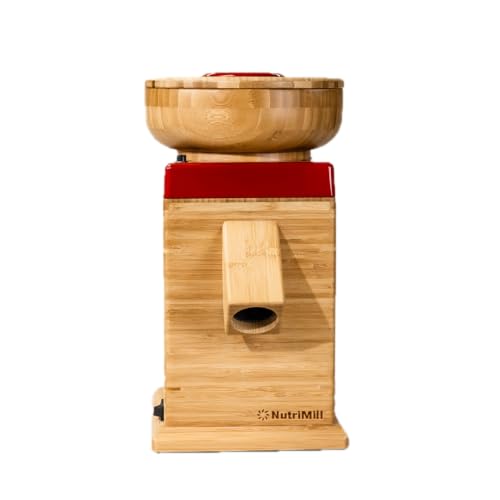
- 450-watt motor with thermal protection
- Corundum stones and adjustable texture control
- 450-gram capacity for home baking
Best For: Home bakers seeking adjustable stone-milled flour
Best Manual Workhorse
Country Living Hand Grain Mill

- Two-pound stated capacity
- Adjusts from cracked grain to cake flour
- Aircraft aluminum build with lifetime warranty
Best For: Manual milling and preparedness use
Best High-Speed Pulverizer
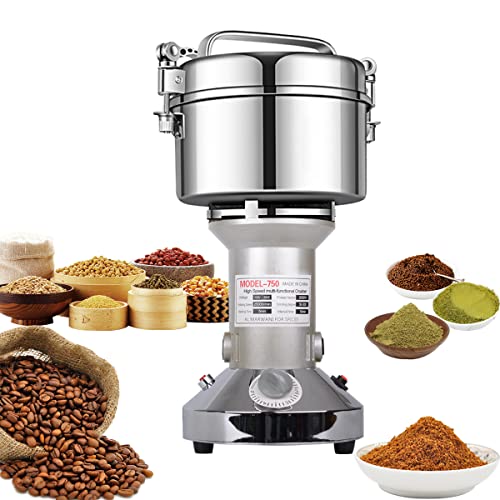
- 2,000-watt motor at 25,000 RPM
- 750-gram capacity with fine powder output
- Three-minute cycles for dry ingredients only
Best For: Fast, short-cycle grinding of dry grains and spices
Best Mixer Attachment
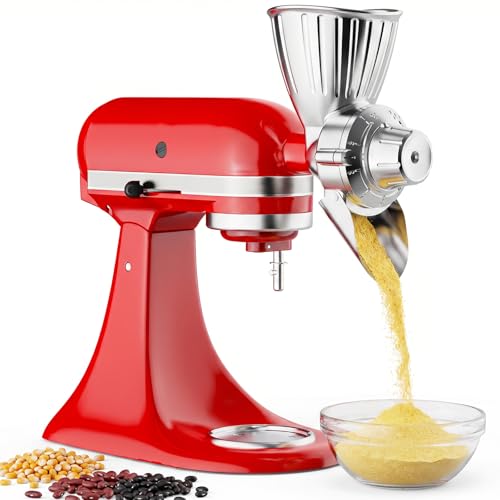
- Larger hopper for dry grains
- Nine coarse-to-fine grind settings
- All-metal design with brush cleaning
Best For: KitchenAid owners milling fresh flour at home
Best Manual All-Purpose Mill

- Produces up to 1.25 cups of flour per minute
- Stone and stainless steel burrs handle varied ingredients
- Clamps securely to a table or counter
Best For: Versatile manual milling, including grains, spices, oily foods, and nut butter
Best Large-Hopper Manual Mill
Lehman's Manual Power Grain Mill

- Large 6-cup hopper suits longer batch sessions
- 12-inch flywheel eases hand grinding
- Can be motorized or bolted to a work surface
Best For: Dry-grain milling for batch baking and self-sufficient food preparation
Best High-Capacity Electric Mill

- 3,000-gram chamber handles substantial batches
- 3,600-watt motor mills dry ingredients quickly
- 30- to 300-mesh output range with overload protection
Best For: High-volume dry milling at home, in cafés, or in small businesses
High-Speed Batch Grinder
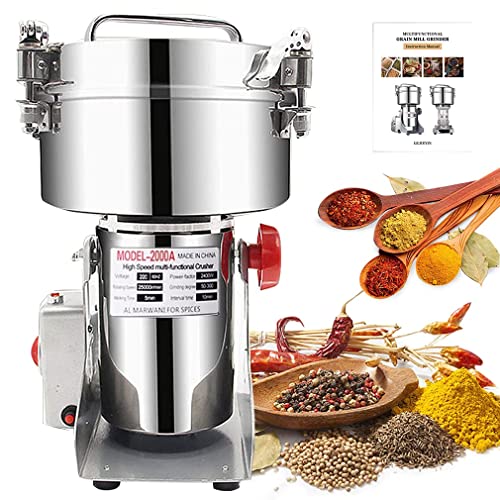
- 3000W motor with 28000 RPM grinding speed
- 50–300 mesh fineness for dry ingredients
- Timer, swing design, and overload protection
Best For: Fast, fine dry grinding in home kitchens and small processing settings
Homebrew Batch Mill
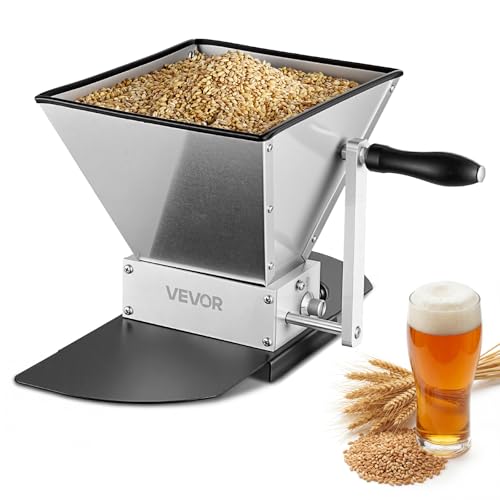
- 1.06-gallon hopper limits refill frequency
- Eight adjustable roller-gap settings
- Bucket-mount base improves stability
Best For: Home brewing with malt, barley, and wheat
Large-Capacity Power Mill
2500g Electric Grain Pulverizer

- 2500g capacity with a 3400W motor
- 32000 RPM speed and 30–300 mesh range
- 270-degree swing design with timer controls
Best For: Fast, high-volume grinding of dry grains and spices
Best All-Around Electric Mill – NutriMill Harvest
For shoppers comparing grain mills for large batches, the NutriMill Harvest combines a 450-watt motor with a 450-gram capacity and adjustable texture control. Its corundum milling stones are designed for fresh flour from various grains, while thermal protection adds a practical safeguard during home use.
Best For: Home bakers who want an adjustable electric stone mill for fresh flour and gluten-free baking.
Pros:
- 450-watt heavy-duty motor with auto-shutoff thermal protection
- Near-diamond-hard corundum stones for milling various grains
- Patented texture control knob adjusts the grind
- CSA tested and listed; designed and assembled in the USA
Cons:
- Its 450-gram capacity may require multiple fills for especially large batches
- Designed for home use rather than continuous commercial processing
The Harvest is a well-rounded choice when adjustable results and stone milling matter more than maximum hopper capacity. Its compact footprint and safety features make it practical for regular home baking.
Best Manual Workhorse – Country Living Hand Grain Mill
The Country Living Hand Grain Mill is a manually operated option for grain mills for large batches, with a stated two-pound capacity and adjustable output from cracked grain to cake flour. Its solid cast aircraft aluminum construction and industrial-grade ball bearings emphasize durability for repeated grinding.
Best For: Preparedness-minded users and home millers who prefer manual operation and adjustable grind sizes.
Pros:
- Two-pound capacity supports larger loads than many compact home mills
- Adjusts from cracked grain to cake flour
- Solid cast aircraft aluminum construction made in the USA
- Double-sealed industrial-grade ball bearings and lifetime warranty
Cons:
- Manual grinding requires physical effort
- Does not offer electric speed or motor-assisted convenience
This mill stands out for users who value mechanical simplicity, a substantial capacity, and long-term support. It is a strong fit when portability from an outlet is less important than manual control.
Best High-Speed Pulverizer – 750g Stainless Steel Grinder
For shoppers seeking grain mills for large batches with fast processing, this stainless steel grinder lists a 750-gram capacity, 2,000-watt motor, and 25,000 RPM speed. It can process dry grains, cereals, spices, herbs, and coffee, but its short three-minute operating limit requires rest periods between batches.
Best For: Users who need very fine powder from dry grains and other small, dry ingredients in short processing cycles.
Pros:
- 750-gram capacity and 2,000 watts for high-speed grinding
- Produces stated fineness from 50 to 300 mesh
- Stainless steel body with overload power protection
- Handles dry grains, spices, herbs, coffee, and similar ingredients
Cons:
- Must rest for 5–10 minutes after each three-minute grinding period
- Dry ingredients only; wet, moist, or oily materials cannot be ground
- Cleaning requires wiping rather than rinsing the motor housing
This machine offers a larger listed capacity and impressive speed, but it is not a continuous-duty mill. Buyers should be comfortable working in timed batches and following the dry-material and cleaning restrictions.
Best Mixer Attachment – HOZODO KitchenAid Grain Mill
The HOZODO attachment is a convenient route to grain mills for large batches when you already own a compatible KitchenAid stand mixer. Its larger hopper, nine grind settings, and all-metal die-cast aluminum construction support dry grains such as wheat, oats, and corn, though cooling breaks are recommended between batches.
Best For: KitchenAid owners who want fresh flour without purchasing a separate countertop mill.
Pros:
- Larger hopper supports grinding more dry grain at once
- Nine adjustable settings from coarse to fine
- Die-cast aluminum alloy construction
- Removable design and included brush simplify cleaning
Cons:
- Requires a compatible KitchenAid stand mixer
- Not intended for oily foods
- Requires 30–45 minute cooling breaks between batches
This attachment saves counter space and leverages equipment you may already own. It is best for home users who can plan around mixer and attachment cooling periods rather than those needing uninterrupted batch production.
Best Manual All-Purpose Mill – Wonder Junior Deluxe
For shoppers comparing grain mills for large batches, the Wonder Junior Deluxe is a versatile manual option that can produce up to 1.25 cups of flour per minute. Its dual burr setup handles dry grains as well as ingredients many electric mills cannot process.
Best For: Home users who want a durable hand-crank mill for flour, cracked grains, spices, oily foods, and nut butter.
Pros:
- Produces up to 1.25 cups of flour per minute.
- Includes stone and stainless steel burrs for dry, oily, and high-moisture ingredients.
- Handles grains, nuts, seeds, spices, coffee beans, and cocoa nibs.
- Double-clamp mount attaches securely without drilling.
Cons:
- Manual cranking requires physical effort for extended large-batch sessions.
- Its listed capacity is 1.25 cups, smaller than the hopper capacity of some batch-oriented mills.
This is a strong choice when ingredient flexibility and long-term durability matter more than hands-free speed. The locking adjustment knob also makes switching from fine flour to coarse cracked grain straightforward.
Best Large-Hopper Manual Mill – Lehman's Manual Power Grain Mill
Among grain mills for large batches, Lehman’s Manual Power Grain Mill stands out for its 6-cup hopper and momentum-building 12-inch flywheel. It is designed for dry grains and can be bolted to a work surface for added stability.
Best For: Users who prefer manual milling and need a larger hopper for wheat, corn, rye, rice, quinoa, and small beans.
Pros:
- Extra-large 6-cup hopper supports longer milling sessions.
- 12-inch iron V-belt flywheel provides momentum for easier hand grinding.
- Stainless steel burrs are electrolytically polished for a smooth grinding surface.
- Can be motorized and has four pre-drilled mounting holes.
Cons:
- Designed for free-flowing, dry grains rather than oily or wet ingredients.
- At 26 pounds, it is relatively heavy for a manual mill.
The generous hopper makes this a practical manual pick for batch baking, while the flywheel helps reduce the effort of turning the mill. Its dry-grain limitation should be considered before purchase.
Best High-Capacity Electric Mill – 3000G High-Speed Grain Mill
For shoppers seeking grain mills for large batches with electric speed, this 3000G model offers a 3,000-gram chamber and a 3,600-watt motor. It is built for dry ingredients and can produce powders ranging from coarse to superfine, provided its duty cycle is followed.
Best For: Home bakers, cafés, and small businesses processing large batches of dry grains, soybeans, coffee, spices, and herbs.
Pros:
- Large 3,000-gram, or 6.6-pound, capacity processes a substantial batch at once.
- 3,600-watt copper motor and 36,000 RPM rotation support fast milling.
- Adjustable output range from 30 to 300 mesh.
- Overload protection and a 270-degree swing design add convenience and safety.
Cons:
- For dry, oil-free ingredients only; the chamber should be filled no more than two-thirds full.
- Requires a 3-minute grinding cycle followed by a 5- to 10-minute cooldown.
- Cleaning is limited to wiping the chamber; the blades require care because of their sharpness.
This model offers the highest stated batch capacity of the three, making it the most suitable for high-volume electric milling. Its cooldown requirements and dry-ingredient restriction are important for planning repeated batches.
High-Speed Batch Grinder – 2000g Electric Grain Mill
For shoppers comparing grain mills for large batches, this 3000W electric grinder offers a roomy 2000g capacity and fast 28000 RPM operation. Its stainless-steel construction, timer, swing design, and overload protection make it suited to dry grains, spices, herbs, coffee, and nuts, though its short run cycles require planned batch work.
Best For: Home kitchens and small food-processing tasks that need superfine dry powders with minimal manual effort.
Pros:
- 2000g capacity and 50–300 mesh fineness range support substantial dry-grinding jobs.
- Three-layer stainless-steel blades and 28000 RPM speed are designed for fine, uniform powder.
- Includes a 0–5 minute timer, 180-degree swing body, lid safety design, and overload protection.
Cons:
- Recommended operation is limited to three minutes at a time, followed by a 5–10 minute rest.
- It is intended for dry materials and should not be filled beyond two-thirds of the jar.
- The grinding tank should be cleaned with a damp cloth or brush rather than rinsed directly.
This model is a practical choice when speed and fine results matter more than uninterrupted operation. The timer and swing mechanism add convenience, but large workloads will need pauses between cycles.
Homebrew Batch Mill – VEVOR Manual Malt Grinder
Among grain mills for large batches, this manual VEVOR model stands out for its 1.06-gallon hopper, bucket-mount base, and adjustable roller gap. It is designed specifically for crushing malt, barley, and other brewing grains while helping preserve husks for more effective mash extraction.
Best For: Home brewers who want a stable, high-capacity manual mill for barley, malt, and wheat.
Pros:
- The 4L hopper reduces how often you need to refill during larger brewing batches.
- Two stainless-steel rollers and eight gap settings allow control over the crush size.
- Detachable metal base plate mounts to a bucket and directs crushed grain neatly downward.
Cons:
- Manual operation requires more physical effort than an electric grain mill.
- The manufacturer does not recommend it for corn.
- Its intended use is brewing grain and malt rather than general-purpose powder grinding.
This is the more specialized option for brewing workflows. Its large hopper and bucket-mounted stability suit repeated malt crushing, while adjustable rollers help tailor the crush to different brewing requirements.
Large-Capacity Power Mill – 2500g Electric Grain Pulverizer
For grain mills for large batches that prioritize capacity and speed, this 3400W VEVOR pulverizer handles up to 2500g of dry material and can produce fine powder in as little as 30 seconds. Its 32000 RPM motor, swing body, timers, and safety features make it a strong fit for demanding dry-grinding tasks.
Best For: Users processing large amounts of dry grains, coffee beans, spices, and nuts who want fast, fine results.
Pros:
- 2500g maximum capacity is the largest listed here for high-volume dry grinding.
- 3400W power and 32000 RPM speed can process dry ingredients into powder quickly.
- Offers 30–300 mesh fineness, 5-, 15-, and 30-second timers, plus a 270-degree swing design.
- Overload protection, lid-open auto stop, and a locking lid add operating safeguards.
Cons:
- It is not suitable for wet, fresh, oily, or sticky materials.
- Continuous operation is limited to five minutes, followed by a 5–10 minute rest.
- Direct washing or rinsing is not recommended; cleaning requires a damp cloth and brush.
With the highest capacity and power in this group, this model is well suited to quick, repeated dry-grinding sessions. Its cycle limits and material restrictions are important considerations for truly continuous production.
How We Picked the Best Grain Mills for Large Batches
We focused on the features that make repeated or high-volume grinding more practical: hopper and chamber capacity, motor power or manual leverage, grinding speed, adjustment options, construction materials, safety controls, and ease of cleaning. We also considered the different jobs these mills perform, because a machine suited to fine flour may not be the best choice for cracked grain, malt, nuts, oily seeds, or spices.
The selection includes countertop electric mills, traditional stone mills, hand-crank designs, roller crushers, and stand-mixer attachments. Product specifications should be checked carefully before purchase, particularly supported ingredients, duty-cycle limits, voltage, and whether accessories are included.
Quick Comparison
- Best for convenient daily flour: Electric stone mills offer consistent hands-off operation and adjustable textures.
- Best for power-free use: Manual mills work during outages and can provide excellent control, but require more effort.
- Best for very fast grinding: High-wattage stainless-steel pulverizers process dry ingredients quickly, though they may be less suitable for continuous commercial workloads.
- Best for brewing: Adjustable roller mills are designed for cracking and crushing malt rather than producing fine baking flour.
- Best for occasional use: A KitchenAid attachment can save counter space if you already own a compatible stand mixer.
Key Buying Factors for Grain Mills for Large Batches
Capacity and Batch Workflow
A larger hopper or grinding chamber reduces refilling, but capacity figures are not always directly comparable. Look for the manufacturer’s stated grain capacity and consider how easily the machine can be emptied between batches.
Power, Speed, and Duty Cycle
Higher wattage can support faster grinding, but it does not guarantee finer flour or continuous-duty performance. Check for overheating protection, timers, cooling requirements, and recommended rest periods if you plan to process several batches in one session.
Grinding Method and Adjustability
Stone mills are popular for flour and adjustable textures. Impact-style pulverizers are often faster for dry grains and spices, while roller mills are better for cracked malt. A manual burr or stone mill offers control without electricity but demands more physical work.
Materials, Safety, and Cleanup
Metal housings and stainless-steel grinding chambers can improve durability, while removable parts make maintenance easier. Confirm that the mill is intended for your ingredients, and never process wet or excessively oily foods unless the instructions specifically allow it.
Who Should Buy Which Grain Mills for Large Batches?
Choose an electric stone mill if you regularly bake bread or need fresh flour with minimal effort. Pick a high-speed stainless-steel grinder if rapid processing of dry grains, corn, or spices is your priority and you can work within its batch limits. A manual model is the better fit for off-grid use, emergency preparedness, or users who value long-term simplicity over speed.
Brewers should choose an adjustable roller mill for controlled malt crushing, while KitchenAid owners may prefer an attachment to avoid adding another full-size appliance. For the best result, match the mill to your primary ingredient and expected batch size rather than choosing solely by motor wattage.
