The best hard drive docking stations for Mac make it easier to access, clone, migrate, and back up bare internal drives without installing them in an enclosure. They are especially useful for photographers, IT technicians, home-office users, and anyone repurposing older SATA drives.
Our 2026 picks include compact single-bay docks, faster USB-C models, dual-bay cloning stations, and versatile options that support both SATA and NVMe storage. Use the guide below to match the dock’s interface, drive compatibility, and workflow features to your Mac setup.
Best 10 Hard Drive Docking Stations for Mac Picks for 2026
Best Simple SATA Pick

- Single-bay dock for bare 2.5- and 3.5-inch SATA drives
- Includes 12V adapter for 3.5-inch HDDs
- USB-A connection with macOS plug-and-play support
Best For: Accessing one bare SATA drive at a time
Best Dual-Bay Mac Option

- Accesses two 2.5- or 3.5-inch SATA drives simultaneously
- USB-C and USB-A cables included
- Independent switches and internal power supply
Best For: Managing two bare SATA drives at once
Best Value SATA Dock
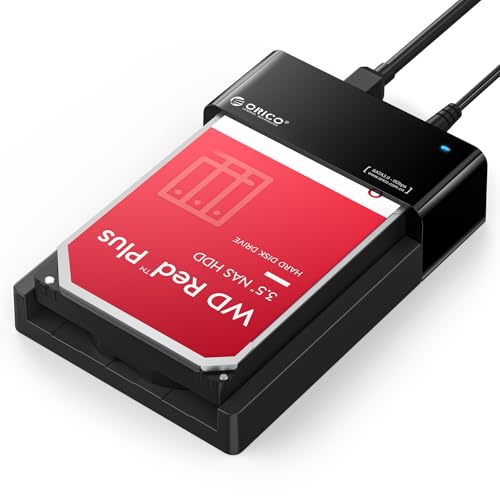
- Supports one SATA HDD or SSD up to 24TB
- Includes power adapter, cable, and converter
- UASP-enabled and compatible with macOS
Best For: Affordable tool-free SATA access and backups
Best Versatile Format Support

- Handles M.2 NVMe plus 2.5- and 3.5-inch SATA drives
- 10Gbps USB-C with USB-C and USB-A cables included
- Supports offline cloning without a computer
Best For: Mixed-drive access and standalone cloning
Best USB-C Cloner

- Offline cloning without a computer
- Reads and writes two SATA drives
- USB-C, hot-swap, and tool-free design
Best For: USB-C Mac users cloning or managing two SATA drives
Best Established Dual-Bay Dock

- Supports 2.5-inch and 3.5-inch SATA drives
- Plug-and-play Mac and Windows support
- Hot swap and two-year warranty
Best For: Simple dual-size SATA drive access on Mac
Best USB 3.0 Cloner

- Offline cloning up to 60Mbps
- Supports two 2.5-inch or 3.5-inch SATA drives
- Plug-and-play USB 3.0 connectivity
Best For: Budget-conscious users cloning standard SATA drives
Dual-Drive Workhorse

- Two independent bays for 2.5-inch and 3.5-inch SATA drives
- Offline cloning without a computer
- Manual mode switch helps prevent operation errors
Best For: Drive cloning and working with two SATA disks
High-Speed USB-C Pick

- USB 3.2 Gen 2x1 supports up to 10Gbps
- Includes USB-A and USB-C cables
- Tool-free hot-swapping for 2.5-inch and 3.5-inch SATA drives
Best For: Fast single-drive access on USB-C or USB-A Macs
Best Simple SATA Pick – Sabrent USB 3.0 SATA Dock
If you need one of the straightforward hard drive docking stations for Mac, the Sabrent EC-DFLT offers tool-free access to a single bare 2.5-inch or 3.5-inch SATA drive. Its USB Type-A connection works with Macs that have a compatible USB-A port; USB-C-only computers require a separate adapter.
Best For: Accessing or swapping one bare SATA HDD or SSD at a time.
Pros:
- Supports 2.5-inch and 3.5-inch SATA I/II/III drives and SSDs.
- Includes the 12V power adapter required for 3.5-inch drives.
- Tool-free, hot-swappable design with plug-and-play support for macOS.
- UASP support and backward compatibility with USB 2.0 and USB 1.1.
Cons:
- Supports SATA drives only; it does not support IDE/PATA, M.2, SAS, or drives already inside USB enclosures.
- Uses USB Type-A rather than a built-in USB-C connection.
- Single-bay design and no S.M.A.R.T. diagnostics passthrough.
This is a practical, compact choice for occasional drive recovery, upgrades, and file transfers, provided your Mac has USB-A access or you already have an adapter.
Best Dual-Bay Mac Option – OWC Drive Dock Dual Bay
The OWC Drive Dock is a strong option among hard drive docking stations for Mac when you need to access two bare SATA drives at once. It provides USB-C connectivity, includes USB-C-to-C and USB-C-to-A cables, and supports simultaneous operation with independent power switches.
Best For: Mac users who regularly work with two 2.5-inch or 3.5-inch SATA drives.
Pros:
- Dual bays allow simultaneous access to two SATA drives.
- Works with both 2.5-inch and 3.5-inch drives.
- Includes USB-C and USB-A connection cables for newer and older computers.
- Internal power supply and independent power switches add convenience.
Cons:
- Supports SATA drives, not M.2 or other drive formats.
- Larger and heavier than a basic single-bay dock.
- Listed warranty information is inconsistent: the supplied notes mention both a two-year limited warranty and “No Warranty.”
With two bays and flexible cable options, this dock is particularly useful for comparing, transferring, or managing multiple bare SATA drives without repeatedly reconnecting hardware.
Best Value SATA Dock – ORICO USB 3.0 Lay-Flat Dock
The ORICO lay-flat dock is a practical choice for shoppers comparing hard drive docking stations for Mac on a budget. It accepts one bare 2.5-inch or 3.5-inch SATA drive, supports capacities up to 24TB per drive, and includes a 12V adapter, USB 3.0 cable, and adapter converter.
Best For: Tool-free SATA drive access, backups, and drive migration on a Mac with USB-A connectivity.
Pros:
- Supports 2.5-inch and 3.5-inch SATA I/II/III HDDs and SSDs up to 24TB.
- UASP-enabled USB 3.0 interface with backward compatibility.
- Tool-free, hot-swappable lay-flat design with a 12V adapter included.
- Advertised compatibility with macOS, Windows, and Linux.
Cons:
- Uses USB Type-A rather than a native USB-C port.
- Single-drive bay and SATA-only support.
- Its 5Gbps interface is slower than newer 10Gbps USB-C docks.
This model covers the essentials well: broad SATA drive support, included power, and simple swapping. It is best suited to Macs with USB-A ports or users who already own a suitable adapter.
Best Versatile Format Support – Sabrent NVMe and SATA Dock
The Sabrent DS-UFNC stands out among hard drive docking stations for Mac because it handles both M.2 PCIe NVMe SSDs and 2.5-inch or 3.5-inch SATA drives. Its 10Gbps USB-C interface, included USB-C and USB-A cables, and offline cloning feature make it a flexible choice for mixed-drive workflows.
Best For: Mac users who need one dock for NVMe SSDs, SATA drives, and offline drive cloning.
Pros:
- Supports M.2 PCIe NVMe 2242, 2260, and 2280 SSDs plus 2.5-inch and 3.5-inch SATA drives.
- 10Gbps USB 3.2 Gen 2 interface with both USB-C-to-C and USB-A-to-C cables included.
- Offline cloning works without a computer when the target is equal to or larger than the source.
- Tool-free design, included 12V adapter, and compatibility with macOS, Windows, and Linux.
Cons:
- Only one drive can be connected in the dock at a time for normal access.
- Actual transfer speeds depend on the installed drive and host connection.
- Drives are not included.
If your storage collection includes both NVMe and SATA media, this is the most adaptable option in the group. It also adds useful standalone cloning, though careful attention to source and target selection is essential.
Best USB-C Cloner – Dual-Bay SATA Dock
For Mac users comparing hard drive docking stations for Mac, the SABRENT EC-CH2B is a practical USB-C option for reading and writing two bare SATA drives. It also works as an offline cloner, copying one drive to another without a computer.
Best For: Mac users with a USB-C port who need dual-drive access and offline SATA cloning.
Pros:
- Clones one SATA drive to another without a computer.
- Mounts two 2.5-inch or 3.5-inch SATA drives simultaneously.
- Tool-free, hot-swappable design with separate drive LEDs.
- Includes a USB-C cable and supports plug-and-play use on Mac.
Cons:
- Supports SATA drives only; it does not support IDE/PATA, M.2, or NVMe drives.
- The included cable requires a USB-C port on the computer.
- Offline cloning runs at up to 60MBps, and actual USB transfer speeds depend on the drives.
This is a strong fit when USB-C connectivity and simple drive duplication matter most. Confirm your Mac has USB-C and that your drives are SATA before ordering.
Best Established Dual-Bay Dock – Thermaltake BlacX Duet
The Thermaltake BlacX Duet is a straightforward choice among hard drive docking stations for Mac, supporting both 2.5-inch and 3.5-inch SATA drives over USB 3.0. Its plug-and-play setup and hot-swap capability make it convenient for routine drive access.
Best For: Mac users wanting a simple dual-size SATA dock with hot swapping and a two-year warranty.
Pros:
- Supports 2.5-inch and 3.5-inch SATA I/II/III drives.
- Works with Windows and Mac OS without software installation.
- USB 3.0 supports transfer rates up to 5.0Gbps.
- Offers hot swapping and a two-year warranty.
Cons:
- The supplied notes do not list offline cloning capability.
- USB 3.0’s maximum rate is a theoretical interface speed; drive performance may be lower.
- It is heavier than the other listed docks at 1.8 pounds.
Choose the BlacX Duet when compatibility with both common SATA drive sizes and a longer stated warranty are priorities. It is best suited to direct drive access rather than standalone cloning.
Best USB 3.0 Cloner – SABRENT Dual-Bay Dock
The SABRENT EC-HD2B is a value-focused option for hard drive docking stations for Mac, with two bays for standard 2.5-inch and 3.5-inch SATA drives. It combines plug-and-play computer access with offline cloning and support for drives up to 10TB.
Best For: Users who need an affordable USB 3.0 dock for two standard SATA drives and occasional offline cloning.
Pros:
- Supports standard 2.5-inch and 3.5-inch SATA hard drives and SSDs.
- Provides offline cloning at up to 60Mbps.
- USB 3.0 transfer speeds reach up to 5Gbps, with backward compatibility to USB 2.0 and 1.1.
- Plug-and-play operation requires no drivers.
Cons:
- The supplied notes specify support for drives up to 10TB.
- Offline cloning is limited to up to 60Mbps.
- It uses USB 3.0 rather than USB-C.
This dock makes sense for Mac users who already have a suitable USB connection and want cloning without adding software. Check the capacity of your drives and your Mac’s available USB port before purchase.
Simple SATA Stand – Single-Bay USB 3.0 Dock
If you need a straightforward option among hard drive docking stations for Mac, this single-bay SABRENT dock handles standard 2.5-inch and 3.5-inch SATA HDDs and SSDs. It connects over USB 3.0, includes the required AC adapter, and supports hot-swapping when the drive is not being accessed.
Best For: Mac users who need to access or swap one SATA drive at a time.
Pros:
- Supports 2.5-inch and 3.5-inch SATA HDDs and SSDs up to 20TB.
- USB 3.0 with UASP offers transfer rates up to 5Gbps.
- Includes the power adapter and USB cable.
- Power and data-activity LEDs make operating status easy to check.
Cons:
- Supports SATA drives only—not SAS or M.2 NVMe drives.
- Requires the included AC adapter; it is not USB bus-powered.
- New or blank drives must be initialized in macOS Disk Utility before appearing.
Its single-drive design keeps the setup compact and uncomplicated. The automatic sleep function can help during idle periods, while the clear setup requirements are worth noting before connecting a new disk.
Dual-Drive Workhorse – USB 3.0 SATA Cloner Dock
For Mac users comparing hard drive docking stations for Mac with cloning features, the SSK DK103 adds two independent SATA bays and offline duplication. Its manual mode switch separates cloning from computer data-transfer mode, helping reduce accidental operation.
Best For: Users who need to access two SATA drives or clone one drive to another without a computer.
Pros:
- Supports two 2.5-inch or 3.5-inch SATA HDDs or SSDs simultaneously.
- Performs offline drive cloning without connecting to a computer.
- Includes LED indicators for power, drive position, and cloning progress.
- Aluminum construction and a stable drive bay support heat dissipation and steady transfers.
Cons:
- Does not support hot-plugging.
- Cloning and transfer functions require manually switching modes.
- Uses USB 3.0, with transfers specified up to 5Gbps.
The DK103 is more versatile than a basic single-bay dock, particularly for drive migration and backups. Follow the mode-switching instructions carefully, and power it with the included 12V/3A adapter.
High-Speed USB-C Pick – 10Gbps USB-C SATA Dock
This SABRENT model is a strong choice among hard drive docking stations for Mac when your computer has USB-C or USB-A connectivity. It accepts 2.5-inch and 3.5-inch SATA drives, includes both cable types, and reaches up to 10Gbps through USB 3.2 Gen 2×1.
Best For: Mac users seeking a fast, tool-free dock for one SATA HDD or SSD.
Pros:
- USB 3.2 Gen 2×1 supports transfer rates up to 10Gbps.
- Works with both USB-C and USB-A connections using the included cables.
- Tool-free, hot-swappable design makes drive changes quick.
- Supports 2.5-inch and 3.5-inch SATA drives, including capacities of 20TB and larger.
Cons:
- Handles one drive at a time.
- Requires external power for 3.5-inch drives.
- Its top speed depends on the host port, cable, and drive.
With broad Windows, macOS, and Linux compatibility and both USB cable options included, the DS-UC1B is a flexible single-bay choice. Its retractable dust cover and tool-less slot also suit frequent backup and drive-swapping tasks.
How We Picked the Best Hard Drive Docking Stations for Mac
We focused on docking stations that offer practical compatibility with modern Mac computers and common 2.5-inch and 3.5-inch SATA drives. We compared connection standards, stated transfer speeds, bay configuration, drive-format support, cloning capabilities, power requirements, and ease of use. Models with USB-C connectivity, UASP support, dual-bay operation, or NVMe compatibility received extra consideration when those features provide a clear workflow benefit.
A dock does not replace a backup strategy, and advertised interface speeds are theoretical maximums. Real-world performance depends on the drive, cable, Mac port, file system, and workload.
Quick Comparison
- Best for a single SATA drive: Choose a compact single-bay dock such as the Sabrent EC-DFLT, EC-UBLB, or DS-UC1B.
- Best for two drives: Dual-bay models from OWC, Sabrent, Thermaltake, or SSK simplify drive-to-drive access and cloning.
- Best for faster USB-C connections: Look for USB 3.2 Gen 2 or 10Gbps models, including the OWC Drive Dock and compatible Sabrent docks.
- Best for mixed storage: The Sabrent DS-UFNC is designed for both NVMe and SATA drives, making it more flexible for upgrades and migrations.
- Best for cloning: Select a dual-bay cloner when you want drive-to-drive duplication without routing data through a Mac.
Key Buying Factors for Hard Drive Docking Stations for Mac
Drive and Interface Compatibility
Confirm whether the dock accepts 2.5-inch SATA drives, 3.5-inch SATA drives, M.2 NVMe drives, or a combination. SATA and NVMe are different standards, so an ordinary SATA dock cannot read an NVMe SSD. Also check whether your Mac has USB-A, USB-C, or Thunderbolt ports and use an appropriate, quality cable.
Speed and Sustained Performance
USB 3.0 is adequate for many hard drives, while 10Gbps USB-C is more useful for SATA SSDs and large transfers. A faster dock will not make a mechanical hard drive exceed its physical limits, but it can reduce interface bottlenecks when using solid-state storage.
Power and Physical Design
Most 3.5-inch drives require dedicated power, so verify that the dock includes a suitable adapter. A vertical dock saves desk space, while a lay-flat design can be steadier for frequent drive swaps. Look for a firm base, accessible eject or power controls, and protection against accidentally inserting a drive at an angle.
Cloning and MacOS Use
Hardware cloning can copy one drive to another without a computer, but the destination generally needs to be equal to or larger than the source. For normal Mac access, check that the dock works with the file systems you use, such as APFS, HFS+, exFAT, or NTFS with suitable software. Safely eject drives before removing them.
Who Should Buy Which Hard Drive Docking Stations for Mac?
Choose a simple single-bay dock if you occasionally recover files, test a spare drive, or rotate backup disks. Pick a dual-bay model if you regularly clone, migrate, or compare two drives. USB-C users who transfer large SSD-based libraries should prioritize a 10Gbps model. If your storage collection includes both M.2 NVMe and conventional SATA drives, select a dual-standard dock rather than buying separate hardware. Finally, professionals handling valuable data should favor a sturdy, powered design and maintain an additional independent backup.
