Graphic design demands room for canvas, tools, references, and communication. A laptop screen extender can add practical workspace without replacing your mobile setup with a full desktop workstation.
These 10 picks cover portable 1080p displays, dual- and triple-screen configurations, detachable designs, and USB-C or HDMI connectivity. Use the guide below to choose based on your laptop, workflow, and travel needs.
Best 10 Laptop Screen Extenders for Graphic Design Picks for 2026
Best Portable FHD Pick
KEFEYA 14-Inch Laptop Screen Extender

- 14-inch FHD IPS display with 300-nit brightness
- Landscape, portrait, mirror, and extended modes
- USB-C and HDMI connectivity with included cables
Best For: Mobile designers and remote workers
Best Laptop-Safe Stand Design
P7 15.6-Inch Triple Monitor Extender
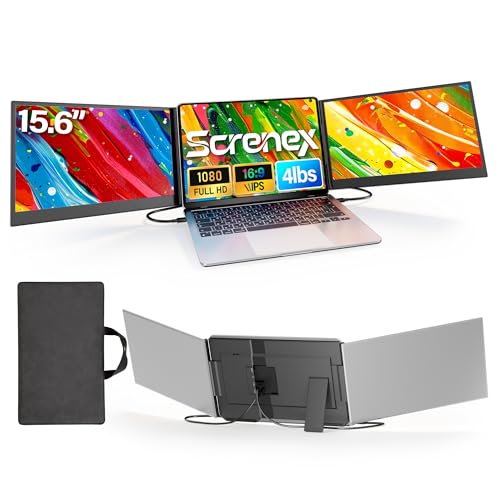
- Freestanding design avoids laptop-screen clamping
- Two 15.6-inch FHD IPS panels
- Includes cables, adapter, and carrying handbag
Best For: Stable home, office, and travel workspaces
Best Lightweight Dual-Screen Extender

- Weighs just 1.87 pounds
- No-driver setup with included cables
- Supports portrait, mirror, and extend modes
Best For: Designers who travel frequently and need a compact second screen
Triple-Screen Productivity
15.6-inch Portable Triple Monitor
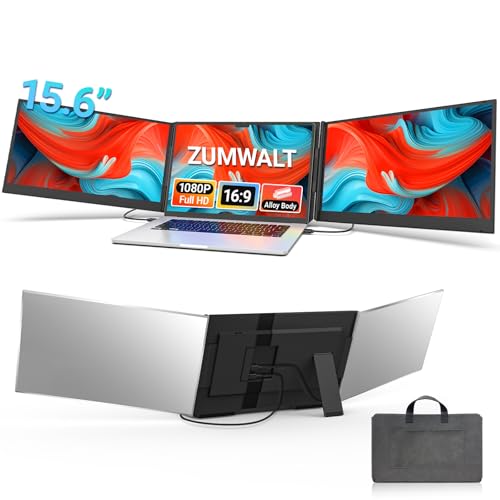
- Adds two 15.6-inch FHD displays
- Supports portrait, mirror, and extend modes
- Aluminum shell with carrying bag
Best For: On-the-go designers managing several applications
Best Portable FHD Pick – KEFEYA 14-Inch Laptop Screen Extender
For shoppers comparing laptop screen extenders for graphic design, the KEFEYA offers a compact 14-inch FHD IPS display with a matte finish and adjustable picture settings. Its USB-C and HDMI connectivity, broad compatibility, and 180-degree rotation make it a flexible choice for mobile creative work, presentations, and multitasking.
Best For: Designers and remote workers who want a portable secondary screen with flexible viewing modes.
Pros:
- 14-inch 1920×1080 IPS display with 300-nit brightness and 72% NTSC color gamut.
- Supports mirror, extended, landscape, and portrait modes.
- Includes USB-C, USB-C-to-USB-A, and HDMI cables.
- Compatible with Windows, Mac, Android, Chrome, Linux, and selected consoles.
Cons:
- HDMI use requires an additional USB-A connection for power.
- Its 14-inch size provides less workspace than larger 15.6-inch options.
The KEFEYA is a practical balance of portability and image quality. It is especially appealing when desk space and travel weight matter, though users seeking the largest possible canvas may prefer a 15.6-inch extender.
Best Large Dual-Panel Setup – KYY 15.6-Inch Triple Screen Extender
The KYY is a substantial option among laptop screen extenders for graphic design, adding two 15.6-inch FHD IPS panels for a triple-screen workstation. Its wide viewing angles, adjustable stand, rotating screens, and one-cable USB-C connection support expansive layouts for design tools, references, and communication.
Best For: Designers who want two large external panels for a more spacious, multi-monitor workflow.
Pros:
- Two 15.6-inch 1920×1080 IPS screens with 178-degree viewing angles.
- Each screen rotates from 0 to 360 degrees for flexible positioning.
- One USB-C-to-USB-C cable can connect the extender to a compatible laptop.
- Includes cables and a power adapter.
Cons:
- Drivers must be downloaded before use.
- Not compatible with PS5, Xbox Series X, and other gaming consoles.
- The larger dual-panel design is less compact than a single portable monitor.
With two full-size panels, the KYY is well suited to users who prioritize workspace over minimal packing size. Confirm your laptop’s USB-C video capability and operating-system support before buying.
Best Flexible Triple-Screen Design – Detachable 15.6-Inch Monitor Extender
This detachable model stands out among laptop screen extenders for graphic design with 15.6-inch FHD IPS screens, broad rotation, and multiple configurations. It can create a triple-screen workspace for simultaneous applications or separate into individual displays for travel, collaboration, and presentations.
Best For: Designers who need adaptable landscape, portrait, stacked, and detachable screen arrangements.
Pros:
- 15.6-inch 1080p IPS screens with low-blue-light, anti-glare, and flicker-free features.
- Supports 235-degree horizontal and 90-degree vertical rotation.
- Detachable design allows a single side to be used independently.
- Connects through USB-C, USB-A, or HDMI without requiring drivers according to the supplied notes.
Cons:
- Compatibility is limited on some Apple silicon models, including M1, M2, and M3 chips as specified.
- HDMI connection requires an additional USB-A cable for power.
- Glossy screen finish may reflect more light than a matte panel.
The flexible hardware makes this a strong choice for creatives who change their setup frequently. Its detachable construction adds travel versatility, while the Apple silicon compatibility note warrants careful checking before purchase.
Best Laptop-Safe Stand Design – P7 15.6-Inch Triple Monitor Extender
The P7 is a useful candidate among laptop screen extenders for graphic design when stability and laptop protection are priorities. Its free-standing design avoids hanging from the laptop display, while two 15.6-inch FHD IPS panels provide a large extended workspace for creation and multitasking.
Best For: Creators who want a stable, freestanding triple-screen setup for home, office, or travel use.
Pros:
- Two 15.6-inch FHD IPS panels with 178-degree viewing angles.
- Freestanding, non-slip stand avoids clamping onto the laptop screen.
- Supports mirror, extended, and portrait display modes.
- Includes connection cables, power adapter, quick guide, and carrying handbag.
Cons:
- At 3.9 pounds, it is heavier than the 14-inch option in this roundup.
- Two-cable plug-and-play setup requires a laptop with two full-function USB-C ports.
- M1–M3 MacBooks require an extra H5-T cable and driver installation according to the supplied notes.
The P7’s stand is its defining advantage, offering a secure setup without placing the extender’s weight on the laptop lid. It is a strong fit for desk-based creative work, provided your laptop meets the connection requirements.
Best One-Cable Triple-Screen Extender – 15.6-inch FHD IPS
For graphic design workflows that benefit from a large canvas, this laptop screen extender for graphic design adds a 15.6-inch Full HD IPS display and supports a triple-screen setup. Its one-cable USB-C connection carries video and power, while Windows and macOS compatibility—including M1 through M5 Macs—makes it a flexible choice, though driver installation is required.
Best For: Designers who want a larger 15.6-inch workspace and a portable triple-monitor arrangement.
Pros:
- 15.6-inch 1920×1080 IPS display with a 178-degree viewing angle.
- One-cable USB-C connection can carry both video and power.
- Fits 13- to 17.3-inch laptops and includes a carrying case.
- Supports Windows and all listed macOS versions, including M1-M5 models.
Cons:
- Driver installation is required.
- The extender weighs about 4 pounds, making it less travel-friendly than lighter options.
- Low-power laptops may require the included power adapter to prevent flicker.
This model stands out when screen area and broad Mac compatibility matter more than minimizing carry weight. The matte IPS panel, adjustable mounting design, and single-cable setup make it a practical fit for mobile design stations.
Best Lightweight Dual-Screen Extender – 14.2-inch FHD IPS
This lightweight laptop screen extender for graphic design adds a second 14.2-inch Full HD IPS display without the bulk of a larger triple-monitor unit. At 1.87 pounds and 0.27 inches thick, it is designed for travel, and it supports extend, mirror, and portrait modes with no driver required.
Best For: Traveling designers, remote workers, and students who need a simple dual-screen setup.
Pros:
- Ultra-portable 1.87-pound, 0.27-inch-thick design.
- 1080p IPS display with 300-nit brightness.
- Supports extend, mirror, and portrait viewing modes.
- No driver required; cables for USB-C, HDMI, and USB-A connections are included.
Cons:
- Adds only one extra display rather than a triple-screen arrangement.
- Full-function USB-C is needed for the simplest direct connection.
- HDMI connections require a separate USB-A cable for power.
Choose this extender when portability and quick setup are central to your workflow. Its 14.2-inch IPS screen offers useful space for palettes, references, or communication tools while keeping the travel load relatively low.
Best Detachable Triple-Screen Extender – 15.6-inch FHD IPS
For designers who want multiple flexible viewing layouts, this laptop screen extender for graphic design uses two detachable 15.6-inch screens with a 1080p IPS display. The screens support horizontal, portrait, mirror, and rotating configurations, and the unit connects through USB-C, USB-A, or HDMI without requiring drivers.
Best For: Graphic designers who want a configurable triple-screen workstation for work, presentations, or travel.
Pros:
- Two detachable screens create a flexible triple-display setup.
- 15.6-inch 1080p IPS panels offer 300-nit brightness and 72% NTSC color gamut.
- Supports 90-, 235-, and 360-degree rotation configurations.
- Includes low-blue-light, flicker-free, anti-glare features, and built-in speakers.
Cons:
- Mac models with M1, M2, or M3 chips are not supported.
- HDMI use requires an additional USB-A-to-USB-C cable for power.
- The glossy screen finish may be less suitable for bright, reflective environments.
This is the most adaptable option of the three for users who value screen arrangement flexibility. Its detachable design and multiple rotation modes are useful for design references and multitasking, but Mac compatibility should be checked carefully before purchase.
Flexible FHD Workspace – Detachable 15.6-inch Extender
For graphic design workflows that benefit from a larger canvas, this laptop screen extender for graphic design adds a 15.6-inch Full HD IPS display to compatible 13- to 17.3-inch laptops. Its matte finish, 300-nit brightness, and detachable vertical-mount design make it useful for layouts, reference material, and portrait-oriented work.
Best For: Designers who want one portable second screen with horizontal and vertical viewing options.
Pros:
- 15.6-inch 1920×1080 IPS display with a matte finish and 300-nit brightness.
- Detaches and supports vertical mounting for portrait documents, dashboards, or video.
- Fits 13- to 17.3-inch laptops and includes Type-C, USB-A, and HDMI-related cables.
- Folds into a portable form and weighs about 1.5 pounds.
Cons:
- It adds only one extra display rather than creating a triple-screen setup.
- Some connections require both USB-A and HDMI when a full-function USB-C port is unavailable.
Choose this model if portability and flexible screen positioning matter more than having multiple extra panels. The detachable design is especially practical for designers who alternate between landscape editing and portrait-oriented reference work.
Triple-Screen Productivity – 15.6-inch Portable Triple Monitor
This triple-screen laptop screen extender for graphic design is built for creators who want more room for an editing workspace, reference images, and supporting tools at once. It adds two 15.6-inch 1080p displays and is designed for travel, with an aluminum shell, carrying bag, and simplified USB-C setup on compatible laptops.
Best For: Multitasking designers who need a portable three-screen workstation.
Pros:
- Two additional 15.6-inch 1920×1080 displays expand a laptop into a triple-screen setup.
- Supports extended, mirrored, and portrait display modes.
- Aluminum construction, included leather carry bag, and a slim portable design.
- Uses two USB-C cables on compatible full-function USB-C laptops.
Cons:
- At about 4 pounds, it is heavier than a single-screen extender.
- M1/M2/M3 MacBooks and laptops without full-function USB-C may require an additional H5-T cable and extra connections.
- Its glossy screen finish may be less suitable for glare-prone workspaces.
This is the most capable option for designers who regularly keep several applications visible. Confirm your laptop’s ports before buying, especially if you use an Apple silicon MacBook or lack full-function USB-C.
Color-Focused Triple Display – KEFEYA 15.6-inch Triple Extender
For graphic design users prioritizing color coverage and a compact travel setup, this laptop screen extender for graphic design combines two 15.6-inch FHD IPS panels with claimed 100% sRGB coverage. It supports landscape and portrait orientations, independent display adjustments, and multiple connection methods for compatible laptops.
Best For: Mobile designers who want a thin triple-screen setup with stated sRGB coverage.
Pros:
- Two 15.6-inch 1920×1080 IPS displays with claimed 100% sRGB coverage.
- 0.16-inch thin profile, foldable construction, and included leather bag.
- Supports mirror, extension, landscape, and portrait modes with 180-degree rotation.
- Includes USB-C and HDMI-related cables for supported connection setups.
Cons:
- At roughly 3.9 to 4 pounds, it is not a lightweight add-on.
- Macs with M1, M2, or M3 chips require a separate H6 adapter.
- USB-A to USB-C supports power only, so it cannot carry video.
The KEFEYA stands out on paper for its stated sRGB coverage and flexible orientation options. It is a strong fit for traveling creatives, provided your laptop supports the required video connections or you budget for the needed adapter.
How We Picked the Best Laptop Screen Extenders for Graphic Design
We focused on the features that matter most in a visual creative workflow: display resolution, IPS panel technology, screen size, connection options, portability, adjustability, and laptop compatibility. Every model here offers a 1080p Full HD display, which provides a useful workspace for palettes, layers, references, and secondary applications.
Because color-critical work can require calibrated professional monitors, these extenders are best viewed as productivity displays rather than replacements for a dedicated graphics monitor. We also considered whether a design supports dual or triple screens, vertical positioning, detachable use, and convenient travel.
Quick Comparison
| Feature | What to look for | Why it matters |
|---|---|---|
| Screen size | 14 to 15.6 inches | Balances workspace with portability |
| Resolution | 1920 × 1080 | Keeps text and interface elements reasonably sharp |
| Panel | IPS | Typically offers better viewing angles for collaborative work |
| Configuration | Dual or triple screen | Adds room for tools, references, or timelines |
| Connections | USB-C and/or HDMI | Improves compatibility across laptops |
Key Buying Factors for Laptop Screen Extenders for Graphic Design
Check Ports, Power, and Operating-System Support
USB-C is convenient, but not every USB-C port supports video output. Confirm that your laptop has DisplayPort Alt Mode if the extender uses USB-C for display. Some models may require HDMI for video plus USB for power, while others require drivers. Check support for your operating system before buying.
Choose the Right Screen Arrangement
A dual-screen extender is usually lighter and simpler for a laptop-based design workflow. Triple-screen models provide more space for references, email, asset folders, or tool panels, but they add weight and may demand more power and desk space. Detachable screens are useful when you sometimes want a standalone second monitor.
Prioritize Fit and Portability
Measure your laptop’s display size and check the supported range, including bezel clearance and thickness. A 15.6-inch extender may not be suitable for every 13-inch or compact laptop. For frequent travel, compare folded thickness, weight, hinges, protective storage, and how securely the unit attaches.
Set Realistic Expectations About Color
Look for an IPS panel and adjustable viewing angles, but do not assume factory calibration. For print production, photography, or brand-color matching, use a calibrated primary monitor and treat the extender as extra workspace.
Who Should Buy Which Laptop Screen Extenders for Graphic Design?
- For frequent travelers: Choose a lightweight, ultra-slim 14-inch or compact 15.6-inch model with simple plug-and-play operation.
- For multitasking designers: A triple-screen extender offers the most room for references, communication, and design tools.
- For flexible layouts: Select a detachable or rotating model if you want portrait orientation or occasional standalone use.
- For mixed laptop setups: Favor models with both USB-C and HDMI, then verify video-output and power requirements before purchase.
- For color-critical professionals: Buy based on connectivity and workspace first, but rely on a calibrated dedicated monitor for final color decisions.
