The best laser engravers make it easier to personalize wood, leather, acrylic, metal, glass, and other materials at home or in a small workshop. This roundup compares 10 machines across beginner, hobbyist, enclosed, portable, and higher-output categories.
Use the buying guide below to match engraving power, work area, safety features, software, and budget to the projects you actually plan to make.
Best 10 Laser Engravers Picks for 2026
Best High-Power Pick

- 40W laser cuts thick wood efficiently
- Large bed with rotary and passthrough support
- Enclosed design with multiple safety features
Best For: Large projects and higher-volume production
Best Maker Value

- 300-by-300mm working area
- Air-assist-ready design for cleaner cuts
- Works with LightBurn and LaserGRBL
Best For: Makers and small-business projects
Best Compact Starter
ACMER S1 2.5W Portable Engraver

- Lightweight, compact 2kg-class design
- 99% preassembled for quick setup
- Works across major operating systems
Best For: Beginners and small home crafting projects
Best for Metal Marking
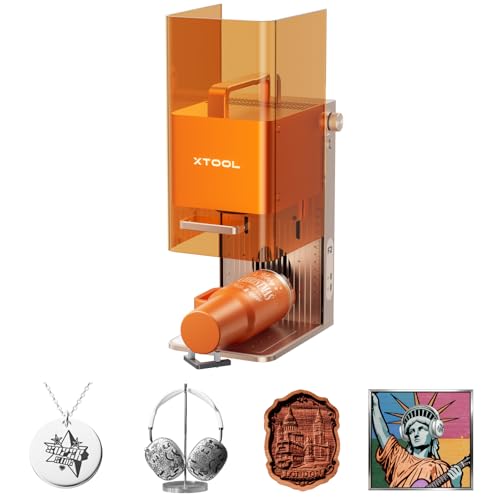
- 5W IR laser marks metal with vivid color
- 50MP camera supports precise alignment
- 6000mm/s speed suits batch personalization
Best For: Metal marking and on-site customization
Best All-Around Value

- True 12W output with a 300 × 300mm work area
- 0.01mm positioning accuracy for detailed designs
- Supports ACMER Studio, LightBurn, and LaserGRBL
Best For: Versatile crafting, gifts, signs, and small-business projects
Best Enclosed Option

- Fully enclosed Class 1 design for home crafting
- Dual cameras enable preview-based material placement
- Templates and AI tools simplify project setup
Best For: Beginners and home crafters seeking a guided, enclosed machine
Best for Fast Cutting

- 20W laser output with speeds up to 400mm/s
- 400 × 365mm workspace for larger projects
- Supports LightBurn, LaserGRBL, and ATOMSTACK software
Best For: Fast engraving, stronger cutting, and small-business production
Best Large-Format Value
LONGER Ray5 10W Laser Engraver

- 400 × 400 mm work area
- Up to 10,000 mm/min speed
- USB, TF, Wi-Fi, app, and offline control
Best For: DIY makers handling varied project sizes
Best Enclosed Starter Kit

- Includes enclosure and honeycomb bed
- Class 1 safety with automatic stops
- Comes with 13 engraving materials
Best For: Beginners wanting a bundled desktop setup
Best High-Power Pick – xTool S1 40W Rotary Bundle
For demanding laser engravers projects, the xTool S1 combines a 40W laser, a large 23.93-by-15.16-inch bed, and speeds up to 600mm/s. Its rotary bundle, autofocus, passthrough capability, and enclosed Class 1 design make it well suited to both large flat work and curved items.
Best For: Large projects, higher-volume production, and users who want an enclosed machine with rotary capability.
Pros:
- 40W output can cut up to 18mm cherry wood in a single pass.
- Large work area and AutoPassthrough support projects up to 118 inches long.
- Autofocus, material presets, tutorials, and AI-assisted design simplify setup.
- Enclosed Class 1 design includes flame sensors, lid-open protection, and an emergency stop.
Cons:
- At 86.8 pounds, it is substantially less portable than compact desktop laser engravers.
- The larger enclosed system requires dedicated workspace.
The xTool S1 is the strongest productivity-oriented option here. It costs space and portability, but its power, bed size, rotary functionality, and safety features make it a capable choice for ambitious home workshops or small businesses.
Best Maker Value – Twotrees TTS-55 Pro 5.5W
The Twotrees TTS-55 Pro is a practical open-frame option among laser engravers, offering a 300-by-300mm work area, fine spot focus, and support for materials including wood, acrylic, leather, paper, and stainless steel. Its air-assist-ready nozzle and wireless controls add useful flexibility for hobby and small-business work.
Best For: Makers who want a reasonably compact machine with broad material support and software flexibility.
Pros:
- 5.5W laser can cut up to 5mm plywood, 3mm acrylic, and 0.7mm leather.
- Fine 0.08-by-0.46mm spot focus supports detailed engraving.
- Supports LaserGRBL, LightBurn, Wi-Fi control, and TF-card offline engraving.
- Metal air-assist nozzle and red laser shield improve the cutting setup.
Cons:
- Lower laser power is better suited to smaller projects than thick-material cutting.
- The open-frame design requires careful attention to workspace safety and ventilation.
With a balanced 300mm square work area and useful connectivity, the TTS-55 Pro is a flexible starting point for makers. It is less powerful than enclosed premium models, but its software compatibility and air-assist support leave room to grow.
Best Compact Starter – ACMER S1 2.5W Portable Engraver
The ACMER S1 is a lightweight choice for buyers seeking compact laser engravers for home crafting. It arrives 99% preassembled, weighs 3.98 pounds, and offers a 130-by-130mm working area with support for common image and design files across Windows, macOS, and Linux.
Best For: Beginners, portable DIY work, and small personalized projects that do not require a large bed.
Pros:
- Compact 2kg-class design is easy to carry and store.
- Preassembled setup requires only about one minute of laser-head installation.
- Supports Acmerstudio, LightBurn, and LaserGRBL on major desktop operating systems.
- Can engrave materials such as wood, leather, ceramics, and aluminum oxide.
Cons:
- The 130-by-130mm work area limits project size.
- Its 2.5W laser is intended for thinner materials and lighter cutting tasks.
- The Class 4 designation means users must follow appropriate laser-safety practices.
The ACMER S1 prioritizes portability and easy setup over production capacity. It makes sense for beginners and occasional crafters, especially when storage space is limited and projects are small.
Best for Metal Marking – xTool F2 Dual-Laser Engraver
The xTool F2 stands out among laser engravers for its combination of a 15W diode laser and 5W infrared laser. A built-in 50MP camera, 0.1mm alignment accuracy, enclosed design, and speeds up to 6000mm/s make it particularly appealing for precise personalization and small-batch production.
Best For: Metal color marking, rapid personalization, on-site services, and small-batch commercial work.
Pros:
- Infrared laser produces deep, dark, vivid color marking on metal.
- 15W diode laser supports 3D embossing and cutting thicker materials.
- 50MP camera enables visual positioning with up to 0.1mm alignment accuracy.
- Fully assembled, enclosed, and portable at 4.6kg, with speeds up to 6000mm/s.
Cons:
- The 6.89-by-9.33-inch footprint limits the size of items handled directly.
- Slide Extension and other accessories may be needed for broader batch workflows.
- As a Class 4 laser, it requires careful operation and safety precautions.
The F2 is the most specialized option in this group. Its dual-laser setup and camera-driven alignment are valuable for fast, repeatable personalization, especially when metal marking or mobile service work is a priority.
Best All-Around Value – ACMER S2 12W Laser Engraver
For shoppers comparing laser engravers, the ACMER S2 offers a capable balance of power, workspace, precision, and software flexibility. Its true 12W laser and 300 × 300mm work area suit detailed crafts, personalized gifts, signs, and small-business projects.
Best For: Makers who want a versatile open-frame engraver with room to expand into larger or cylindrical projects.
Pros:
- True 12W laser can engrave more than 100 materials and cut paulownia wood or black acrylic with multiple passes.
- 0.01mm positioning accuracy and a 0.08 × 0.08mm spot support fine text, photos, and intricate artwork.
- Works with ACMER Studio, LightBurn, and LaserGRBL across Windows, macOS, and Linux.
- Optional rotary, riser, and air-assist accessories provide an upgrade path.
Cons:
- Open-frame design may require more attention to workspace safety than a fully enclosed machine.
- Deeper cuts may require multiple passes.
The S2 is a strong general-purpose choice when you want meaningful cutting capability without giving up detailed engraving or expansion options. Its included protective shield and motion protection add reassurance for new users.
Best Enclosed Option – xTool M2 10W Laser Engraver
The xTool M2 stands out among laser engravers for its fully enclosed Class 1 design and beginner-focused workflow. Built-in dual cameras, templates, and the Place & Go system are aimed at home crafters who want easier positioning and a more guided creative process.
Best For: Home users and beginners who prioritize an enclosed machine, camera-assisted setup, and accessible software.
Pros:
- Fully enclosed Class 1 design includes real-time monitoring for a more home-friendly setup.
- Dual cameras support workspace previews and more accurate material placement.
- xTool Studio offers ready-to-use templates and an integrated AI image generator.
- Optional modules can add CMYK color printing or 3W IR engraving for metal and plastic.
Cons:
- The CMYK Inkjet module and RA3 Lite Rotary are sold separately.
- The standard configuration uses a 10W diode laser, while some advanced capabilities require add-ons.
- Its 36.2-pound weight makes it less portable than open-frame alternatives.
The M2 is a practical choice for users who value convenience and safety over a lightweight, bare-bones setup. Its modular design also leaves room to add color printing or infrared engraving later.
Best for Fast Cutting – ATOMSTACK A20 Pro V2 20W
Among laser engravers, the ATOMSTACK A20 Pro V2 is geared toward users who want higher output and faster processing. Its 20W laser, claimed speeds up to 400mm/s, and 400 × 365mm working area make it suitable for larger personalized projects and demanding cutting work.
Best For: Experienced makers and small businesses that need strong cutting performance, a spacious work area, and rapid engraving.
Pros:
- 20W output supports high-energy cutting and engraving across wood, acrylic, metal, and leather.
- Engraving speeds reach up to 400mm/s for shorter processing times.
- Integrated linear guides, limit switches, and a cross-line light support accuracy and setup.
- Compatible with ATOMSTACK software, LightBurn, and LaserGRBL, with Type-C or USB-stick control.
Cons:
- Its removable magnetic cover is not the same as a fully enclosed Class 1 cabinet.
- The strongest cutting results may depend on the material and project settings.
- Its feature set may be more than casual hobbyists need.
The A20 Pro V2 makes the most sense when throughput and cutting strength are priorities. A modular aluminum frame, long stated service life, and lifetime technical support further suit users planning regular production.
Best Portable Pick – LP1 Plus Mini Laser Engraver
If portability and simplicity matter most, the LaserPecker LP1 Plus is a compact laser engraver for beginner projects. It can run from a power bank, starts quickly, and handles compatible non-metal materials such as wood, leather, and acrylic.
Best For: Beginners, travelers, and DIY users who want a pocket-sized engraver for small personalized projects.
Pros:
- Pocket-sized 2.4-pound design is easy to carry.
- Adjustable stand supports 360° multi-angle engraving.
- Works with wood, leather, acrylic, paper, and other compatible non-metal materials.
- Cross-platform app supports imported photos and doodles.
Cons:
- Metal engraving is not supported.
- Requires a precise 200 mm lens-to-material distance.
- Its compact format is better suited to small projects than large workpieces.
The LP1 Plus is a practical choice when convenience outweighs cutting power. Its magnetic base, included ruler, and power-bank compatibility make it especially useful for casual, portable crafting.
Best Large-Format Value – LONGER Ray5 10W Laser Engraver
The LONGER Ray5 is a versatile 10W laser engraver for users who need a generous work area, faster operation, and multiple control options. Its 400 × 400 mm workspace, 10,000 mm/min maximum speed, and USB, TF card, Wi-Fi, and app connectivity support a broad range of projects.
Best For: DIY makers who want a larger workspace, offline operation, and compatibility with common engraving software.
Pros:
- 400 × 400 mm engraving area accommodates larger projects.
- Dual-beam laser offers a 0.06 mm × 0.06 mm spot and up to 10,000 mm/min speed.
- Supports USB, TF card, Wi-Fi, app, LaserGRBL, and LightBurn workflows.
- Includes emergency stop, motion protection, heat protection, cover, and safety goggles.
Cons:
- Its larger, more feature-rich setup may be more than casual beginners need.
- Material results and cutting limits vary by material and project settings.
With its touchscreen, offline capability, and spacious work area, the Ray5 is a strong all-around option for expanding beyond small crafts. It also includes setup tools and step-by-step guidance, plus one year of manufacturer warranty coverage.
Best Enclosed Starter Kit – BlazeX M3 10W Laser Engraver
The BlazeX M3 combines a 10W laser engraver with an enclosure, honeycomb bed, starter materials, and safety features. It is designed for desktop projects involving wood, leather, glass, acrylic, and coated metal, with software support across Windows, macOS, iOS, and Android.
Best For: Beginners and hobbyists who want an enclosed, ready-to-start setup for detailed desktop engraving and cutting.
Pros:
- Includes a protective enclosure, honeycomb bed, goggles, tools, and 13 engraving materials.
- Class 1 safety design includes lid and tilt sensors with automatic stopping.
- 0.01 mm stated precision supports detailed work across a broad material range.
- Compatible with LightBurn, LaserGRBL, and CutLabX on multiple platforms.
Cons:
- Advanced accessories such as the rotary roller, air assist, and purifier are upgrades.
- The 10W standard model may not suit users seeking the highest cutting capacity.
The M3 is appealing for buyers who prefer a bundled and enclosed starting experience rather than assembling a basic open-frame machine. Its honeycomb bed, exhaust fan, and automatic safety protections add practical convenience for home, studio, or educational use.
How We Picked the Best Laser Engravers
We compared these Laser Engravers by laser type and output, usable work area, stated speed and precision, enclosure and safety features, camera or alignment tools, material compatibility, portability, and overall suitability for common projects. We also considered whether each machine makes sense for beginners, experienced makers, or small businesses.
Specifications can vary by configuration, included accessories, and manufacturer claims, so confirm the exact package before ordering. A higher wattage does not automatically mean a better machine: beam quality, airflow, software, focusing, and reliable material settings also affect results.
Quick Comparison
| Best For | What to Prioritize | Good Fit From This List |
|---|---|---|
| First-time users | Simple setup, protective enclosure, camera alignment | LaserPecker LP1 Plus or xTool M2 |
| Large wood and craft projects | Higher diode power and a generous work area | xTool S1, ACMER S2, or ATOMSTACK A20 PRO V2 |
| Portable engraving | Compact design, adjustable positioning, easy controls | LaserPecker LP1 Plus |
| Metal marking | IR capability or a laser specifically designed for metal | xTool F2 |
| Budget experimentation | Basic diode performance and upgrade potential | Twotrees TTS-55 Pro or ACMER S1 |
| Small-business production | Speed, repeatability, ventilation, and workflow features | xTool F2 or xTool S1 |
Key Buying Factors for Laser Engravers
Laser Type and Power
Diode lasers are versatile for wood, leather, paper, and many coated surfaces, while higher-output models generally cut thicker materials in fewer passes. IR lasers are better suited to marking some metals and producing different finishes. Check the manufacturer’s supported-material list rather than relying on wattage alone.
Work Area and Speed
Choose a bed large enough for your intended signs, panels, tumblers, or batches of smaller products. A fast advertised speed helps most when paired with accurate motion control and suitable settings. Rotary accessories may be necessary for cylindrical items.
Safety and Ventilation
Prefer a fully enclosed machine when children, pets, or shared living spaces are nearby. Use appropriate ventilation, never leave an active laser unattended, and follow eye-protection and fire-safety guidance. Some materials, including PVC and vinyl, can release hazardous gases and should not be engraved.
Software and Alignment
Camera positioning, autofocus, preview functions, and a supported control program can save substantial setup time. Beginners should favor clear workflows and broad file compatibility; experienced users may prioritize offline controls, advanced settings, or integration with existing design software.
Who Should Buy Which Laser Engravers?
Beginners and occasional crafters should start with an enclosed or compact machine that simplifies focusing and alignment. Makers producing larger signs, ornaments, and layered wood projects should consider a higher-power model with a larger bed. Users marking metal should select a machine with suitable IR capability rather than assuming a powerful blue diode will perform the same task.
For personalized products or steady small-business work, prioritize repeatability, fast positioning, dependable ventilation, and accessories such as rotary attachments. If you are unsure, choose the machine with the best balance of safety, usable workspace, software support, and upgrade path—not simply the highest advertised laser output.
