The best meat slicers for small kitchens make it easier to prepare deli-thin meats, sandwich portions, bread, and firm cheeses without giving up valuable counter space. Compact electric models can offer useful thickness control while remaining easier to store than full-size commercial slicers.
We compared 10 home-friendly options by considering footprint, blade size, power, adjustability, cleaning convenience, and storage features. This guide highlights what matters most before choosing a slicer for your kitchen and cooking routine.
Best 10 Meat Slicers for Small Kitchens Picks for 2026
Best Compact Electric Pick

- 0–15mm adjustable thickness
- Dishwasher-safe removable parts
- Compact design with suction feet
Best For: Home cooks needing a space-conscious electric slicer
Best Folding Design
Foldable 6.7-Inch Electric Slicer

- Folds for cabinet or drawer storage
- 0–20mm thickness adjustment
- Child lock and three suction feet
Best For: Compact kitchens with limited storage space
Best Manual Option
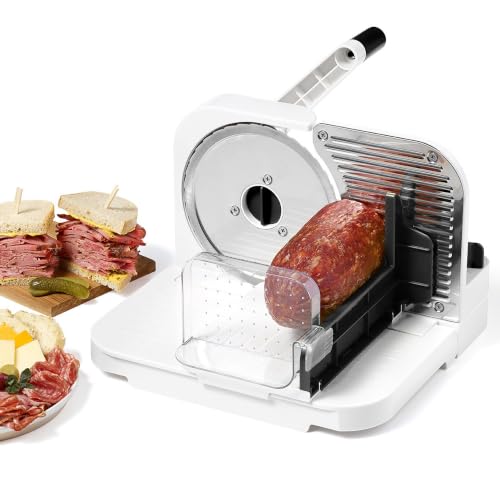
- Manual design needs no outlet
- Adjusts up to 1 inch thick
- Foldable and dishwasher-safe components
Best For: Occasional home slicing and easy storage
Best Blade Versatility

- 200W DC motor with lower-noise operation
- Two removable 7.5-inch blades
- 0–15mm adjustment and child lock
Best For: Frequent home slicing with interchangeable blade options
Compact Versatility
VEVOR 7.5-inch Electric Deli Slicer

- 200W motor with 0–0.6-inch thickness adjustment
- Includes serrated and non-serrated blades
- Compact, lightweight design with removable parts
Best For: Versatile home slicing in space-conscious kitchens
Countertop Precision
Cuisinart Kitchen Pro Food Slicer
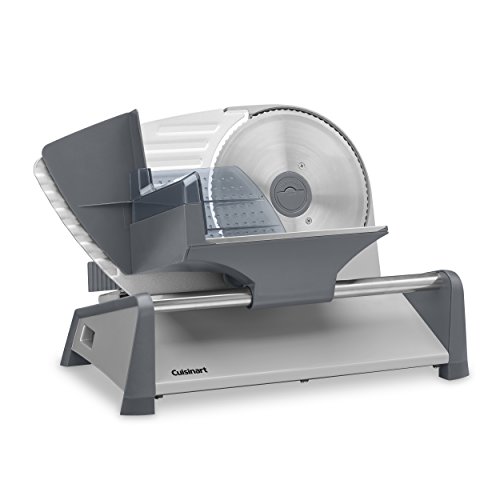
- Adjusts from 1/32 to 1/2 inch
- Removable blade, guide, and carriage
- Durable housing with three-year motor warranty
Best For: Precise slicing of meats, cheeses, bread, and vegetables
Quiet Deli Slicing
Weston Electric Deli Meat Slicer

- Quiet 150W belt-driven motor
- Adjustable from deli-thin to over 1/2 inch
- Stable base with suction feet and toothed pusher
Best For: Stable, quieter slicing for regular home deli use
Compact Pick

- Foldable body with cord storage
- 0–15 mm adjustable thickness
- Removable parts for easier cleaning
Best For: Apartments, RVs, and space-conscious home kitchens
Heavy-Duty Home Pick

- 200W motor with a 7.5-inch blade
- 11-pound cast iron base for stability
- 0.5–12 mm thickness adjustment
Best For: Frequent meal prep, jerky, and charcuterie at home
Balanced Black Pick
Nutrichef Electric Meat Slicer

- 200W motor with a 7.5-inch blade
- 0–15 mm adjustable cutting range
- Compact body with removable carriage
Best For: Home users wanting compact, adjustable meat slicing
Best Compact Electric Pick – OSTBA 150W Meat Slicer
The OSTBA Electric Meat Slicer is a practical choice for shoppers comparing meat slicers for small kitchens. Its compact footprint, 150W motor, and adjustable 0–15mm thickness dial support controlled slicing of deli meats, cheese, bread, fruits, and vegetables.
Best For: Home cooks who want a compact electric slicer with dishwasher-safe removable parts.
Pros:
- Adjustable thickness from 0 to 15mm for customized slices.
- Removable blade and food pusher are dishwasher-safe.
- Non-slip suction feet and a food pusher that doubles as a blade guard support safer operation.
- Compact 11.7-by-7.78-by-10.2-inch design suits smaller kitchens.
Cons:
- The 6.7-inch serrated blade may be less suitable for larger cuts than models with longer blades.
- Its semi-automatic operation requires manually guiding food through the slicer.
With useful thickness control and easy-clean removable parts, the OSTBA balances everyday versatility with a countertop-friendly design. It is especially appealing when storage space and cleanup matter.
Best Folding Design – Foldable 6.7-Inch Electric Slicer
For very limited storage, this foldable electric slicer stands out among meat slicers for small kitchens. It combines a folding body with a 0–20mm thickness range, a German RSG stainless steel blade, and multiple safety features for home slicing.
Best For: Small kitchens where compact storage and broad thickness adjustment are priorities.
Pros:
- Foldable design can be stored in drawers, cabinets, or closets.
- 0–20mm control accommodates thin deli slices and thicker cuts.
- Child lock, protected food pusher, and three suction feet add safety support.
- One-twist disassembly helps with cleaning the body, blade, and food pusher.
Cons:
- Product-care instructions specify hand washing rather than dishwasher cleaning.
- The plastic construction may feel less substantial than an all-metal slicer.
This model is a strong fit when storage is the deciding factor. Its foldable construction and wide adjustment range make it versatile, though hand washing adds a little maintenance time.
Best Manual Option – Starfrit Compact Deli Slicer
The manual Starfrit Deli Slicer offers a straightforward alternative for shoppers seeking meat slicers for small kitchens without an electric motor. Its 6.5-inch serrated blade, adjustable thickness up to 1 inch, and nestable design cover common meat, cheese, and bread tasks.
Best For: Occasional slicing when compact storage, simple operation, and easy cleanup matter more than powered speed.
Pros:
- Manual operation avoids needing an electrical outlet.
- Adjusts from deli-thin slices to cuts up to 1 inch thick.
- Detachable components are dishwasher-safe for simpler cleanup.
- Large suction base, food pusher, carriage, and thumb guard support stability and control.
Cons:
- Manual operation is slower and requires more effort than electric models.
- The 6.5-inch blade is intended for smaller home-slicing tasks.
Starfrit is a sensible pick for occasional use and compact storage. Its manual format keeps the design uncomplicated, while the foldable, nestable body helps it fit neatly in a small kitchen.
Best Blade Versatility – 200W Dual-Blade Food Slicer
This 200W electric model is a versatile contender among meat slicers for small kitchens, especially for cooks who want two blade styles. It includes 7.5-inch serrated and non-serrated stainless steel blades, 0–15mm thickness adjustment, and a stainless steel tray.
Best For: Home cooks who want stronger motor output and blade flexibility for meat, cheese, bread, and vegetables.
Pros:
- 200W DC motor provides stable torque with lower-noise operation.
- Two removable 7.5-inch blades offer serrated and non-serrated options.
- Adjustable 0–15mm thickness supports consistent, customized cuts.
- Child lock, non-slip feet, blade cover, and removable parts add convenience and safety support.
Cons:
- At 14.6 inches long, it requires more counter or storage space than the smaller models here.
- Hand-wash-only care may make cleanup less convenient.
The dual-blade setup gives this slicer more flexibility than a single-blade machine, while the 200W motor is suited to regular home preparation. Measure your available storage space before choosing it for a small kitchen.
Compact Versatility – VEVOR 7.5-inch Electric Deli Slicer
For shoppers comparing meat slicers for small kitchens, the VEVOR SL-520A offers a compact, lightweight design with useful flexibility. Its 200W motor, dual blades, and adjustable 0–0.6-inch thickness range make it suitable for deli meats, frozen meat, bread, and vegetables.
Best For: Home cooks who want versatile slicing and easy storage in a compact kitchen.
Pros:
- Includes serrated and non-serrated 7.5-inch stainless steel blades.
- Adjusts from paper-thin slices up to 0.6 inches.
- Removable blade, food pusher, and slide bar extender simplify cleaning.
- Suction-cup feet and a recessed blade support stable, safer operation.
Cons:
- Hand washing is recommended.
- The semi-automatic design requires users to guide the food manually.
With its modest footprint and broad range of uses, this VEVOR is a practical choice when counter space and versatility both matter. The included second blade is especially useful for switching between different foods.
Countertop Precision – Cuisinart Kitchen Pro Food Slicer
The Cuisinart Kitchen Pro is a strong contender among meat slicers for small kitchens when precise thickness control is important. Its 7.5-inch stainless steel blade adjusts from 1/32 to 1/2 inch, while the coated-steel and die-cast aluminum housing gives it a durable countertop presence.
Best For: Home cooks who prioritize very thin, consistently adjustable slices for meats, cheeses, bread, and vegetables.
Pros:
- Slice control adjusts from 1/32 inch to 1/2 inch.
- Removable blade, food guide, and carriage support easier cleanup.
- 130W motor and non-slip feet provide capable, stable countertop operation.
- Includes a limited three-year motor warranty.
Cons:
- At 18.25 inches long and 10 pounds, it may need dedicated storage space.
- Hand washing is recommended.
This model balances fine control with a durable construction, making it useful for more than meat alone. Its relatively long footprint is worth measuring against your available counter or cabinet space.
Quiet Deli Slicing – Weston Electric Deli Meat Slicer
For small kitchens that still need a sturdy meat slicer, the Weston Electric Deli Meat Slicer combines a belt-driven, quiet-running motor with adjustable thickness control. Its removable stainless steel blade, tilting tray, and suction-cup feet are practical features for regular home use.
Best For: Home users who want quiet operation, stable slicing, and deli-thin through thick cuts.
Pros:
- Adjusts from deli-thin slices to more than 1/2 inch thick.
- Quiet belt-driven motor delivers 150W of power.
- Toothed food pusher and suction feet support controlled, stable slicing.
- Tilting tray and removable 8-5/8-inch blade make cleaning and storage easier.
Cons:
- At 17 inches long and 12.5 pounds, it is less portable than lighter models.
- Hand washing is recommended.
The Weston is a sensible option when stability and quieter operation matter more than the smallest possible footprint. Its sturdy construction and broad thickness range make it well suited to recurring home deli-slicing tasks.
Compact Pick – OSTBA Foldable Meat Slicer
For shoppers comparing meat slicers for small kitchens, the OSTBA stands out with a foldable design, compact footprint, and built-in cord storage. Its 150W motor and 6.7-inch stainless steel serrated blade handle everyday slicing of meat, cheese, bread, vegetables, and semi-frozen foods.
Best For: Apartments, RVs, and home cooks who prioritize easy storage and everyday versatility.
Pros:
- Foldable construction and cord compartment help save storage space.
- Adjustable 0–15 mm thickness supports thin deli slices and thicker cuts.
- Removable blade, platform, and food pusher simplify cleanup.
- Non-slip feet and quiet 150W operation support stable, convenient use.
Cons:
- The 6.7-inch blade and 150W motor are geared more toward everyday home use than heavy-duty slicing.
- Its semi-automatic operation requires manually guiding food through the blade.
The OSTBA is a practical choice when countertop and cabinet space are limited. Its foldable body and broad thickness range make it especially appealing for occasional slicing without committing to a larger machine.
Heavy-Duty Home Pick – 200W Meat Slicer Machine
This 200W electric slicer is a strong option among meat slicers for small kitchens when stability and capacity matter. Its 7.5-inch serrated stainless steel blade, 11-pound cast iron base, and adjustable 0.5–12 mm range suit meal prep, deli cuts, jerky, cheese, bread, and vegetables.
Best For: Home cooks who want a firmly planted slicer for frequent meal prep, charcuterie, or jerky making.
Pros:
- Powerful 200W motor is designed for frozen meat, deli meats, jerky, and hard cheese.
- Heavy cast iron base and suction feet help keep the machine stable.
- Dual-action child lock and food-pusher blade guard add operating safeguards.
- Detachable blade, carriage, tray, and pusher support thorough hand washing.
Cons:
- At 11 pounds and 15 by 10 by 11 inches, it is less convenient to move or store than a foldable model.
- The motor base should not be immersed, and components require hand washing.
This model trades portability for a more anchored, substantial setup. If your small kitchen can accommodate its footprint and you slice regularly, the heavier base and spare blade may justify the extra bulk.
Balanced Black Pick – Nutrichef Electric Meat Slicer
The Nutrichef combines a 200W motor with a relatively compact 13.9-by-9.9-by-10.9-inch body, making it a balanced candidate among meat slicers for small kitchens. Its removable 7.5-inch stainless steel tooth blade and 0–15 mm dial cover a range of home slicing tasks.
Best For: Home users seeking a compact automatic slicer with straightforward thickness control and removable parts.
Pros:
- 200W motor and 7.5-inch stainless steel blade support varied slicing tasks.
- Dial adjusts cutting thickness from 0 to 15 mm.
- Removable blade and food carriage make cleaning and storage more manageable.
- Safety guard, slicer knob, and safety lock provide added control.
Cons:
- Recommended uses are listed primarily as meat, so its stated versatility is narrower than some alternatives.
- Hand-wash-only care requires more cleanup effort.
- The package includes one tooth blade rather than a spare.
The Nutrichef is a sensible middle ground for shoppers who want 200W performance without choosing the heaviest model in the group. Its compact dimensions and broad thickness range work well for organized home kitchens with limited storage.
How We Picked the Best Meat Slicers for Small Kitchens
We focused on slicers designed for home use rather than commercial kitchens. Our comparison considered motor wattage, blade diameter, thickness adjustment, construction, safety features, removable parts, and storage-friendly details such as folding designs. We also looked at versatility: a useful home slicer should handle more than one type of food, including cooked meat, deli meat, bread, and firm cheese when the manufacturer permits it.
Because countertop space and cleanup are major concerns in smaller kitchens, compact dimensions, foldability, accessible controls, and easy-to-remove blades received particular attention. Product specifications can vary by seller, so confirm the included accessories, dimensions, and care instructions before ordering.
Quick Comparison
| Feature | What to Look For | Why It Matters |
|---|---|---|
| Power | 150W–200W for typical home use | Supports routine slicing without requiring a commercial motor |
| Blade size | About 6.5 to 7.5 inches | Balances cutting capacity with a smaller footprint |
| Thickness control | Adjustable dial or knob | Lets you switch between deli-thin and thicker portions |
| Storage | Foldable body or compact profile | Makes occasional use easier in a crowded kitchen |
| Cleaning | Removable blade and food-contact components | Reduces buildup and simplifies maintenance |
Key Buying Factors for Meat Slicers for Small Kitchens
Counter Space and Storage
Measure both the available operating area and the storage location. A slicer needs enough room for the food carriage to move safely, not just enough space for its base. Foldable models can be useful for apartments or kitchens where the appliance will be stored after each use.
Blade and Thickness Range
A stainless steel blade is a practical choice for everyday home use, while a wider blade may accommodate larger roasts or loaves. Check the stated thickness range if you want precise sandwich slices, thicker roast portions, or very thin cured meats. Some models are better suited to occasional slicing than precision deli work.
Power, Stability, and Safety
For most households, a 150W or 200W motor is adequate for moderate batches. Look for non-slip feet, a food pusher, a blade guard, and safety-lock or continuous-operation protections. Never force frozen food through a home slicer unless the manufacturer specifically allows it.
Cleaning and Maintenance
Removable blades can make cleanup easier, but they also require careful handling. Unplug the machine before cleaning, follow the manufacturer’s washing instructions, and dry metal parts thoroughly. Avoid assuming that any component is dishwasher-safe without confirmation.
Who Should Buy Which Meat Slicers for Small Kitchens?
Choose a compact 150W slicer if you want an affordable appliance for occasional deli meat, bread, or cheese preparation. A foldable model is a strong fit when storage space is the main limitation. Consider a 200W model with a larger blade if you regularly slice roasts, larger loaves, or bigger batches. If precise portions matter most, prioritize a clearly marked thickness dial and a stable carriage over maximum wattage.
These Meat Slicers for Small Kitchens are best for home cooks who want more control than pre-sliced groceries provide. Before buying, match the slicer’s capacity and cleanup requirements to how often you will use it; the easiest model to store, operate, and wash is often the one you will use most.
