Building a reliable studio setup starts with choosing an interface that matches your instruments, microphones, computer, and workflow. The right model can simplify MIDI control, recording, monitoring, and expansion without adding unnecessary cost or complexity.
We’ve selected 10 options ranging from compact MIDI-to-USB cables and affordable two-channel interfaces to complete bundles with microphones and recording software. Use the guide below to narrow your choices by connectivity, inputs, sound quality, and intended use.
Best 10 Midi Interfaces for Studio Setup Picks for 2026
Best Studio Hub
Focusrite Scarlett 4i4 4th Gen

- MIDI I/O with four line inputs and outputs
- Two mic preamps and two Hi-Z inputs
- Includes recording software and plugins
Best For: Multi-instrument home studios
Best Simple MIDI Link

- USB-C MIDI input and output
- Plug-and-play Windows and Mac connection
- LEDs show power and signal activity
Best For: Connecting one MIDI instrument to a computer
Best Compact Recording Pick
Focusrite Scarlett 2i2 4th Gen

- Two mic preamps and two Hi-Z inputs
- 24-bit/192kHz recording with 120dB dynamic range
- Auto Gain, Clip Safe, and Air modes
Best For: Solo vocal and guitar recording
Best Budget USB-C Option

- USB-C bus-powered, class-compliant design
- Two combo inputs with 48V phantom power
- Direct monitoring and loopback functions
Best For: Portable two-input home recording
Best Compact Interface
Focusrite Scarlett Solo 4th Gen

- 120dB dynamic range and 24-bit/192kHz support
- One mic input plus one Hi-Z instrument input
- Air modes and extensive included software
Best For: Solo vocalists, guitarists, and compact recording setups
Best MIDI-Ready Value
- Dedicated MIDI I/O for compatible hardware
- Two mic preamps and two instrument inputs
- Bus-powered with zero-latency monitoring
Best For: Home studios connecting MIDI gear and recording two sources
Best Complete Starter Kit
Focusrite Scarlett Solo Studio 4th Gen

- Includes interface, condenser mic, headphones, and cable
- 120dB dynamic range and 24-bit/192kHz support
- Air modes plus bundled recording software
Best For: Beginners building an all-in-one vocal or guitar setup
Versatile Starter Interface
- Two combo inputs with phantom power
- USB/direct zero-latency monitoring
- Includes MPC Beats software
Best For: Home recording, podcasting, and livestreaming
Complete Recording Bundle
PreSonus AudioBox 96 Studio Kit

- 24-bit/96kHz audio and MIDI interface
- Microphone, headphones, stand, and accessories included
- Studio One Artist and Studio Magic included
Best For: New creators wanting an all-in-one studio package
Enhanced Artist Bundle
Focusrite Scarlett 2i2 Studio 4th Gen

- 24-bit/192kHz recording with 120dB dynamic range
- Auto Gain, Clip Safe, and Air modes
- Includes microphone, headphones, and software
Best For: Musicians and vocalists upgrading a home studio
Best Studio Hub – Focusrite Scarlett 4i4 4th Gen
For musicians building flexible midi interfaces for studio setup, the Focusrite Scarlett 4i4 4th Gen combines MIDI I/O with multiple analog connections. Its two mic preamps, Hi-Z inputs, four line inputs, and four line outputs make it practical for integrating microphones, instruments, synths, and drum machines.
Best For: Home studios connecting several instruments and outboard devices alongside MIDI gear.
Pros:
- MIDI I/O plus four line inputs and four line outputs for a flexible studio setup.
- Two mic preamps and two Hi-Z instrument inputs support microphones, guitars, and other sources.
- 120dB dynamic range, Air mode, Auto Gain, and Clip Safe support polished, manageable recording.
- Includes Pro Tools Intro+, Ableton Live Lite, Cubase LE, and Hitmaker Expansion.
Cons:
- Its larger connection set may be more than a simple two-input recording setup requires.
The Scarlett 4i4 is the most expandable choice here for a studio that needs MIDI connectivity and several line-level connections in one central interface.
Best Simple MIDI Link – LEKATO USB-C MIDI Cable
If your midi interfaces for studio setup needs are centered on a keyboard or synthesizer, the LEKATO MIDI Cable offers a direct USB-C connection without the size or cost of a full audio interface. It provides one MIDI input, one MIDI output, LED status indicators, and plug-and-play support for compatible Windows and Mac systems.
Best For: Connecting a standard MIDI keyboard, digital piano, synthesizer, or drum pad to a computer or iPad.
Pros:
- One MIDI input and one MIDI output support standard two-way MIDI communication.
- USB-C plug-and-play design requires no special drivers for supported systems.
- LED indicators show power and signal activity for easier troubleshooting.
- Supports up to 16 input and output channels with low-latency transmission.
Cons:
- It handles MIDI data rather than microphone, guitar, or analog audio recording.
- Some older or specific vintage devices may require compatibility checks or special settings.
This cable is a focused solution for hardware MIDI control and sequencing, but it is not a replacement for an audio interface when recording sound is also part of the setup.
Best Compact Recording Pick – Focusrite Scarlett 2i2 4th Gen
The Focusrite Scarlett 2i2 4th Gen is a compact option for midi interfaces for studio setup when your main priority is recording vocals, guitar, or another instrument. Its two mic preamps, two Hi-Z inputs, USB-C connectivity, and included software make it a straightforward starting point for a small studio.
Best For: Solo musicians and creators recording up to two microphones or instruments at once.
Pros:
- Two mic preamps and two Hi-Z instrument inputs cover common vocal and guitar recording needs.
- 24-bit/192kHz operation and 120dB dynamic range support high-resolution recording.
- Auto Gain and Clip Safe help manage recording levels during performances.
- Includes Air modes, recording software, and a collection of production plugins.
Cons:
- Its two-input design offers less expansion than the Scarlett 4i4 for larger setups.
- The supplied notes do not list dedicated MIDI I/O.
Choose the 2i2 when recording two sources is enough and you want an approachable interface with useful level-management tools and a substantial software bundle.
Best Budget USB-C Option – PIYONE Q2 2×2 Audio Interface
For a portable midi interfaces for studio setup alternative that also records analog audio, the PIYONE Q2 provides two combo inputs, USB-C bus power, and class-compliant operation. Its direct monitoring, loopback function, and 3.5mm headphone output suit basic home, PC, Mac, or iOS recording workflows.
Best For: Mobile creators and home users who need a simple two-input interface for microphones and guitar.
Pros:
- USB-C connection provides data transfer and bus power without an external power supply.
- Two combo inputs accommodate XLR microphones and Hi-Z guitar sources.
- 24-bit/192kHz recording supports high-resolution audio capture.
- Direct monitoring, loopback, and a 3.5mm headphone output add useful monitoring flexibility.
Cons:
- The two-channel design is intended for smaller recording setups.
- The supplied details list Windows compatibility, so users of other platforms should verify support.
- It does not list dedicated MIDI I/O in the supplied specifications.
The Q2 is a practical, portable audio interface for basic recording and monitoring, though dedicated MIDI hardware will still be needed for MIDI-only connections.
Best Compact Interface – Focusrite Scarlett Solo 4th Gen
For a streamlined studio setup, the Focusrite Scarlett Solo 4th Gen is a compact USB-C audio interface built for recording one microphone and one instrument. Its 120dB dynamic range, 24-bit/192kHz support, and Air modes make it a strong choice among midi interfaces for studio setup considerations, though it does not include MIDI I/O.
Best For: Songwriters and solo musicians recording vocals, guitar, or other single-source performances.
Pros:
- One XLR mic preamp and one Hi-Z instrument input.
- 120dB dynamic range with up to 24-bit/192kHz recording.
- Air modes add presence and harmonic drive to vocals and guitars.
- Includes Pro Tools Intro+, Ableton Live Lite, Cubase LE, and Hitmaker Expansion.
Cons:
- No MIDI input or output is listed.
- Only one microphone input is provided.
The Solo 4th Gen keeps the setup small while offering high-resolution recording and useful software. Choose it when your workflow centers on a microphone and instrument rather than MIDI hardware.
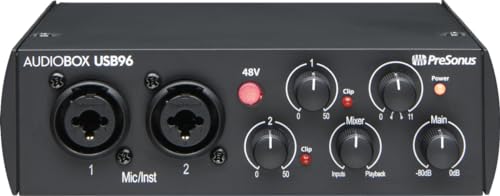
Best MIDI-Ready Value – PreSonus AudioBox 96
The PreSonus AudioBox 96 25th Anniversary model is a practical two-channel USB interface for a studio setup that includes MIDI hardware. Along with MIDI I/O, it provides two Class-A mic preamps, two instrument inputs, zero-latency monitoring, and bus-powered operation.
Best For: Home producers who need MIDI connectivity and flexible two-channel recording without an external power supply.
Pros:
- Includes MIDI I/O for connecting compatible MIDI hardware.
- Two Class-A mic preamps and two high-headroom instrument inputs.
- Supports up to 24-bit/96kHz recording and playback.
- Includes Studio One Artist, Ableton Live Lite, and the Studio Magic Plug-In suite.
Cons:
- Its maximum sample rate is lower than the 192kHz options in this roundup.
- USB 2.0 connectivity may be less convenient for newer USB-C-only setups.
- The included warranty is one year.
With dedicated MIDI I/O and two recording channels, the AudioBox 96 is the most directly aligned with MIDI-focused studio connections here. It is especially appealing when portability, phantom power, and bundled software matter.
Best Complete Starter Kit – Focusrite Scarlett Solo Studio 4th Gen
The Focusrite Scarlett Solo Studio 4th Gen bundles the Solo interface with a CM25 MkIII condenser microphone, SH-450 headphones, and an XLR cable. For anyone building a compact studio setup, it combines 120dB dynamic range, 24-bit/192kHz recording, and monitoring essentials in one package, although MIDI I/O is not listed.
Best For: Beginners and songwriters who need an interface, microphone, headphones, and recording software in one purchase.
Pros:
- Includes the Scarlett Solo 4th Gen, condenser microphone, headphones, and XLR cable.
- 120dB dynamic range with up to 24-bit/192kHz recording.
- Air modes help bring vocals and guitars forward in a mix.
- Includes Pro Tools Intro+, Ableton Live Lite, Cubase LE, and Hitmaker Expansion.
Cons:
- No MIDI I/O is listed.
- Only one XLR mic preamp is provided.
- The bundle is less suitable for recording several sources at once.
This bundle removes much of the guesswork from assembling a first recording rig. It is a convenient starting point for vocal-and-guitar production, while MIDI-heavy users should look for an interface with dedicated MIDI ports.
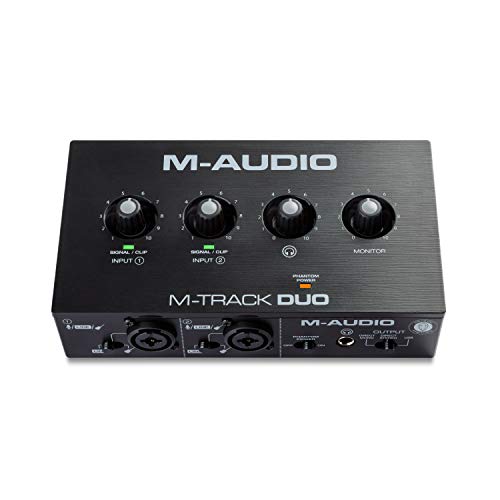
Versatile Starter Interface – M-Audio M-Track Duo
For a practical entry point among midi interfaces for studio setup, the M-Audio M-Track Duo combines two combo inputs, phantom power, and straightforward USB connectivity in a compact enclosure. It supports guitar, vocals, line-level sources, podcasting, recording, and livestreaming on Mac or PC.
Best For: Home musicians, podcasters, and streamers who need two-input recording with simple zero-latency monitoring.
Pros:
- Two combo XLR/line/instrument inputs with phantom power accommodate microphones, guitars, and line sources.
- USB/direct monitoring switch helps provide zero-latency monitoring.
- Includes MPC Beats and supports 48kHz audio resolution.
Cons:
- Maximum sample rate is 48kHz, below the higher rates offered by some competing interfaces.
- Only two channels are available for simultaneous input.
The M-Track Duo is a compact, flexible choice for a basic studio setup. Its two inputs and monitoring options cover common recording and streaming tasks, while the included software helps new users get started.
Complete Recording Bundle – PreSonus AudioBox 96 Studio Kit
This PreSonus package is a turnkey option for midi interfaces for studio setup, pairing a 24-bit/96kHz USB 2.0 audio and MIDI interface with a microphone, headphones, stand, and recording accessories. It is designed for creators who want most of the essential equipment in one purchase.
Best For: Beginners, podcasters, vocalists, and streamers building a complete two-channel recording setup.
Pros:
- Provides 24-bit/96kHz capture through dual XLR/TRS combo inputs.
- Includes a cardioid condenser microphone, shockmount, pop filter, XLR cable, stand, and headphones.
- Comes with Studio One Artist and the Studio Magic Plug-In Suite.
Cons:
- The bundle is less suitable if you already own a microphone, headphones, or studio accessories.
- Compatibility is specified for Mac and Windows recording workflows.
Rather than supplying only an interface, this AudioBox 96 bundle covers the core hardware and software needed to begin recording. Its USB-powered design also makes it convenient for mobile or compact studio rigs.
Enhanced Artist Bundle – Focusrite Scarlett 2i2 Studio 4th Gen
The Focusrite Scarlett 2i2 Studio 4th Gen is a strong option for midi interfaces for studio setup when recording quality and workflow assistance matter. It combines two inputs with a condenser microphone, headphones, 192kHz capability, Auto Gain, Clip Safe, and Air mode.
Best For: Musicians and vocalists who want a refined two-input interface with bundled monitoring gear and recording software.
Pros:
- Offers 24-bit/192kHz operation and a stated 120dB dynamic range.
- Auto Gain and Clip Safe help simplify level setting and reduce clipping risks.
- Includes the CM25 MkIII microphone, SH-450 headphones, XLR cable, and a broad software bundle.
Cons:
- It remains a two-channel interface, limiting larger simultaneous recording setups.
- The bundled features may be more than needed for basic voice or instrument recording.
With practical recording aids and a complete mic-and-headphone package, the Scarlett 2i2 Studio is aimed at creators who want to focus on performance instead of setup. Air mode adds another tonal option for vocals and guitars.
How We Picked the Best Midi Interfaces for Studio Setup
We focused on interfaces and MIDI connectivity options that suit common home-studio needs, including keyboard and synthesizer integration, microphone recording, direct monitoring, and computer-based production. The lineup includes established brands such as Focusrite, PreSonus, and M-Audio, along with a dedicated MIDI-to-USB option for musicians who do not need audio inputs.
Our comparison emphasizes connection types, input and output flexibility, recording resolution, ease of setup, included software, and overall value. Because studio requirements vary widely, the best choice depends less on having the most features and more on matching the interface to your equipment and planned workflow.
Quick Comparison
- For a simple MIDI connection: Choose a dedicated MIDI-to-USB cable such as the LEKATO option.
- For solo recording: The Scarlett Solo, M-Track Duo, or AudioBox 96 offer compact two-channel setups.
- For vocals and instruments: The Scarlett 2i2 and comparable 2×2 interfaces provide two combo inputs and straightforward monitoring.
- For more simultaneous sources: The Scarlett 4i4 adds extra connectivity for a more expandable setup.
- For beginners: Studio bundles combine an interface with a microphone, software, and other essentials.
Key Buying Factors for Midi Interfaces for Studio Setup
MIDI Connections and Compatibility
Check whether you need traditional five-pin MIDI ports or only USB MIDI. A MIDI-to-USB cable works well for connecting an older keyboard or synthesizer to a computer, while a full audio interface with MIDI I/O is more suitable if you also record microphones or instruments. Confirm compatibility with your computer, iPad, or other mobile device before buying.
Audio Inputs and Outputs
Combo XLR/TRS inputs accept microphones, guitars, keyboards, and other line-level sources. Two inputs are enough for many solo musicians, but four or more inputs provide room for stereo instruments, multiple microphones, or external hardware. Also consider headphone outputs, monitor connections, and whether you need independent outputs for hardware monitoring.
Recording Quality and Monitoring
24-bit recording is standard for modern home studios, while higher sample-rate support can benefit particular production workflows. Low-latency direct monitoring is especially useful for recording vocals or instruments without distracting delay. Look for a physical monitor control and dependable headphone amplification.
Portability, Software, and Bundles
Bus-powered USB interfaces are convenient for compact desks and mobile recording. Bundles can be a strong value for beginners, but make sure the included microphone and software fit your needs. Experienced users may prefer paying for better connectivity rather than accessories they already own.
Who Should Buy Which Midi Interfaces for Studio Setup?
Choose a dedicated MIDI cable if your main goal is controlling virtual instruments or transferring MIDI from one keyboard or synthesizer to a computer.
Choose a two-input interface if you record one or two sources at a time, such as vocals and guitar. The Scarlett Solo suits minimalist setups, while the Scarlett 2i2, AudioBox 96, and M-Track Duo offer greater input flexibility depending on your equipment.
Choose a four-input interface if you expect to connect multiple instruments, external MIDI hardware, or more complex monitoring equipment. The Scarlett 4i4 is better suited to a growing studio than a basic solo rig.
Choose a studio bundle if you are starting from scratch and need an interface, microphone, and software in one purchase. Bundles reduce setup decisions, while standalone interfaces are usually the better route for buyers who already own quality microphones, headphones, or monitors.
