The best multitrack recorders make it easier to capture ideas, record live performances, and build complete productions without relying entirely on a computer. The right choice depends on track count, input needs, portability, and how much mixing control you want.
This roundup compares 10 capable options, from pocket-sized songwriting tools and handheld field recorders to full mixer-recorders for bands, venues, and home studios.
Best 10 Multitrack Recorders Picks for 2026
Best All-in-One Studio

- 12 channels with 12-in/10-out USB connectivity
- Built-in compressor and three-band EQ
- MIDI, click output, and dual headphone outputs
Best For: Home studios and mixer-centered recording setups
Best Touchscreen Workflow
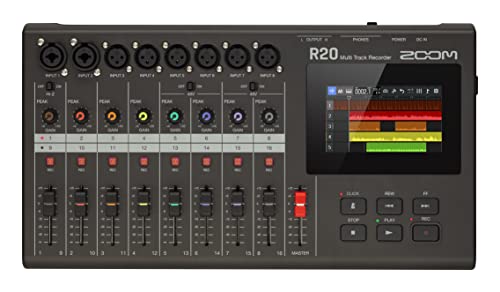
- Up to 16 tracks and eight simultaneous recordings
- Six XLR inputs plus two combo inputs
- Touchscreen editing, effects, rhythms, and synth sounds
Best For: Computer-free song production and demos
Best Pocket Songwriting Recorder

- Six-track recording with two-track simultaneous input
- Built-in stereo condenser microphones
- Battery powered with 4 GB storage
Best For: Portable songwriting and quick idea capture
Best Portable Touchscreen Recorder

- Eight tracks with touchscreen editing
- Drum loops, FM synths, effects, and MIDI
- USB-C interface with battery operation
Best For: Mobile music creation and computer-free arranging
Portable Studio Pick
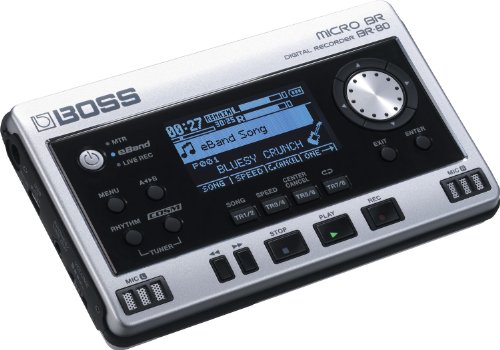
- Three recording and practice modes
- Built-in stereo microphone and COSM effects
- USB interface with SD/SDHC recording
Best For: Portable songwriting, practice, and quick demos
Layering Value Pick

- Four-track recording with bounce workflow
- 32-bit float capture reduces clipping concerns
- Built-in rhythms and USB interface
Best For: Portable layered demos and songwriting
Live Mixing Powerhouse

- 12-channel digital mixer with 14-track recording
- 24-bit/96kHz capture and 32-bit float mixdown
- Physical faders and high-gain studio-grade preamps
Best For: Bands, live performances, and multi-source recording
Best All-Around Choice

- Up to six individual tracks plus stereo mix
- 32-bit float recording with look-ahead limiters
- Up to 15 hours on four AA batteries
Best For: Musicians, filmmakers, and field recordists
Best for Professional Location Work

- Six XLR inputs and up to 14 tracks
- 32-bit float recording with dual A/D converters
- Timecode I/O for frame-accurate sync
Best For: Film crews, broadcast teams, and professional sound recordists
Best Accessible Handheld

- Four-track recording with 32-bit float capture
- Two XLR/TRS inputs plus stereo microphones
- USB-C recording or streaming with SD backup
Best For: Musicians, podcasters, filmmakers, and interview creators
Best All-in-One Studio – Tascam Model 12
The Tascam Model 12 is a strong choice for musicians and creators who want multitrack recorders functionality combined with a mixer, USB audio interface, and DAW controller. Its 12-channel design, onboard processing, and MIDI support make it suited to more involved recording setups.
Best For: Home studios, bands, and users who want a mixer-centered recording workflow with DAW connectivity.
Pros:
- Provides 12 channels and a 12-in/10-out USB audio interface.
- Includes a one-knob compressor and three-band EQ on all input modules.
- Offers MIDI functionality, tap-tempo click output, and dual headphone outputs.
Cons:
- Its 13.3-pound, mixer-style design is less portable than compact recorders.
- The supplied notes do not specify onboard standalone storage or recording capacity.
The Model 12 makes the most sense when hands-on mixing and broad connectivity matter more than a small footprint. It is a versatile multitrack recording hub for a fixed or semi-permanent setup.
Best Touchscreen Workflow – Zoom R20
The Zoom R20 brings a computer-free approach to multitrack recorders with a DAW-style touchscreen for recording, editing, and mixing. It can record up to 16 tracks, with up to eight recorded simultaneously, while providing effects, rhythms, and an onboard synth for building complete projects.
Best For: Musicians who want hands-on, computer-free recording and editing with multiple microphone inputs.
Pros:
- Supports up to 16 tracks and eight simultaneous recording tracks.
- Includes six XLR inputs plus two XLR/TRS combo inputs.
- Offers touchscreen editing, built-in effects, 150 rhythm patterns, and 18 synth sounds.
Cons:
- Its maximum sample rate is 44.1 kHz.
- The supplied notes do not identify the included storage capacity.
Choose the R20 if an intuitive touchscreen and standalone workflow are priorities. Its generous track count and built-in creative tools make it particularly practical for demos and full song ideas.
Best Pocket Songwriting Recorder – Tascam DP-006
The Tascam DP-006 is a compact, battery-operated option for portable multitrack recorders users who want to capture songwriting ideas without a full studio setup. It records up to six tracks at CD quality and includes two built-in omnidirectional condenser microphones.
Best For: Songwriters needing a lightweight recorder for sketches, acoustic ideas, and mobile sessions.
Pros:
- Records up to six tracks with two-track simultaneous recording.
- Includes built-in stereo omnidirectional condenser microphones.
- Runs on four included AA batteries and provides 4 GB of storage.
Cons:
- Its 2.5 mm headphone jack may require an adapter for many headphones.
- Recording is limited to 16-bit/44.1 kHz CD quality.
- It is designed for six-track projects rather than larger productions.
The DP-006 favors simplicity and portability over extensive connectivity. It is a sensible pick for capturing ideas quickly, especially when built-in microphones and battery operation are more important than advanced studio features.
Best Portable Touchscreen Recorder – Zoom R12
The Zoom R12 is a portable multitrack recorder for musicians who want touchscreen editing, built-in effects, and creative accompaniment in a compact format. It records up to eight tracks, supports two XLR/TRS inputs, and can operate as a USB-C interface and DAW control surface.
Best For: Mobile musicians who want to develop and mix ideas without carrying a larger studio setup.
Pros:
- Provides eight-track recording with touchscreen editing and mixing tools.
- Includes 150 drum loops, 18 FM synth instruments, effects, and MIDI support.
- Offers phantom power on both inputs, Hi-Z on input 1, and up to five hours of battery operation.
Cons:
- Its two inputs and eight-track limit may not suit larger ensembles.
- Battery life is listed as up to five hours, so extended sessions may require planning.
- The USB-C interface operates as a stereo interface rather than a multichannel computer interface.
The R12 is a practical balance of portability and hands-on control. It stands out for creators who want to record, arrange, and add rhythmic or synth parts away from a conventional computer-based studio.
Portable Studio Pick – Roland BR-80
The Roland BR-80 is a compact choice for musicians who want multitrack recorders with built-in microphones, onboard effects, and several creative modes. It records to an SD/SDHC card, supports up to eight simultaneous playback tracks, and can also work as a USB audio interface.
Best For: Songwriters and musicians who want portable recording, practice tracks, and built-in amp and effects processing.
Pros:
- Offers MTR, eBand, and Live Recorder modes.
- Built-in stereo condenser microphone enables quick recording without extra microphones.
- Includes 64 V-Tracks, eight simultaneous playback tracks, rhythms, backing patterns, and COSM amps and effects.
- Can function as a USB audio interface and includes SONAR X1 LE software.
Cons:
- Storage uses SD/SDHC cards, which are not included.
- Its eight-track simultaneous playback capacity is more limited than larger multitrack systems.
- Requires a AAA battery for portable operation.
The BR-80 is especially versatile for portable practice and idea capture, combining recording, backing tracks, and effects in a 16-ounce unit. Its feature set is broad, though users needing many physical inputs or a larger live-recording setup may prefer a mixer-style recorder.
Layering Value Pick – Zoom R4
The Zoom R4 is a straightforward option among multitrack recorders for building songs in layers. It records up to four tracks, lets you bounce them to a dedicated track, and uses 32-bit float recording to help avoid clipping without constant gain adjustments.
Best For: Musicians who want a battery-powered recorder for layered ideas, demos, rehearsals, and mobile sessions.
Pros:
- Supports recording, layering, bouncing, and repeating with undo functionality.
- Two XLR/TRS combo inputs accept microphones, instruments, keyboards, and other sources.
- Offers 32-bit float recording for clip-free capture without manual gain adjustments.
- Includes more than 80 built-in drum patterns and works as a 2-in/2-out USB audio interface.
Cons:
- Recording is limited to four tracks at a time before bouncing.
- Requires four AA batteries for battery-powered use.
- Its compact input count may not suit larger ensemble recordings.
The R4 is appealing when portability and simple overdubbing matter more than a high channel count. Its bounce workflow helps extend arrangements beyond four tracks, while the built-in rhythms and USB connectivity add useful flexibility.
Live Mixing Powerhouse – Zoom LiveTrak L12next
The Zoom LiveTrak L12next is built for musicians who need multitrack recorders with substantial live-mixing capability. It combines a 12-channel digital mixer with 14-track recording at 24-bit/96kHz, plus a 32-bit float mixdown and hands-on physical controls.
Best For: Bands, live performers, and recording setups that need multiple inputs, monitor control, and hands-on mixing.
Pros:
- Combines a 12-channel digital mixer and multitrack recorder.
- Records up to 14 tracks at 24-bit/96kHz and mixes down in 32-bit float.
- Provides studio-grade preamps with up to +70 dB gain, Hi-Z, PAD, and +48V phantom power.
- 60mm faders, channel controls, scenes, effects, and optional wireless app control support live operation.
Cons:
- Its corded-electric power design is less portable than battery-powered recorders.
- The BTA-1 adapter is required for wireless control through the L12next Control App.
- Its larger mixer-style feature set may be more than a solo musician needs.
The L12next is the strongest fit here for multi-source recording and live performance control. Its channel count, high-resolution recording, physical faders, and monitoring-oriented features make it better suited to band setups than quick, pocket-sized demos.
Best All-Around Choice – Zoom H6 Studio
The Zoom H6 Studio is a versatile option for shoppers comparing multitrack recorders for music, filmmaking, and field work. It records up to six individual tracks plus a stereo mix, with 32-bit float recording, flexible sample rates, and microphones designed to handle loud sources.
Best For: Musicians, filmmakers, and field recordists who want a capable portable recorder with strong battery life.
Pros:
- Records up to six individual tracks plus a stereo mix.
- 32-bit float recording and look-ahead limiters help prevent distortion.
- 19.4mm microphones handle sound levels up to 140 dB SPL.
- Runs for up to 15 hours on four AA batteries.
Cons:
- Uses four AA batteries, adding more battery weight and replacement needs.
- Its six-track capacity may be limiting for larger productions.
The H6 Studio balances track capacity, recording flexibility, and portability. It is a practical middle ground for creators who need more than a basic handheld recorder without moving to a larger professional field setup.
Best for Professional Location Work – Zoom F6
The Zoom F6 is built for demanding multitrack recorders workflows in film, broadcast, and professional location audio. Its six XLR inputs, up to 14-track capacity, dual A/D converters, and timecode I/O support complex productions where clean audio and accurate synchronization matter.
Best For: Film crews, broadcast teams, and professional sound recordists working with multiple microphones.
Pros:
- Six XLR inputs support simultaneous microphone recording.
- Records up to 14 tracks for larger production setups.
- 32-bit float recording with dual A/D converters helps avoid clipping.
- Timecode I/O provides frame-accurate synchronization with video.
Cons:
- At 2.4 pounds, it is heavier than the handheld options listed here.
- Its professional feature set may be more than casual users need.
Choose the F6 when input count, timecode, and production flexibility take priority. It can also function as a USB audio interface, giving experienced users more ways to integrate it into a recording setup.
Best Accessible Handheld – Zoom H4 Essential
The Zoom H4 Essential is a straightforward choice among multitrack recorders for musicians, podcasters, filmmakers, and interview recording. It combines built-in stereo microphones with two XLR/TRS inputs, four-track recording, 32-bit float capture, and USB-C connectivity for recording or streaming.
Best For: Creators who want a compact four-track recorder for music, podcasts, interviews, and video audio.
Pros:
- Four-track recording supports larger projects than a basic stereo recorder.
- Built-in stereo microphones and two XLR/TRS inputs offer flexible connections.
- 32-bit float recording helps capture quiet and loud sources without distorted takes.
- Spoken menu guidance can make operation easier for visually impaired users.
Cons:
- Its four-track capacity is lower than the H6 Studio and F6.
- Runs on two AA batteries, so longer sessions may require spares.
The H4 Essential is the most approachable option in this group. It suits creators who need external inputs and portable multitrack recording but do not require the F6’s extensive input count or timecode features.
How We Picked These Multitrack Recorders
We selected models across several common recording needs rather than focusing only on the highest track count. The lineup includes compact songwriting recorders, portable devices for musicians and filmmakers, mixer-based systems for live recording, and professional field recorders. We considered input count and connector types, simultaneous recording capability, portability, onboard microphones, effects, storage, battery operation, computer connectivity, and workflow.
Track counts can be misleading, so we also looked at how each recorder is intended to be used. Some are designed for quick overdubs, while others are better suited to multichannel live sessions, location sound, or computer-assisted production.
Quick Comparison
| Best For | What to Prioritize | Ideal Type |
|---|---|---|
| Home studio recording | Track count, monitoring, USB connectivity | Mixer-recorder or tabletop recorder |
| Songwriting and overdubs | Simple controls, portability, built-in effects | Pocket or portable multitrack recorder |
| Live bands and rehearsals | Multiple inputs, direct monitoring, reliable storage | Multichannel mixer-recorder |
| Podcasting and video | Clean preamps, microphone inputs, compact operation | Handheld or portable recorder |
| Professional field work | Low-noise preamps, time-saving workflow, rugged design | Professional field recorder |
Key Buying Factors for Multitrack Recorders
Track Count and Simultaneous Inputs
Determine whether you need to record several sources at once or simply layer parts one at a time. A recorder with many playback tracks may still have fewer microphone inputs, so check both specifications.
Inputs, Preamps, and Microphones
XLR inputs are important for microphones, while combo XLR/TRS inputs add flexibility for instruments and line-level sources. Built-in microphones are convenient for sketches, ambience, and quick takes, but dedicated inputs generally provide more control for serious sessions.
Portability and Power
Battery-powered pocket and handheld models work well for rehearsals, travel, interviews, and location recording. Larger mixer-recorders offer more hands-on control but need more space and may be better suited to a desk, stage, or studio.
Workflow and Connectivity
Look for features that match your process, such as onboard effects, drum loops, bouncing, touchscreen control, USB audio interface functionality, or DAW integration. If you plan to finish mixes on a computer, confirm the recorder supports the file transfer or interface workflow you prefer.
Audio Quality and Reliability
Higher-resolution recording, quiet preamps, limiter options, and 32-bit float support can help preserve detail and reduce problems in demanding environments. For field work, rugged construction, dependable media support, and battery life may matter more than extra studio features.
Who Should Buy Which Multitrack Recorders?
Choose a Mixer-Recorder for Bands and Live Sessions
Musicians recording multiple performers at once should favor models with numerous physical inputs, direct monitoring, and straightforward channel control. These are also useful for rehearsal capture and small venue production.
Choose a Portable Recorder for Songwriting
Solo musicians and mobile creators may prefer a compact recorder with quick overdubbing, effects, built-in microphones, or drum patterns. Simpler controls can make it easier to capture ideas before they disappear.
Choose a Handheld Recorder for Flexible Capture
Handheld units suit podcasters, filmmakers, interviewers, and musicians who need a lightweight device for stereo or multichannel recording. They are convenient when a full studio setup is impractical.
Choose a Professional Field Recorder for Location Sound
Film crews and serious field recordists should prioritize clean preamps, durable construction, dependable level management, and efficient file handling. The best option is the one that protects recordings in unpredictable environments.
