The best network audio player can bring streaming services, multiroom audio, high-resolution playback, and app control to a traditional stereo system. The right model depends on whether you need a simple source component, a premium DAC, or an all-in-one amplifier.
This roundup compares 10 options ranging from compact Wi-Fi streamers to feature-rich hi-fi music players, helping you match connectivity, sound quality, and system requirements to your listening setup.
Best 10 Network Audio Player Picks for 2026
Best Premium Network Audio Player
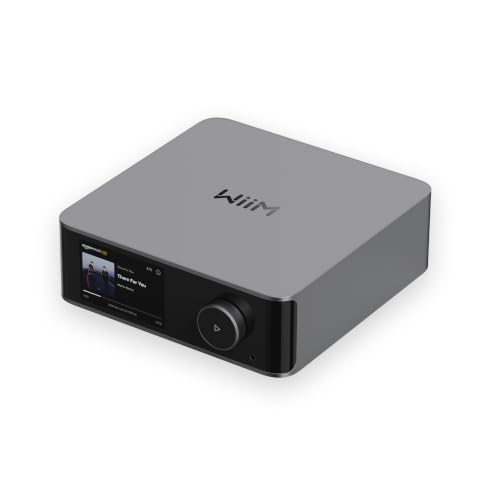
- ESS DAC with 24-bit/192 kHz streaming
- Touchscreen and extensive wired connectivity
- Multiroom, room correction, and subwoofer support
Best For: Flexible high-resolution stereo systems
Best Simple Stereo Upgrade

- Adds Sonos streaming to existing stereo equipment
- Wi-Fi, Ethernet, RCA, and digital outputs
- AirPlay 2 and multiroom expansion
Best For: Traditional stereos entering the Sonos ecosystem
Best All-in-One Hi-Fi Player

- Combines streamer, CD player, DAC, preamp, and amp
- 7.8-inch touchscreen with lyrics and audio displays
- Dual drive bays with support for up to 8TB
Best For: Centralized digital and CD music libraries
Best Network Audio Player With Amplification

- 100W amplifier for passive speakers
- HDMI ARC, Wi-Fi 6, and Bluetooth 5.3
- RoomFit correction and touchscreen control
Best For: Compact music and TV systems
Best for Easy Setup

- DSD512, multichannel DSD, and MQA support
- Touchscreen, app control, HDMI ARC, and trigger functions
- Balanced XLR/RCA outputs plus broad streaming support
Best For: High-end digital music systems and home theater integration
Best Value Network Audio Player

- Up to 24-bit/192 kHz playback
- AirPlay 2, Google Cast, Spotify Connect, and TIDAL Connect
- Multiroom support with analog, optical, and coaxial connections
Best For: Upgrading an existing stereo with flexible streaming
All-in-One Network Audio Player

- Streamer, DAC, preamp, and music-library functions in one unit
- Four ESS9039Q2M DACs with DSD512 and 768 kHz/32-bit support
- NAS, NVMe, USB storage, and external CD ripping support
Best For: Comprehensive high-resolution systems with local music storage
Best All-Rounder

- Up to 24-bit/192 kHz playback
- AirPlay 2, Google Cast, and major streaming connects
- Broad multiroom and stereo connectivity
Best For: Hi-fi owners wanting flexible streaming and multiroom support
Best Premium Setup

- ESS DAC and 3.5-inch touchscreen
- HDMI ARC, phono, headphone, and subwoofer outputs
- Room correction and up to 24-bit/192 kHz streaming
Best For: Feature-rich stereo or compact 2.1 home audio systems
Best Budget Apple Upgrade

- AirPlay 2 receiver for existing stereos
- Up to 24-bit/192 kHz playback
- Compact analog and optical connectivity
Best For: Apple users seeking an affordable stereo streaming upgrade
Best Premium Network Audio Player – WiiM Ultra
The WiiM Ultra is a versatile network audio player for listeners who want high-resolution streaming, a touchscreen interface, and extensive connections in one component. It supports up to 24-bit/192 kHz playback, includes an ESS ES9038 Q2M DAC, and works with services such as Spotify, TIDAL, Qobuz, and Amazon Music.
Best For: Audiophiles building a flexible stereo or 2.1-channel system with digital, analog, phono, or TV sources.
Pros:
- ESS DAC, Wi-Fi 6, Bluetooth 5.3, and high-resolution playback
- 3.5-inch touchscreen with app, remote, touch, and voice control
- Broad connectivity, including HDMI ARC, phono, optical, coaxial, RCA, USB, and subwoofer output
- Supports multiroom audio, Roon Ready, DLNA, Spotify Connect, TIDAL Connect, and Qobuz Connect
Cons:
- Does not support AirPlay or function as an AirPlay receiver
- Its extensive feature set may be more than a simple streaming setup requires
The WiiM Ultra stands out when you want one network audio player to serve as a streaming hub for both modern and legacy equipment. Its wide input and output selection, room correction, and subwoofer support make it particularly adaptable.
Best Simple Stereo Upgrade – Sonos Port
The Sonos Port is a straightforward network audio player for adding streaming and multiroom control to an existing stereo or receiver. It connects through Ethernet or Wi-Fi and provides RCA and digital outputs, while the Sonos app and Apple AirPlay 2 handle playback control.
Best For: Owners of a traditional amplifier or stereo system who want an easy path into Sonos streaming.
Pros:
- Connects an existing stereo or amplifier to Sonos streaming
- Supports music, podcasts, audiobooks, internet radio, and stored audio
- Works with Apple AirPlay 2 and expands to additional rooms
- Line-in lets a phone or another source feed the stereo
Cons:
- Requires an existing amplified audio system
- Offers fewer connection types and audio-focused features than more elaborate streamers
The Sonos Port is a practical choice if convenience and ecosystem integration matter more than a built-in display or audiophile-oriented specifications. It is especially useful for modernizing a trusted stereo without replacing the amplifier.
Best All-in-One Hi-Fi Player – DMP-K8 Plus
The DMP-K8 Plus is an ambitious network audio player that combines streaming, DAC, preamp, amplifier, CD playback, and local storage support. Its 7.8-inch touchscreen, Wi-Fi 6, four ESS9039Q2M DACs, and support for up to 768 kHz/32-bit audio and DSD512 make it suited to listeners who want a highly integrated digital music hub.
Best For: Music enthusiasts who want streaming, CD playback, local libraries, storage expansion, and detailed on-device controls.
Pros:
- Combines streamer, CD player, DAC, preamp, and amplifier functions
- Large 7.8-inch display shows album art, lyrics, spectrum analysis, and VU meters
- Supports AirPlay, DLNA, Spotify Connect Lossless, TIDAL Connect, and high-resolution formats
- Includes 64GB eMMC storage and dual drive bays supporting up to 8TB
Cons:
- Large, feature-heavy design may be excessive for basic streaming
- Some capabilities depend on the companion app or external-drive support
- The supplied notes identify the app as Wi-Fi controlled and state that the related product description does not have Bluetooth functionality
With its storage options, CD functionality, large display, and extensive format support, the DMP-K8 Plus is aimed at building a centralized music library rather than simply adding streaming to an amplifier. Verify the exact included drive and connectivity configuration before purchase.
Best Network Audio Player With Amplification – WiiM Amp Ultra
The WiiM Amp Ultra pairs network streaming with a 100W Hi-Fi amplifier, allowing it to power speakers without a separate power amp. It adds Wi-Fi 6, Bluetooth 5.3, HDMI ARC, RoomFit room correction, and a touchscreen to create a compact solution for music and TV listening.
Best For: Listeners who want a streamlined streaming system that can drive passive speakers and connect directly to a television.
Pros:
- 100W amplifier can power up to four speakers
- ESS SABRE DAC, dual TI TPA3255 amplifiers, and low-distortion performance
- HDMI ARC, Wi-Fi 6, Bluetooth 5.3 with LE Audio, and room correction
- Supports Spotify, TIDAL, Qobuz, Amazon Music, Roon Ready, and Chromecast
Cons:
- Does not support AirPlay or function as an AirPlay receiver
- Less suitable if you already own a separate amplifier you want to keep in the signal chain
The WiiM Amp Ultra is a strong fit for a compact system where simplicity matters. Its integrated amplification, TV-friendly HDMI ARC connection, touchscreen, and RoomFit correction reduce the number of separate components needed.
Best for Easy Setup – EVERSOLO DMP-A6 Gen 2
The EVERSOLO DMP-A6 Gen 2 is a feature-rich network audio player for listeners building a serious digital music system. Its 6-inch touchscreen, dedicated app, broad streaming support, extensive high-resolution format compatibility, and HDMI ARC make it suitable for both two-channel listening and home theater integration.
Best For: Audiophiles who want an all-in-one streamer and DAC with local-library management, high-resolution playback, and flexible system connectivity.
Pros:
- Supports DSD512, multichannel DSD, MQA, and other high-resolution formats.
- Offers Qobuz, TIDAL, Spotify Connect Lossless, Roon Ready, DLNA, and additional streaming options.
- Includes a 6-inch touchscreen, mobile app control, HDMI ARC, trigger control, and balanced XLR outputs.
Cons:
- Its extensive features may be more than a basic streaming setup requires.
- Some listed services and functions may require compatible accounts, devices, or network storage.
The DMP-A6 Gen 2 stands out when you want a central digital source with serious format support and multiple ways to connect it to amplifiers, active speakers, televisions, and storage. It is a particularly versatile choice for a high-end network audio system.
Best Value Network Audio Player – WiiM Pro Plus
The WiiM Pro Plus is a practical network audio player for upgrading an existing stereo without replacing the amplifier or speakers. It combines AirPlay 2 reception, Google Cast, Spotify Connect, TIDAL Connect, high-resolution output, and multiroom support in a compact streaming component.
Best For: Stereo owners who want broad app compatibility, simple multiroom streaming, and high-resolution digital or analog output at an accessible level of complexity.
Pros:
- Streams up to 24-bit/192 kHz through digital and analog outputs.
- Supports AirPlay 2, Google Cast, Spotify Connect, TIDAL Connect, Alexa, Roon Ready, NAS, and DLNA features.
- Works with Ethernet or Wi-Fi and supports multiroom playback across compatible ecosystems.
Cons:
- It is an AirPlay receiver only and cannot transmit AirPlay to other devices.
- High-resolution availability depends on the music service or source library.
Choose the WiiM Pro Plus when straightforward streaming and ecosystem flexibility matter more than a built-in touchscreen or audiophile-oriented storage features. It is an effective bridge between modern streaming services and a conventional stereo system.
All-in-One Network Audio Player – Kaiboer DMP-K7 Plus
The Kaiboer DMP-K7 Plus is an all-in-one network audio player that combines a streamer, DAC, preamp, and digital music library in one substantial component. With four ESS9039Q2M DACs, DSD512 and 768 kHz/32-bit support, NAS access, internal storage expansion, and CD ripping capability, it is designed for a centralized high-resolution setup.
Best For: Listeners who want one advanced component for streaming, local music storage, NAS playback, preamp duties, and optional CD ripping.
Pros:
- Combines music streamer, DAP, DAC, and preamp functions.
- Supports up to 768 kHz/32-bit audio and DSD512 with four ESS9039Q2M DACs.
- Offers 8GB DDR4 memory, 64GB eMMC storage, M.2 NVMe support, USB storage up to 16TB, and NAS protocols.
Cons:
- Bluetooth is not supported.
- Its advanced storage and processing features may be unnecessary for simpler systems.
- The 5 kg chassis is less suited to a lightweight or minimalist setup.
The DMP-K7 Plus is the most ambitious option here for consolidating digital audio duties. Its combination of high-end conversion, storage flexibility, NAS compatibility, and CD support makes it compelling for listeners building a comprehensive music hub.
Best All-Rounder – WiiM Pro Plus
The WiiM Pro Plus is a versatile network audio player for upgrading an existing stereo system. It combines AirPlay 2, Google Cast, Spotify Connect, TIDAL Connect, high-resolution playback, and broad multiroom support, making it a practical choice for households with varied streaming platforms.
Best For: Hi-fi owners who want flexible streaming, high-resolution audio, and multiroom compatibility.
Pros:
- Supports streaming up to 24-bit/192 kHz through digital and analog outputs.
- Works with AirPlay 2, Google Cast, Alexa, Siri, Spotify Connect, TIDAL Connect, and Qobuz Connect.
- Offers Ethernet, Wi-Fi, Bluetooth, RCA, optical, coaxial, and USB Type-C connectivity.
- Supports synchronized multiroom playback across compatible WiiM, AirPlay 2, Google Cast, and Alexa devices.
Cons:
- It is an AirPlay receiver only and cannot transmit AirPlay to other devices.
- High-resolution availability depends on the streaming service or music source.
The Pro Plus is a strong middle-ground network audio player: more connected than a basic adapter while remaining focused on integrating with an existing stereo. Its wide ecosystem support is especially useful if your home uses a mix of Apple, Google, and Alexa devices.
Best Premium Setup – WiiM Ultra
The WiiM Ultra is a premium network audio player designed for systems that need both streaming and extensive source connectivity. Its touchscreen, ESS DAC, HDMI ARC, phono input, headphone output, and subwoofer connection make it suitable for more involved stereo or home theater setups.
Best For: Listeners building a feature-rich stereo or compact 2.1 home audio system.
Pros:
- Includes an ESS ES9038 Q2M DAC, 3.5-inch touchscreen, Wi-Fi 6, and Bluetooth 5.3.
- Offers HDMI ARC, phono, RCA, optical, coaxial, USB, headphone, and subwoofer connections.
- Supports streaming up to 24-bit/192 kHz, gapless playback, room correction, and independent EQ settings.
- Can join multiroom systems with compatible WiiM, Amazon Echo, and Google Home devices.
Cons:
- It is incompatible with AirPlay and cannot function as an AirPlay receiver.
- Its broader feature set may be unnecessary for a simple stereo streaming upgrade.
The Ultra stands out when connectivity and system control matter as much as streaming quality. Choose it if you want to connect multiple source types, add a subwoofer, or use HDMI ARC; Apple households should note the lack of AirPlay support.
Best Budget Apple Upgrade – WiiM Mini
The WiiM Mini is a compact network audio player for adding wireless streaming to an existing stereo at a lower-complexity price point. It supports AirPlay 2, Spotify Connect, TIDAL Connect, Alexa, and high-resolution output, while keeping connections focused on auxiliary and optical audio.
Best For: Apple users and budget-conscious listeners upgrading a stereo with AirPlay 2.
Pros:
- Turns a compatible stereo into an AirPlay 2 receiver for music and Apple TV audio.
- Supports unaltered playback up to 24-bit/192 kHz and gapless transitions.
- Works with Spotify Connect, TIDAL Connect, Alexa, Siri, and compatible multiroom devices.
- Provides both analog and digital output through auxiliary and optical connections.
Cons:
- It does not support Google Cast.
- It is an AirPlay receiver only and cannot transmit AirPlay to other AirPlay devices.
- Qobuz works through the WiiM Home app but does not support Qobuz Connect.
The Mini is a straightforward choice when you mainly need wireless access to an existing stereo, especially within an Apple-centered setup. Its smaller feature set keeps things simple, but users seeking Google Cast or more connection options should consider a larger WiiM model.
How We Picked the Best Network Audio Players
We focused on the features that matter when adding network playback to a stereo system: streaming-service support, wireless standards, digital and analog outputs, app quality, high-resolution format compatibility, multiroom features, and ease of setup. We also separated source components from models with built-in amplification, DACs, storage, or CD functionality so you can compare products on a like-for-like basis.
Because systems vary widely, the list includes compact streamers for existing amplifiers, flexible components for receivers and powered speakers, and premium all-in-one units for listeners building a more complete digital front end.
Quick Comparison
| Best For | Look For | Product Type |
|---|---|---|
| Simple stereo upgrade | Compact design, dependable app control, analog output | Basic network streamer |
| Apple and multiroom households | AirPlay 2, ecosystem compatibility, synchronized playback | Connected source component |
| Premium hi-fi listening | Advanced DAC, balanced outputs, DSD support, display | High-end music streamer |
| Fewer separate components | Amplification, HDMI ARC, room correction | Streaming amplifier |
| Local music libraries | Storage support, USB connectivity, broad file compatibility | Music server or all-in-one player |
Key Buying Factors for a Network Audio Player
System Compatibility
Check how the player connects to your equipment. RCA outputs work with many integrated amplifiers and receivers, while optical, coaxial, USB, or balanced outputs may be preferable for a dedicated DAC or higher-end system. If you need to power passive speakers directly, choose a streaming amplifier rather than a source-only component.
Streaming Services and Control
Confirm that your preferred services are supported through the manufacturer’s app or direct protocols such as Spotify Connect, Tidal Connect, AirPlay 2, or Chromecast. Direct playback often provides better convenience than relying exclusively on Bluetooth or screen mirroring.
Sound Quality and File Support
Higher sample-rate and bit-depth support can benefit compatible libraries, but DAC implementation and system matching matter more than specifications alone. Consider DSD, FLAC, MQA, gapless playback, and USB audio support if those formats are part of your collection.
Multiroom, Display, and Expansion
Multiroom compatibility is useful when you plan to add speakers in other rooms. A front-panel display can make browsing easier, while room correction, HDMI ARC, storage bays, or CD playback may justify a larger investment for an all-in-one setup.
Who Should Buy Which Network Audio Player?
Choose a compact streamer if you simply want to add Wi-Fi playback to an existing stereo without replacing your amplifier. A flexible midrange model is a better fit for households using AirPlay, Spotify Connect, or multiple streaming platforms. Listeners with revealing hi-fi equipment should consider a premium player with stronger DAC capabilities, a screen, and broader output options.
If you are replacing several components, an all-in-one music player with storage, preamp functions, or CD support can simplify the system. For passive speakers and a streamlined setup, select a Network Audio Player with integrated amplification and confirm its power output matches your speakers. Finally, prioritize app reliability and the connections you will actually use; unused high-end specifications should not outweigh straightforward daily operation.
