Making pasta for a crowd is easier when your machine can handle repeated mixing, rolling, cutting, or extrusion without slowing you down. The right choice depends on batch size, available power, pasta shapes, and how much hands-on control you want.
This roundup compares 10 pasta makers ranging from compact automatic machines to commercial-capacity equipment, helping you match features and output to your kitchen, catering operation, or restaurant.
Best 10 Pasta Machines for Large Batches Picks for 2026
Best Commercial Workhorse
YIMOHOME 750W Electric Pasta Maker

- Up to 66 lb of noodles per hour
- Kneads, rolls, and cuts in one machine
- Stainless-steel build with 750W motor
Best For: Restaurants and high-volume pasta preparation
Best Large-Batch Home Pick
Philips 7000 Series Pasta Maker

- Makes up to eight portions at once
- Automatic preparation in under 10 minutes
- Includes eight discs and dishwasher-safe parts
Best For: Families and entertaining at home
Best Premium Roller Set
Marcato Atlasmotor Electric Pasta Machine
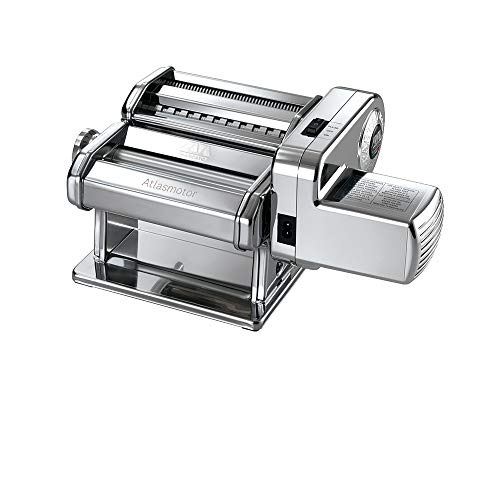
- Made and assembled in Italy
- Electric motor plus included hand crank
- Ten thickness positions and 6-inch sheets
Best For: Hands-on cooks seeking controlled, repeatable rolling
Best Budget Manual Option

- Nine thickness settings from 0.5mm to 3mm
- Two cutter widths for varied pasta
- Lightweight manual stainless-steel design
Best For: Budget-conscious home cooks and occasional batches
Top Commercial Pick
Automatic 15-20kg/h Pasta Extruder

- 15-20kg/h stated output for commercial production
- Automatic operation with three included dies
- Stainless steel body with four casters
Best For: Small to medium commercial kitchens needing high-volume shaped pasta
Versatile Heavy-Duty Option
Newhai 750W Press-and-Cut Pasta Maker

- Presses and cuts dough in one machine
- Adjustable 0.12-18mm thickness range
- 750W motor with steel gears and non-slip pads
Best For: Restaurants and home kitchens needing flexible press-and-cut operation
Best Manual Choice
Marcato Atlas150 Italian Pasta Maker

- Manual machine for lasagna and ribbon pasta
- 10 thickness settings from 0.8mm to 4.8mm
- Lightweight 2.6kg chrome-steel design
Best For: Home cooks wanting compact, hands-on pasta making
Best Electric Option
Stainless Steel 700W Pasta Maker

- 700W motor with two speeds and reverse
- Eight thickness settings for sheets and noodles
- Includes fettuccine and spaghetti cutters
Best For: Families and home cooks making repeated batches of sheet pasta
Best Heavy-Duty Manual
Imperia Italian Steel Pasta Maker

- Made in Italy with chromed steel construction
- Six thickness settings and 150 mm sheets
- Can accept a separate electric motor
Best For: Traditional pasta makers seeking a durable, expandable roller
Best for Family Portions

- Makes about four servings in roughly 14 minutes
- Four automatic modes and eight pasta shapes
- Includes measuring cups and dishwasher-safe parts
Best For: Beginners and families making automatic shaped noodles
Best Commercial Workhorse – YIMOHOME 750W Electric Pasta Maker
For kitchens comparing pasta machines for large batches, this YIMOHOME model stands out for its 750W motor, stainless-steel construction, and stated output of 45–66 pounds of fresh noodles per hour. It combines kneading, rolling, and cutting for a more streamlined workflow.
Best For: Restaurants, catering kitchens, and households that regularly prepare substantial quantities of noodles, pasta, dumpling wrappers, or flat dough.
Pros:
- High stated capacity of up to 66 pounds of noodles per hour.
- Combines kneading, pressing, and cutting in one machine.
- 304 food-grade stainless-steel roller and cutter with a 750W motor.
- Offers multiple cutter widths and adjustable dough thickness from 0.1–20mm.
Cons:
- At about 46 pounds, it is considerably heavier than typical home pasta machines.
- The commercial footprint may be excessive for occasional home use.
- Cleaning and operating a multi-function machine may require more setup than a simple roller.
This is the strongest capacity-focused option in the group. Its size, weight, and commercial-oriented build make the most sense when throughput matters more than compact storage.
Best Large-Batch Home Pick – Philips 7000 Series Pasta Maker
The Philips 7000 Series is a practical choice for shoppers seeking pasta machines for large batches without moving to commercial equipment. Its large-capacity design prepares up to eight portions at once and is intended to produce pasta in under 10 minutes.
Best For: Families and hosts who want automated fresh pasta preparation with straightforward cleanup and recipe support.
Pros:
- Prepares up to eight portions in one batch.
- Automatic operation and claimed pasta preparation in under 10 minutes.
- Includes eight shaping discs for variety.
- Non-stick, dishwasher-safe parts simplify cleanup, and the HomeID app offers recipe guidance.
Cons:
- Its 150W motor and eight-portion capacity are aimed at home use rather than restaurant-scale production.
- It offers less dough-thickness flexibility than the manually adjustable roller machines listed here.
- The unit weighs about 20 pounds, so it is not especially lightweight.
For most families, this offers a useful balance of batch size, automation, and convenience. It is better suited to repeated household batches than to continuous commercial production.
Best Premium Roller Set – Marcato Atlasmotor Electric Pasta Machine
For cooks who prefer hands-on control when preparing pasta machines for large batches, the Marcato Atlasmotor combines an Atlas 150 roller with an electric Pastadrive motor. Its 10-position adjustment knob and 6-inch sheet width support consistent rolling across repeated batches.
Best For: Serious home cooks who want electric assistance while retaining manual control over sheet thickness and pasta preparation.
Pros:
- Made and assembled in Italy.
- Electric motor and included hand crank provide flexible operation.
- Ten clear thickness positions help with repeatable sheets.
- Compatible with 11 separately available Marcato accessories for additional shapes.
Cons:
- It makes sheets up to 6 inches wide, narrower than the commercial YIMOHOME model.
- Additional pasta shapes require separately available accessories.
- Cleaning instructions call for dry cleaning rather than washing the machine parts.
This is a refined option for batch cooking when precision and craftsmanship matter more than maximum throughput. The included motor reduces cranking effort, but the setup remains more hands-on than an automatic extruder.
Best Budget Manual Option – Sailnovo 3-in-1 Pasta Maker
The Sailnovo is a compact manual choice for shoppers considering pasta machines for large batches on a budget. Its clamp-mounted design, nine thickness settings, and two cutting widths give home cooks useful control, although producing very large quantities will require more hands-on effort.
Best For: Home cooks who want an affordable roller-and-cutter for family-size batches, dumpling skins, lasagna, spaghetti, or fettuccine.
Pros:
- Nine adjustable thickness settings, with sheets from 0.5mm to 3mm according to the notes.
- Two cutting widths of 2.0mm and 4.5mm support different pasta styles.
- Stainless-steel and aluminum construction is described as rust-resistant and lightweight.
- Manual operation avoids the need for a motor or electrical outlet.
Cons:
- Manual operation can be tiring when producing very large batches.
- The blade attachment should not be washed in water or placed in a dishwasher.
- It has fewer automated features and a lower-throughput workflow than the electric models.
This model makes sense when storage space, price, and simple operation are priorities. For genuinely high-volume production, an electric machine will reduce the physical work considerably.
Top Commercial Pick – Automatic 15-20kg/h Pasta Extruder
For restaurants and food stalls comparing pasta machines for large batches, this automatic stainless-steel extruder stands out for its stated 15-20kg/h output. Its 2.2kW motor, 110V compatibility, and included shaping dies make it suited to high-volume production with relatively simple operation.
Best For: Small to medium commercial kitchens that need automatic, high-throughput shaped pasta production.
Pros:
- Produces a stated 15-20kg of pasta per hour.
- Includes three dies for fusilli, spaghetti, and penne, with support for additional shapes.
- Stainless-steel construction, built-in handles, and four anti-slip casters support cleaning and mobility.
- Large hopper and thread transmission shaft are designed to reduce dough sticking.
Cons:
- At 220 pounds, it is substantially heavier than countertop pasta makers.
- Its single operating setting and commercial form factor may be more than a home user needs.
- Only three dies are included; other shapes require additional compatible dies.
This is the strongest option here when throughput and automation matter most. Buyers should confirm available workspace and whether the included die selection matches their menu before choosing it.
Versatile Heavy-Duty Option – Newhai 750W Press-and-Cut Pasta Maker
This Newhai machine offers a practical press-and-cut setup for buyers seeking pasta machines for large batches without moving between separate dough-rolling and cutting stages. Its 750W motor, adjustable 0.12-18mm thickness range, and commercial steel construction provide flexibility for pasta sheets, noodles, and wrappers.
Best For: Restaurants or busy home kitchens that want one semi-automatic machine for pressing dough and cutting noodles.
Pros:
- Combines dough pressing and pasta cutting without removing the blades.
- Offers a wide stated thickness range from 0.12mm to 18mm.
- Uses steel gears, a double-belt transmission, and non-slip pads for stable operation.
- Includes 2.5mm round, 2mm, and 6mm blade configurations.
Cons:
- Automatically shuts down after 1-2 hours of continuous operation and needs 10-20 minutes to cool.
- Semi-automatic operation requires more hands-on work than a fully automatic extruder.
- Its 48.5-pound weight makes it less portable than a compact manual machine.
The Newhai is a balanced choice for varied dough work rather than maximum continuous output. Its cooling pause is important to factor into production planning for especially long batch runs.
Best Manual Choice – Marcato Atlas150 Italian Pasta Maker
MARCATO Atlas150 Manual Pasta Maker Machine-LASAGNA, FETTUCCINE & TAGLIOLINI. Made in Italy
Check Price On AmazonThe Marcato Atlas150 is a compact manual option for shoppers considering pasta machines for large batches but preferring hands-on control. Made in Italy with a chrome-steel body, it makes lasagna, fettuccine, and tagliolini while offering 10 thickness settings.
Best For: Home cooks and small-batch makers who value manual control, compact storage, and classic pasta-sheet versatility.
Pros:
- Produces lasagna, fettuccine, and tagliolini.
- Provides 10 thickness settings from 0.8mm to 4.8mm.
- At 2.6kg, it is much lighter and easier to store than the commercial machines.
- Chrome-plated steel construction offers a durable traditional design.
Cons:
- Manual cranking is slower and more labor-intensive for genuinely large batches.
- It does not offer automatic extrusion or motorized operation.
- Its included cutters focus on sheet and ribbon pasta rather than multiple extruded shapes.
The Atlas150 is not the throughput leader, but it is the most approachable choice for controlled home production. Choose it when batch size is moderate and compactness matters more than automation.
Best Electric Option – Stainless Steel 700W Pasta Maker
For pasta machines for large batches, the GVODE is a practical electric choice when you want powered rolling and cutting without a stand-mixer attachment. Its 700W motor, two speeds, reverse function, and 15-minute operating rhythm are suited to repeated home batches.
Best For: Families and home cooks who want electric sheet pasta, fettuccine, and spaghetti with adjustable thickness.
Pros:
- Stainless steel housing and metal drive gears are designed for durable, easy-clean use.
- Eight thickness settings from 0.4 to 2 mm support delicate noodles through thicker lasagna sheets.
- Includes sheet roller, fettuccine and spaghetti cutters, two speeds, and reverse.
Cons:
- Requires 15-minute batches with a five-minute cool-down for motor longevity.
- It rolls and cuts sheet pasta but is not an extruder for shaped noodles.
The GVODE offers a strong balance of capacity-minded electric operation and straightforward pasta formats. Follow the recommended pacing and progressively thin the dough before cutting for the cleanest results.
Best Heavy-Duty Manual – Imperia Italian Steel Pasta Maker
Among pasta machines for large batches, the Imperia Classic Line is a durable manual option for cooks who prefer hands-on control. Its steel construction, six thickness settings, and optional motor compatibility make it suitable for repeated rolling, provided you are comfortable turning the crank or adding the compatible motor separately.
Best For: Traditionalists and serious home cooks who want an Italian-made roller that can expand with accessories.
Pros:
- Heavy-duty chromed steel construction is made in Italy.
- Produces sheets up to 150 mm wide, fettuccine at 6.5 mm, and tagliolini at 2 mm.
- Compatible with a separate Pasta Facile 4600 motor and additional Duplex, Simplex, or Raviolamp accessories.
Cons:
- The included operation is manual, so large batches require more physical effort.
- Motor and specialty accessories are not included.
This Imperia is a good long-term platform for cooks who value steel construction and expandability over push-button convenience. Its included clamp, crank, brush, and storage pouch make it ready for traditional use.
Best for Family Portions – 500g Automatic Pasta Extruder
For pasta machines for large batches, the VEVOR stands out with a stated 500g flour capacity that makes roughly four servings in about 14 minutes. Its automatic modes and eight shaping discs simplify fresh noodle production, though accurate flour-and-water measuring is essential to prevent sticking.
Best For: Beginners and families who want automatic extruded noodles in multiple shapes with minimal hands-on work.
Pros:
- 500g flour capacity is sized for approximately four people per batch.
- Four intelligent modes and simple recipes make operation approachable.
- Includes eight pasta discs, measuring cups, spatula, brush, and dishwasher-safe parts.
Cons:
- Incorrect flour-to-water ratios can cause dough to stick or fail to pass through.
- Its 150W motor and stated capacity are better suited to family-size batches than unlimited continuous production.
The VEVOR is the most automated choice here for families who prioritize shaped noodles and quick preparation. Use the supplied ratio table carefully, then let the removable parts dry before brushing away residue.
How We Picked These Pasta Machines for Large Batches
We selected models across several use cases rather than treating every machine as interchangeable. The lineup includes automatic home machines, electric roller-and-cutter systems, manual Italian machines, and high-output commercial extruders. We considered stated capacity, motor power, construction, included dies or cutters, adjustment options, cleaning requirements, and the type of pasta each machine can produce.
Because advertised capacity does not always equal practical throughput, buyers should also consider mixing time, dough preparation, refill frequency, and whether the machine is designed for continuous commercial duty or occasional large family meals.
Quick Comparison
| Best For | Look For | Typical Advantage |
|---|---|---|
| Large family meals | Automatic mixing and multiple shapes | Less manual work |
| Fresh sheet pasta | Adjustable rollers and sturdy clamps | Control over thickness |
| Restaurants and catering | Commercial motor, metal construction, high throughput | Faster repeated production |
| Traditional pasta making | Manual dial, steel rollers, replaceable parts | Hands-on precision and durability |
Key Buying Factors for Pasta Machines for Large Batches
Capacity and Throughput
Check whether specifications refer to flour weight, total dough weight, or finished pasta per hour. A household machine handling several portions is suitable for dinner parties, while a restaurant may need a commercial extruder rated in kilograms per hour. Leave headroom rather than choosing a machine that must run continuously at its maximum rating.
Machine Type and Pasta Shapes
Roller machines are best for lasagna sheets, fettuccine, and tagliolini. Extruders are better for shapes such as penne, macaroni, fusilli, or conchiglie. Automatic countertop models offer convenience and often include several discs, but their shape selection and dough capacity may be more limited than commercial equipment.
Power, Materials, and Duty Cycle
Higher wattage can support demanding dough, but it is not the only measure of performance. Look for stainless steel or substantial metal components, stable mounting, overload protection, and clear guidance on operating time. A manual machine avoids motor limits but requires more labor for large batches.
Cleaning and Workflow
For frequent production, removable parts, accessible dough paths, and included cleaning tools matter. Never wash components unless the manufacturer permits it; many pasta machines should be brushed clean after the dough dries. Also plan for weighing, resting, drying, and storing the finished pasta.
Who Should Buy Which Pasta Machines for Large Batches?
Choose an automatic home machine if convenience and repeatable portions matter most. These models suit families and hosts who want mixing, shaping, and extrusion with minimal hand work.
Choose an electric roller-and-cutter machine if you primarily make sheets and long noodles but want faster production than a hand crank provides. It is a practical middle ground for serious home cooks.
Choose a manual Italian roller if you value control, simplicity, and long-term serviceability. It is slower for very large batches but excellent for cooks who prefer to manage dough texture and thickness themselves.
Choose a commercial extruder for restaurants, catering, or production measured in kilograms per hour. Confirm electrical requirements, die availability, cleaning procedures, and the supplier’s stated duty cycle before buying.
