Small bakeries need equipment that saves labor without consuming valuable counter space. The right pasta machine can help standardize dough thickness, speed up prep, and expand your menu with fresh pasta, filled doughs, pastry sheets, and specialty items.
This roundup compares 10 manual and electric options, including dedicated pasta makers and heavier-duty dough rollers. Focus on capacity, adjustment range, cleaning, workspace, and whether the machine suits occasional batches or steady commercial use.
Best 10 Pasta Machines for Small Bakeries Picks for 2026
Compact Electric Roller
135W Stainless Steel Dough Sheeter

- 135W automatic motor
- Six adjustable thickness settings
- Compact stainless-steel design
Best For: Small bakeries with limited counter space
Italian Manual Classic

- Made in Italy
- 10 thickness settings
- Makes lasagna, fettuccine, and tagliolini
Best For: Hands-on, lower-volume pasta preparation
High-Output Dough Press
VEVOR 370W Automatic Dough Sheeter

- 240–260 pieces per hour
- 3–14-inch adjustable dough size
- Automatic 1–5.5mm thickness control
Best For: Commercial kitchens prioritizing pressing speed
Electric Atlas Upgrade

- 110W automatic operation
- 10 thickness settings
- Compatible with Atlas and Ampia machines
Best For: Existing Marcato equipment owners wanting powered rolling
Best Manual Value

- Nine thickness settings from 0.3 to 2.6 mm
- Two cutter widths for several pasta styles
- Clamp-mounted, dismantlable, and easy to clean
Best For: Small-batch pasta and hands-on bakery production
Best Electric Upgrade
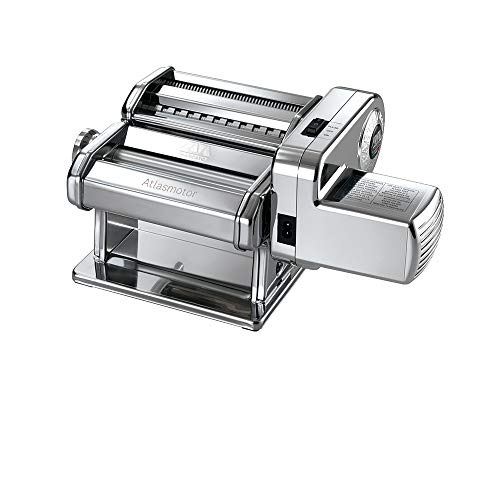
- Electric or manual operation
- 10 thickness positions for controlled sheets
- Compatible with 11 optional Marcato accessories
Best For: Small bakeries balancing convenience and menu flexibility
Best Commercial Dough Sheeter

- Forms dough portions in about five seconds
- Adjustable 0.7–5.4 mm thickness range
- Heavy stainless steel unit with safety features
Best For: Bakeries and pizzerias prioritizing fast pizza dough forming
Italian Craftsmanship
Atlas 180 Manual Pasta Machine

- Made and assembled in Italy
- 10 thickness settings with 180 mm sheets
- Optional Pastadrive motor compatibility
Best For: Small bakeries needing precise manual pasta and pastry shaping
Compact Electric Output
GVODE 3-in-1 Electric Pasta Maker

- 700W motor with two speeds and reverse
- Eight thickness settings from 0.4 to 2 mm
- Lightweight housing with metal drive gears
Best For: Small bakeries wanting electric assistance in a compact machine
Compact Electric Roller – 135W Stainless Steel Dough Sheeter
For small bakeries comparing pasta machines for small bakeries, this compact electric dough roller offers automated operation, six thickness positions, and a stainless-steel build. Its small footprint may suit workspaces where counter space is limited.
Best For: Small bakeries and kitchens needing a compact electric roller for noodles, pastry, and dumpling skins.
Pros:
- 135W motor supports faster, more consistent operation than a manual roller.
- Six thickness settings cover sheets from 0.02 to 0.14 inches.
- 410 stainless-steel construction is designed to resist rust and deformation.
- Compact 8.46-by-6.88-inch footprint helps conserve counter space.
Cons:
- The supplied notes do not specify a production capacity per hour.
- Its listed sheet width options may be limiting for some larger-format bakery work.
This is a practical option when space and basic automation matter most. Confirm the working width and output requirements before choosing it for higher-volume production.
Italian Manual Classic – Marcato Atlas150 Pasta Maker
MARCATO Atlas150 Manual Pasta Maker Machine-LASAGNA, FETTUCCINE & TAGLIOLINI. Made in Italy
Check Price On AmazonAmong pasta machines for small bakeries, the Marcato Atlas150 is a manual choice for operators who value direct control and a compact footprint. Made in Italy, it prepares lasagna, fettuccine, and tagliolini with multiple thickness settings.
Best For: Small bakeries that prefer hands-on pasta preparation and do not need electric operation.
Pros:
- Manual operation gives the user direct control over the rolling process.
- Includes pasta-making capability for lasagna, fettuccine, and tagliolini.
- Offers 10 settings, with listed sheet thickness from 0.8 to 4.8 millimeters.
- Compact 8-by-8-by-7-inch dimensions suit smaller work areas.
Cons:
- Manual operation requires more hands-on effort than an electric machine.
- The supplied notes do not provide an hourly production rate.
The Atlas150 is best suited to controlled, lower-volume workflows where operator involvement is acceptable. Its compact size and broad setting range make it a flexible traditional option.
High-Output Dough Press – VEVOR 370W Automatic Dough Sheeter
For production-focused pasta machines for small bakeries, this 370W automatic dough roller is designed for fast pressing rather than compact countertop use. It handles 3- to 14-inch dough sizes and lists an output of 240–260 pieces per hour.
Best For: Bakeries, cafes, pizzerias, and similar commercial kitchens needing high-throughput dough pressing.
Pros:
- Rated to press approximately 240–260 pieces per hour.
- Adjustable dough sizes from 3 to 14 inches and thickness from 1 to 5.5 millimeters.
- Automatic double-roller process reduces repeated manual pressing.
- Stainless-steel body, waterproof switch, safety cover, and non-slip feet support commercial use.
Cons:
- At 76.1 pounds and 19.7 by 18.3 by 25.2 inches, it requires substantial space.
- Its design is focused on pizza-style dough pressing rather than multiple pasta-cutting formats.
- The supplied notes list a single disc.
This machine makes the most sense when throughput and broad dough sizing outweigh portability. Measure the installation area and confirm that pressing, rather than pasta cutting, matches your production needs.
Electric Atlas Upgrade – Marcato Pastadrive 110W
This Marcato Pastadrive is a compact electric option for pasta machines for small bakeries, particularly businesses already using compatible Atlas or Ampia equipment. Its 110W motorized design is made and assembled in Italy and offers 10 settings.
Best For: Small bakeries seeking an electric drive compatible with Atlas, Ampia, or Marga Mulino machines.
Pros:
- Automatic operation can reduce the effort required for pasta rolling.
- Compatible with Atlas and Ampia machines and Marga Mulino, according to the supplied notes.
- Offers 10 settings with listed thickness from 0.02 to 2.5 millimeters.
- Compact 5.91-by-4.72-by-7.28-inch dimensions fit smaller work areas.
Cons:
- Compatibility-focused design may be less useful without the matching equipment.
- The supplied notes do not specify production capacity or included attachment variety.
The Pastadrive is a focused upgrade rather than a complete multifunction pasta system. It is most attractive for bakeries that already own compatible Marcato equipment and want powered operation in a compact format.
Best Manual Value – 3-in-1 Adjustable Pasta Maker
For small bakeries seeking pasta machines for small bakeries without a large equipment investment, this manual 3-in-1 model offers adjustable dough rolling plus two cutting widths. Its clamp-mounted design is compact and suited to lower-volume, hands-on production.
Best For: Small bakeries making fresh pasta, lasagna sheets, fettuccine, spaghetti, or dumpling skins in modest batches.
Pros:
- Nine thickness settings range from 0.3 to 2.6 mm.
- Includes a dough roller and cutters for 2 mm and 6.6 mm pasta.
- Sturdy table clamp helps keep the machine stable during use.
- Cutting attachment can be dismantled for more thorough cleaning.
Cons:
- Manual operation requires hand-cranking and more labor than an electric machine.
- Its 7.87-inch length and included cutters may be limiting for higher-volume production.
This is a practical entry-level choice when versatility, compact storage, and control over sheet thickness matter more than automation. It is best suited to bakeries that can accommodate a hands-on workflow.
Best Electric Upgrade – Marcato Atlasmotor 150
Among pasta machines for small bakeries, the Marcato Atlasmotor stands out for combining a traditional Atlas 150 with an electric Pastadrive motor. It can produce sheets up to 150 mm wide manually or electrically, giving operators flexibility as production needs change.
Best For: Small bakeries wanting electric assistance with the option to retain manual control and expand into additional pasta shapes.
Pros:
- Includes the Atlas 150, Pastadrive motor, hand crank, clamp, and manual.
- Offers 10 clearly marked thickness positions.
- Supports manual or electric operation.
- Compatible with 11 separately available Marcato accessories.
Cons:
- Additional pasta-shape accessories are sold separately.
- Its 9.5-pound weight and 13.39-inch length require more counter or storage space than a compact manual unit.
- Cleaning instructions call for letting residue sit out for at least 30 minutes before brushing.
The Atlasmotor is a strong middle ground for a bakery that wants to reduce hand-cranking without committing to a fully specialized production machine. Its accessory compatibility also leaves room to broaden the menu over time.
Best Commercial Dough Sheeter – 370W Dual-Roller Dough Press
For bakeries that also produce pizza, this 370W dual-roller sheeter is the most commercial-oriented option among these pasta machines for small bakeries. It forms dough portions in about five seconds and provides adjustable thickness for consistent crust preparation, though it is substantially larger than a pasta roller.
Best For: Small bakeries, pizzerias, and food businesses needing fast, semi-automatic pizza dough forming.
Pros:
- 370W copper motor forms a portion of dough in approximately five seconds.
- Dual rollers produce 4- to 15.7-inch bases in one pass.
- Thickness adjusts from 0.7 to 5.4 mm.
- Stainless steel construction, protective covers, overload protection, and non-slip feet support commercial use.
Cons:
- It is designed for pizza dough forming rather than cutting traditional pasta shapes.
- At 90.5 pounds and 20.86 by 21.26 by 25.2 inches, it needs significant dedicated space.
- Semi-automatic operation still requires placing, catching, rotating, and occasionally adjusting the dough.
This machine makes sense when speed and uniform pizza bases are central to the bakery’s workflow. It is overbuilt for occasional pasta making but useful for businesses that need repeatable dough processing at a higher volume.
Italian Craftsmanship – Atlas 180 Manual Pasta Machine
For small bakeries seeking pasta machines for small bakeries that can also support pastry work, the MARCATO Atlas 180 offers a compact manual setup with a 180 mm sheet width. Its chrome-steel construction, 10 thickness positions, and compatibility with an optional motor make it adaptable to varied workflows.
Best For: Small bakery teams that want manually controlled pasta sheets and occasional bread or cake decoration work.
Pros:
- Made and assembled in Italy.
- Produces sheets up to 7 inches wide, suitable for lasagna and ravioli.
- Offers 10 thickness settings, from 0.1 mm to 3 mm.
- Can be paired with the separately available Pastadrive motor.
Cons:
- Manual operation requires hand-cranking unless the optional motor is added.
- The 180 mm sheet width may be limiting for larger production batches.
- Cleaning requires allowing dough residue to dry before brushing it away.
The Atlas 180 is a flexible choice when control, Italian manufacture, and multi-purpose dough handling matter more than automated throughput. Its motor compatibility also leaves room for a future workflow upgrade.
Compact Electric Output – GVODE 3-in-1 Electric Pasta Maker
The GVODE is a practical option for small bakeries comparing pasta machines for small bakeries with limited counter and storage space. Its 700W electric drive, three-in-one roller and cutter design, and eight thickness settings reduce hand-cranking while keeping the machine relatively portable.
Best For: Small bakery operations that want electric assistance, compact storage, and multiple pasta formats.
Pros:
- 700W motor with two speeds and reverse.
- Eight thickness settings cover 0.4 mm to 2 mm.
- Produces sheets and cuts pasta for spaghetti, fettuccine, and lasagna.
- Lightweight 8-pound design with metal drive gears.
Cons:
- Requires 15-minute operating periods followed by 5-minute cool-downs.
- The plastic housing may feel less substantial than an all-metal machine.
- Its stated capacity and pacing make it better suited to controlled batches than continuous production.
This model fits bakeries that value convenience and easy storage. Following the recommended run-and-cool cycle is important for protecting the motor during repeated batches.
Versatile Manual Value – 7-Setting Stainless-Steel Pasta Maker
For small bakeries looking for pasta machines for small bakeries without an electric drive, this stainless-steel manual model provides a straightforward roller-and-cutter setup. Seven thickness levels and two detachable cutter widths support common pasta formats while the clamp helps keep the machine stable.
Best For: Small bakery teams that prefer a durable hand-crank machine for flexible, smaller-batch pasta preparation.
Pros:
- Heavy-duty stainless-steel construction and food-grade materials.
- Seven thickness settings for pasta sheets and wrappers.
- Includes 4.5 mm fettuccine and 2 mm spaghetti cutters.
- Table clamp, hand crank, and compact storage design are included.
Cons:
- Hand-crank operation can be slower and more labor-intensive for repeated batches.
- The supplied details list a minimum thickness of 2 mm, offering less stated range than some alternatives.
- It does not provide electric operation or motor compatibility in the supplied specifications.
This is a sensible entry-level production tool when a bakery values stainless-steel construction and simple maintenance. Its manual format is best matched with modest batch sizes and hands-on preparation.
How We Picked the Best Pasta Machines for Small Bakeries
We compared these machines by looking at the features most relevant to a small production kitchen: drive type, roller or cutter versatility, thickness control, working width, construction, footprint, and expected workflow. We also considered whether each model is best suited to pasta, pastry, dumpling skins, pizza dough, or multiple applications.
Manual machines can be cost-effective and easy to store, while electric units reduce repetitive hand-cranking during larger batches. However, a higher wattage rating alone does not guarantee better results; the machine must also provide suitable roller clearance, stable mounting, and controls that staff can use consistently.
Quick Comparison
| Machine type | Best suited for | Main advantage | Potential limitation |
|---|---|---|---|
| Manual pasta roller | Low-volume pasta and pastry | Simple, compact, and affordable | Requires hand operation |
| Electric pasta machine | Repeated pasta batches | Faster, less tiring production | Needs power and more counter space |
| Dough roller or sheeter | Pizza, pastry, and broad dough sheets | Higher throughput and wider use | May lack pasta cutters or fine settings |
| Multi-function maker | Small menus and varied prep | One appliance supports several tasks | Often trades heavy-duty capacity for versatility |
Key Buying Factors for Pasta Machines for Small Bakeries
Capacity and Workflow
Estimate how many dough portions you process per day and how often the machine will run continuously. A manual model may be enough for made-to-order pasta, while an electric roller or sheeter is more practical for repeated batches during service.
Thickness and Width Control
More settings provide better control over lasagna sheets, noodles, dumpling wrappers, and pastry. Check the actual roller width and thickness range rather than relying only on the number of settings.
Construction and Stability
Look for metal rollers, a firm base, and a dependable clamp or feet. Machines that shift during operation slow production and can produce uneven sheets. Commercial-style dough rollers may be preferable when the equipment will handle pizza or pastry as well as pasta.
Cleaning and Maintenance
Dry flour and dough residue should be removable without forcing water into the motor or gears. Detachable cutters and accessible surfaces simplify end-of-day cleaning. Always follow the manufacturer’s instructions for lubrication and sanitation.
Who Should Buy Which Pasta Machines for Small Bakeries?
Choose a manual Marcato-style roller if you value durability, compact storage, and hands-on control for smaller batches. An electric pasta maker is a better fit when staff repeatedly roll and cut dough and labor savings matter more than portability. Consider a dough roller or sheeter if your bakery’s priority is pizza, pastry, or larger sheets rather than only noodles. Multi-function models make sense for businesses testing a new menu or working with limited counter space.
Before buying, measure the available workspace, confirm voltage requirements, and check whether replacement cutters or accessories are available. For commercial use, prioritize reliable mounting, straightforward cleaning, and a machine sized for your actual daily volume rather than choosing solely by the lowest price.
