A good portable DAC for Android can make wired headphones sound cleaner, louder, and more detailed while keeping your setup small enough for daily carry.
We selected 10 USB-C DAC dongles ranging from simple 3.5mm adapters to feature-rich models with balanced outputs, gain controls, app support, and high-resolution decoding.
Best 10 Portable Dac for Android Picks for 2026
Best High-Power Pick

- 550mW balanced output in Desktop mode
- 3.5mm and 4.4mm outputs
- App-supported customization
Best For: Android listeners needing strong headphone-driving power
Best Hi-Fi Value

- 227mW output at 32 ohms
- 32-bit/384kHz dual-DAC playback
- USB-A adapter included
Best For: Android users wanting a powerful 3.5mm dongle
Best for Adjustable Gain

- Three adjustable gain levels
- 3.5mm and 4.4mm outputs
- Physical volume buttons
Best For: Android users switching between IEMs and headphones
Best for Everyday 3.5mm Use

- 32-bit/384kHz playback support
- Inline microphone and controls
- USB-A adapter included
Best For: Android users with efficient 3.5mm IEMs and headsets
Best Android-Controlled Pick
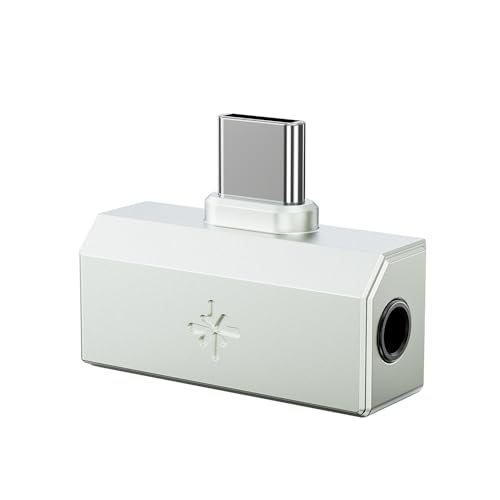
- 10-band PEQ through Android app
- PCM 384kHz/DSD256 support
- 7g direct plug-in aluminum design
Best For: Android listeners who want compact, adjustable sound
Best Compact All-Rounder

- 32-bit/384kHz USB-C audio
- Up to 200mW at 32Ω
- About 8.5g with broad compatibility
Best For: Everyday Android listening across phones and computers
Best Balanced-Output Option

- 3.5mm and 4.4mm outputs
- DSD256 and PCM 384kHz support
- 60-step physical volume control
Best For: Android listeners using balanced or demanding headphones
Flexible Hi-Res Pick
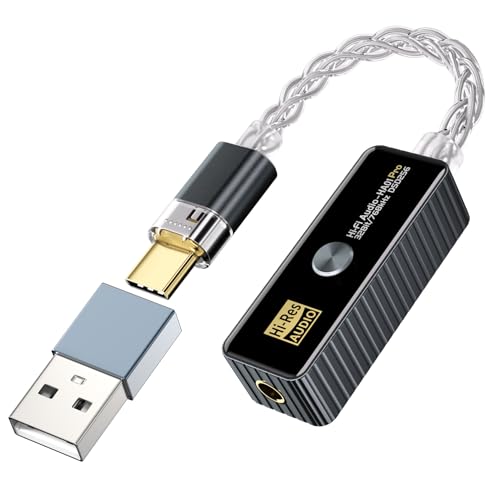
- 32-bit/768kHz and DSD256 support
- Five filters, gain control, and three output levels
- 14g design with broad headphone compatibility
Best For: Android listeners wanting powerful, adjustable hi-res audio
Ultra-Lightweight Value
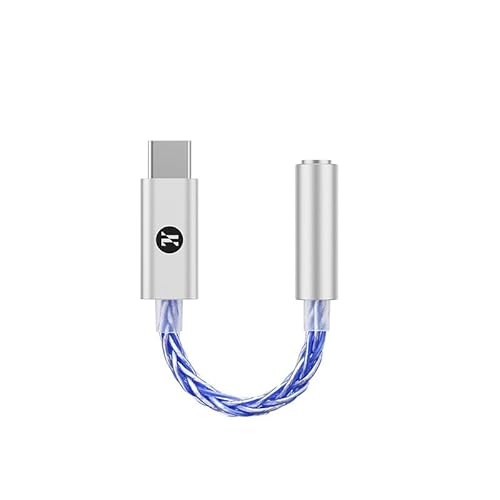
- Dual DAC and amplifier chip design
- 32-bit/384kHz PCM support
- Approximately 6g with 3.5mm output
Best For: Everyday Android listening with wired headphones
Best for Custom Tuning

- 10-band parametric EQ for Android and web
- 3.5mm and 4.4mm dual outputs
- 32-bit/384kHz decoding in a 10g metal body
Best For: Android users who want EQ control and output flexibility
Best High-Power Pick – FiiO/JadeAudio KA13
The FiiO/JadeAudio KA13 is a strong choice if you need a portable DAC for Android that can also handle demanding headphones. Its compact aluminum body offers both 3.5mm and 4.4mm outputs, while Desktop mode provides substantially more balanced-output power.
Best For: Android listeners who want high output power, dual headphone connections, and app-based customization.
Pros:
- Desktop mode raises balanced output power to 550mW for low- and high-impedance headphones.
- Dual CS43131 DACs and dual SGM8262 op-amps support detailed, high-resolution playback.
- Includes both 3.5mm single-ended and 4.4mm balanced outputs in a compact design.
- FIIO Control app supports RGB, audio-filter, and SPDIF-output adjustments.
Cons:
- Its highest stated power requires Desktop mode and balanced output.
- The feature set may be more than needed for basic earbuds.
Choose the KA13 when power and flexibility matter more than having the smallest possible basic adapter. It is particularly appealing if you already use 4.4mm balanced headphones or want room to upgrade.
Best Hi-Fi Value – BZINK BA36 USB-C DAC
The BZINK BA36 is a practical portable DAC for Android users who want high-resolution playback and more power than a basic phone adapter. It combines dual DAC hardware with a 3.5mm output and includes a USB-A adapter for use with additional devices.
Best For: Android, tablet, and USB-C laptop users seeking a compact 3.5mm DAC with strong output specifications and broad compatibility.
Pros:
- Dual CS43131 DACs support decoding up to 32-bit/384kHz.
- Rated output of up to 227mW at 32 ohms and support for 16–600-ohm headphones.
- Aluminum housing and silver-plated oxygen-free copper cable suit travel and daily use.
- Includes a USB-A adapter and a stated 20-month warranty with email support.
Cons:
- Only a 3.5mm headphone connection is listed; there is no 4.4mm balanced output.
- It is less suitable if you specifically need balanced headphone connectivity.
The BA36 makes sense for listeners who want substantial stated power and clean, high-resolution output without moving to a larger DAC amp. Its USB-A adapter also adds convenience for computers and other compatible sources.
Best for Adjustable Gain – TempoTec Sonata BHD
The TempoTec Sonata BHD is a versatile portable DAC for Android with separate 3.5mm and 4.4mm outputs, physical volume buttons, and three gain levels. That combination makes it easier to match the adapter to both sensitive IEMs and more demanding headphones.
Best For: Android listeners who want hardware volume control, adjustable gain, and compatibility with balanced and single-ended headphones.
Pros:
- Three-position hardware gain control adapts to sensitive IEMs and larger headphones.
- Provides both 3.5mm single-ended and 4.4mm balanced outputs.
- Dedicated physical volume buttons allow precise independent adjustment.
- Supports native DSD256 and PCM up to 32-bit/384kHz without drivers on listed platforms.
Cons:
- The listed Windows compatibility begins with Windows 10 version 1703 and later.
- Its extra controls may be unnecessary for users seeking a simple plug-in adapter.
For Android users who frequently switch between IEMs and headphones, the Sonata BHD offers useful control without requiring a separate amplifier. Its 18-gram aluminum build also keeps the setup suitable for commuting and travel.
Best for Everyday 3.5mm Use – CX31993 USB-C DAC Adapter
This CX31993-based adapter is a straightforward portable DAC for Android users who primarily use 3.5mm IEMs or headphones. It pairs a CX31993 DAC with a MAX97220 amplifier, adds inline microphone and control support, and includes a USB-A adapter for broader connectivity.
Best For: Android users who want a compact 3.5mm dongle for music, calls, gaming voice chat, and portable headphones.
Pros:
- Supports up to 32-bit/384kHz playback with a stated 124dB SNR.
- 63mW at 32 ohms is designed for 16–32-ohm IEMs and portable headphones.
- Built-in ADC supports inline volume, play/pause, call, and microphone functions.
- Includes a USB-A adapter and a 24-month warranty.
Cons:
- Its stated output is aimed at portable, lower-impedance headphones rather than demanding models.
- There is no 4.4mm balanced output.
This adapter is a sensible everyday option when convenience and headset functionality matter more than maximum amplifier power. It is especially well suited to phone calls, gaming chat, and efficient IEMs.
Best Android-Controlled Pick – FiiO/Snowsky TINY A
If you want a portable DAC for Android that combines a compact plug-in design with adjustable sound, the FiiO/Snowsky TINY A is a feature-rich choice. It supports PCM 384kHz/32-bit and DSD256 playback, while its Android app adds 10-band PEQ tuning, preset switching, UAC mode control, and volume adjustment.
Best For: Android users who want app-based EQ control, dual ports, and an exceptionally lightweight DAC.
Pros:
- Supports high-resolution PCM 384kHz/32-bit and DSD256 decoding.
- 10-band PEQ and additional controls through the FiiO app on Android or PC web.
- Only 7g, with a direct plug-in design and durable CNC-machined aluminum body.
- Supports simultaneous music playback and charging through its 3.5mm and Type-C ports.
Cons:
- The control app is supported on Android and PC web, not iOS.
- The direct plug-in format may be less flexible than a cabled adapter for some setups.
The TINY A stands out when portability and customization matter most. Its Android-focused control options are especially useful for listeners who want to fine-tune different headphones, while the dual-port design adds charging convenience.
Best Compact All-Rounder – FiiO KA11
The FiiO KA11 is a straightforward portable DAC for Android with a USB-C connection and 3.5mm headphone output. Its CS43131 DAC and amplifier support up to 32-bit/384kHz audio, while the compact 8.5g body is easy to carry between a phone, tablet, and computer.
Best For: Android users seeking a small, powerful USB-C dongle for everyday headphones and multiple devices.
Pros:
- Supports up to 32-bit/384kHz decoding with a CS43131 DAC and op-amp.
- Delivers up to 200mW at 32Ω and 245mW at 16Ω for driving many headphones.
- Compact 44 x 9.7 x 10.5mm design weighs about 8.5g.
- Compatible with Android, iOS, Windows, Mac, and UAC1.0 devices such as Switch and PS5.
Cons:
- It provides a single 3.5mm headphone output rather than a balanced connection.
- UAC1.0 mode requires switching through the FiiO Control app.
Choose the KA11 if you want strong output and broad compatibility without adding much bulk. It is a practical daily-use adapter for Android listening, computer audio, and compatible gaming devices.
Best Balanced-Output Option – Fosi Audio DS2
For listeners who need more connection flexibility, the Fosi Audio DS2 is a portable DAC for Android with both 3.5mm single-ended and 4.4mm balanced outputs. Dual CS43131 chips support PCM 32-bit/384kHz and DSD256 decoding, while independent volume buttons provide 60-step adjustment and volume memory.
Best For: Android users with demanding headphones who want balanced output, strong amplification, and physical volume controls.
Pros:
- Offers both 3.5mm single-ended and 4.4mm balanced headphone connections.
- Supports PCM 32-bit/384kHz and DSD256 high-resolution decoding.
- Provides up to 170mW at 32Ω per channel and uses dual CS43131 DAC chips.
- Includes independent 60-step volume buttons and volume memory.
Cons:
- Its 4.4mm balanced output is useful only with compatible headphones or cables.
- At 1.92 ounces, it is heavier than the smaller dongle-style alternatives here.
The DS2 is the strongest fit for Android listeners who value output options and hands-on control. Its balanced connection and dedicated volume buttons make it more versatile for serious headphone use, though the larger design may be less pocket-friendly.
Flexible Hi-Res Pick – Daakro HA01 Pro
The Daakro HA01 Pro is a versatile portable DAC for Android users who want high-resolution playback, headphone amplification, and extensive sound-shaping options in a very small package. It supports PCM up to 32-bit/768kHz and DSD256, while its USB-C connection works with Android phones, tablets, computers, and other compatible devices.
Best For: Android listeners who want powerful amplification, multiple filter modes, and broad device compatibility.
Pros:
- Supports PCM 32-bit/768kHz and DSD256 decoding.
- Offers five filter modes, high/low gain, and three output levels.
- Compact 14-gram design with up to 60mW at 16 ohms and 55mW at 32 ohms.
- Compatible with headphones and IEMs across a 16–600-ohm impedance range.
Cons:
- Does not support answering incoming calls.
- Some older iPhones require an OTG cable, which is not included.
- Its many tuning controls may be more than casual listeners need.
With its strong specifications, flexible filters, and low-noise performance, the HA01 Pro is a feature-rich option for Android users who want more control than a basic USB-C dongle provides.
Ultra-Lightweight Value – JCALLY JM6 Pro
The JCALLY JM6 Pro is a simple, lightweight portable DAC for Android phones with a USB-C port and wired 3.5mm headphones. Its dual-DAC design supports PCM up to 32-bit/384kHz and weighs about 6 grams, making it a practical choice for everyday carry.
Best For: Android users who want a compact USB-C-to-3.5mm adapter with dual-DAC decoding and straightforward operation.
Pros:
- Dual CX31993 and MAX97220 DAC/amplifier chips.
- Supports PCM up to 32-bit/384kHz.
- Very light design at approximately 6 grams.
- Listed compatibility includes many Galaxy, Pixel, Huawei, OnePlus, and other Android devices.
Cons:
- Provides a 3.5mm output only, without a balanced connection.
- Its listed compatibility should be checked against the specific Android phone.
- Offers fewer customization features than more advanced DAC amplifiers.
The JM6 Pro focuses on portability and essential audio decoding rather than extra controls. It is a sensible fit for Android listeners who primarily need a small wired-headphone adapter.
Best for Custom Tuning – BQEYZ C30 DAC Amp
The BQEYZ C30 is a versatile portable DAC for Android users who want dual headphone outputs and app-based sound customization. It combines 32-bit/384kHz decoding with a 10-band parametric EQ, plus 3.5mm and 4.4mm outputs in a 10-gram aluminum body.
Best For: Android listeners who want adjustable EQ profiles, a balanced-output option, and a compact metal build.
Pros:
- Provides customizable 10-band parametric EQ through Android or a web interface.
- Includes both 3.5mm and 4.4mm outputs.
- Supports PCM up to 32-bit/384kHz decoding.
- Delivers 57mW at 32 ohms in a 10-gram CNC aluminum body.
Cons:
- EQ settings are not supported on iOS.
- Output performance may vary when both outputs are used simultaneously.
- Its tuning features may be unnecessary for users seeking a basic dongle.
The C30 stands out for Android-focused customization and dual-output flexibility. Its parametric EQ makes it especially appealing for listeners who want separate profiles for music, gaming, vocals, or bass.
How We Picked the Best Portable Dac for Android
We focused on USB-C DACs that are practical for Android phones and tablets, with attention to compatibility, output options, amplification, portability, and stated high-resolution support. The selection includes straightforward plug-and-play adapters as well as more powerful models for demanding headphones and balanced cables.
Specifications such as PCM or DSD decoding can indicate capability, but they do not guarantee better sound by themselves. We also considered controls, connector durability, power requirements, and whether each model suits everyday mobile listening.
Quick Comparison
| What to Compare | Best For |
|---|---|
| 3.5mm output | Most wired earbuds and headphones |
| 4.4mm balanced output | Compatible headphones needing more power |
| Volume buttons | Convenient phone-free adjustments |
| Gain control | Matching output to sensitive or demanding headphones |
| App or PEQ support | Users who want sound customization |
Key Buying Factors for a Portable Dac for Android
Connector and Android Compatibility
Confirm that the dongle uses USB-C and supports your Android device’s USB audio behavior. Most modern phones work without drivers, but some devices may require USB OTG settings or have limited support for accessories while charging.
Output Type and Power
A 3.5mm jack is the most universal option. A 4.4mm balanced output can provide more power and channel separation, but it requires compatible headphones or a balanced cable. Do not connect a single-ended cable to a balanced port with an unsafe adapter.
DAC Resolution Versus Real-World Needs
Support for 24-bit, 32-bit, high sample rates, or DSD is useful for compatibility with high-resolution files, but ordinary streaming services and efficient earphones rarely need the maximum specification. Prioritize clean output and suitable power over headline numbers.
Size, Controls, and Battery Impact
Smaller dongles are easier to carry, while models with volume buttons, gain settings, or built-in tuning offer more control. More powerful DACs can draw additional phone battery, particularly when driving low-sensitivity headphones.
Who Should Buy Which Portable Dac for Android?
For Simple Everyday Listening
Choose a compact 3.5mm USB-C adapter such as the KA11, CX31993-based adapters, Daakro, or JCALLY JM6 Pro if you want an inexpensive, plug-and-play upgrade for wired headphones.
For Balanced Headphones
Look at models with both 3.5mm and 4.4mm outputs, including the KA13, Sonata BHD, Fosi Audio DS2, or BQEYZ C30. These are better suited to listeners who already own balanced cables.
For Demanding Headphones
Prioritize a model with stronger amplification or adjustable gain, such as the BA36, Sonata BHD, or DS2. Check impedance and sensitivity before buying because no dongle is ideal for every full-size headphone.
For Customization
The FiiO/Snowsky Tiny is the most appropriate choice for listeners interested in app-based controls and precision equalization. It is worth considering when tailoring sound matters as much as portability.
