Finding the best power amplifier for audiophiles means matching clean, controlled power with the speakers, sources, and room you already use. This lineup covers compact desktop amps, stereo power amplifiers, monoblocks, integrated models, and tube-equipped options.
Use the comparisons below to narrow your choices by power, connectivity, amplification design, and system flexibility before choosing the model that best fits your listening setup.
Best 10 Power Amplifier for Audiophiles Picks for 2026
Flexible Powerhouse

- Stereo or mono operation with up to 235W mono output
- Balanced XLR/TRS input and 12V trigger
- Swappable op-amps and upgraded cooling design
Best For: Compact, scalable passive-speaker systems
Connected Hi-Fi Hub
AIYIMA A80 Bluetooth DAC Amplifier

- ESS9038Q2M DAC with TPA3255 Class D amplification
- Bluetooth, USB, optical, coaxial, AUX, RCA, and balanced input
- Subwoofer pre-out, 12V trigger, remote, and VU display
Best For: Modern mixed-source desktop and home audio systems
Modular Monoblock Option

- Stereo direct mode for separates-based systems
- XLR mono operation with two amplifiers
- GaN transistors, PGA2311 control, and protection circuits
Best For: Audiophiles planning a modular preamp and monoblock setup
Versatile Integrated Classic
Denon PMA-600NE Stereo Amplifier
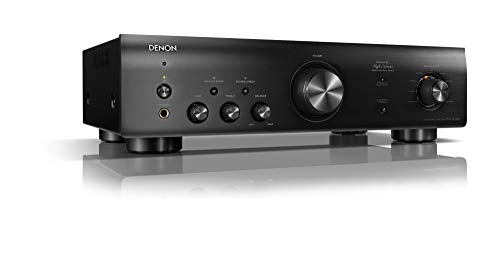
- 70W-per-channel stereo amplification at 4 ohms
- Bluetooth, DAC, optical, coaxial, and phono inputs
- Analog mode disengages digital circuits and Bluetooth
Best For: Simple two-channel systems with vinyl and digital sources
Versatile High-Power Choice
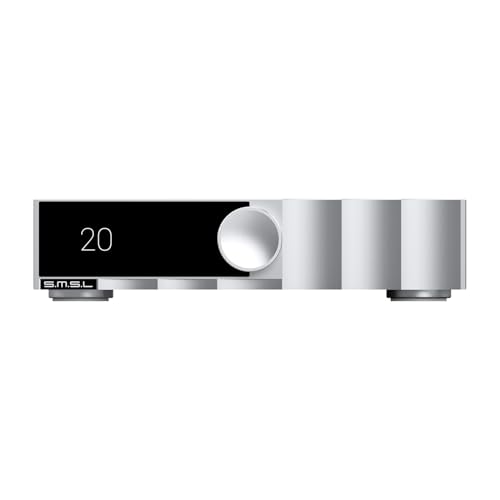
- GaN power technology with PGA2311 volume control
- Stereo pass-through and XLR mono modes
- Overheat and overcurrent protection
Best For: Flexible stereo systems and expandable high-power setups
Compact High-Output Value
Fosi Audio V3 Stereo Amplifier

- Up to 300W x2 with the included 48V supply
- Supports 2–8Ω passive speakers
- Swappable op-amps and adjustable pre-out
Best For: Desktop, bookshelf, and compact home-theater systems
Warm Class A Presentation

- 20W x2 at 8Ω and 25W x2 at 4Ω
- Reference-style pure Class A circuit
- Toroidal transformer and large filter array
Best For: Efficient desktop and bookshelf speakers with a warm tonal preference
Best Monoblock Power Amplifier

- 240W at 4 ohms for a single passive speaker
- Balanced XLR/TRS and RCA inputs
- Compact TPA3255 Class-D design
Best For: Modular stereo and home theater systems
Best All-in-One Power Amplifier
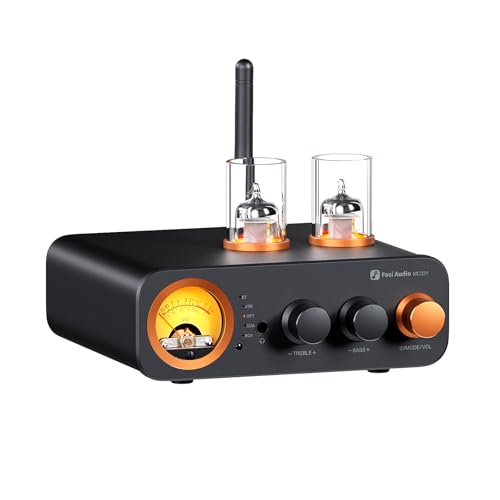
- Up to 105W x2 at 4 ohms
- Built-in DAC, preamp, and headphone amp
- Bluetooth, USB, optical, coaxial, and RCA inputs
Best For: Compact tube-style systems with varied sources
Best Budget Stereo Power Amplifier

- Two-channel Class-D design with stated 300W per channel
- Bass and treble controls for easy tuning
- Supports 2–8-ohm passive bookshelf speakers
Best For: Simple stereo, desktop, and bass-shaker systems
Flexible Powerhouse – Fosi Audio ZA3
The Fosi Audio ZA3 is a compelling power amplifier for audiophiles who want compact sizing with flexible system-building options. Its stereo and mono modes, balanced input, 12V trigger, and included 48V power supply make it suitable for desktop systems, passive speakers, or a scalable home theater setup.
Best For: Audiophiles who want a compact, upgradeable amplifier with stereo or bridged-mono flexibility.
Pros:
- Switches between stereo output up to 180W and mono output up to 235W.
- Balanced XLR/TRS input and 12V trigger help support cleaner, integrated systems.
- Uses a TPA3255 amplifier chip and supports DIP8 op-amp rolling.
- Upgraded cooling design is intended to support sustained high-power operation.
Cons:
- Op-amp rolling requires compatible components and some hands-on experimentation.
- Its compact form is best suited to systems built around passive speakers rather than extensive onboard features.
The ZA3 stands out when flexibility and future upgrades matter more than having an all-in-one receiver. Pairing two units in mono mode can provide a more powerful system, while the balanced connections suit noise-sensitive setups.
Connected Hi-Fi Hub – AIYIMA A80 Bluetooth DAC Amplifier
The AIYIMA A80 is an all-in-one power amplifier for audiophiles who want digital sources, Bluetooth, DAC functionality, and speaker amplification in one compact component. It combines an ESS9038Q2M DAC with a TPA3255 Class D amplifier and adds balanced input, subwoofer connectivity, tone controls, and a remote.
Best For: Listeners building a flexible desktop or home audio system around digital music, Bluetooth, TV, or computer sources.
Pros:
- Integrates ESS9038Q2M DAC and TPA3255 amplification in one unit.
- Offers Bluetooth, USB, optical, coaxial, AUX, RCA, and TRS balanced inputs.
- Supports DSD256 and PCM high-resolution audio according to the supplied specifications.
- Includes a subwoofer pre-out, 12V trigger input, remote, and digital VU display.
Cons:
- The many functions may be unnecessary for buyers seeking a simple analog power amp.
- Its maximum output depends on the connected speakers, power supply, and listening setup.
The A80 is a strong choice for minimizing component count without giving up modern connectivity. Its balanced input and broad digital support make it especially practical for mixed-source systems, while the VU display adds a visible, retro-inspired touch.
Modular Monoblock Option – SMSL PA200 Power Amplifier
The SMSL PA200 is a specialized power amplifier for audiophiles who prefer a clean post-stage design and the option to expand into a higher-power mono arrangement. It includes XLR and RCA inputs, a TI PGA2311 volume-control chip, and a stereo direct mode for use with a separate decoding preamp.
Best For: Enthusiasts building a separates-based system who may later pair two amplifiers for mono operation.
Pros:
- Supports stereo pure post-stage direct mode for use with a separate preamp or decoder.
- XLR input enables mono operation when combining two PA200 units.
- Uses a PGA2311 volume-control chip and high-efficiency gallium nitride power transistors.
- Includes overheating and overcurrent protection circuits.
Cons:
- Its 35W listed output is less substantial than many higher-powered amplifiers.
- Reaching the stated mono power gain requires purchasing and configuring two units.
- It is more specialized than an integrated amplifier with built-in digital sources.
The PA200 makes the most sense in a carefully planned separates system. Its direct mode suits listeners who already have a capable preamp, while the mono configuration provides an upgrade path for systems that need more speaker-driving capability.
Versatile Integrated Classic – Denon PMA-600NE Stereo Amplifier
The Denon PMA-600NE is a practical power amplifier for audiophiles who want the convenience of an integrated stereo component. It combines 70W-per-channel amplification with Bluetooth, a built-in DAC, optical and coaxial inputs, and a phono input, making it easy to connect both digital and analog sources.
Best For: Music listeners who want a straightforward two-channel home system for speakers, turntables, televisions, and mobile devices.
Pros:
- Delivers 70W per channel at 4 ohms for a broad range of home speakers.
- Includes Bluetooth, two optical inputs, coaxial input, and a phono input.
- Analog mode can disengage digital circuits and Bluetooth for an undivided analog path.
- Uses Denon’s Advanced High Current push-pull amplification circuit.
Cons:
- It does not offer the balanced inputs or mono configuration found on some specialized power amps.
- Its feature set is centered on stereo listening rather than multichannel home theater.
The PMA-600NE is the most approachable option here for buyers who want one established component to handle everyday sources. Its phono input and analog mode also make it a sensible choice for listeners who divide their time between vinyl and digital playback.
Versatile High-Power Choice – SMSL VMV PA200
For audiophiles who need flexibility and substantial power, the SMSL VMV PA200 is a feature-rich power amplifier for audiophiles with stereo, pass-through, and mono operating modes. Its XLR input supports pairing two units in mono configuration, while the GaN power technology, PGA2311 volume chip, and dedicated switching supply target clean, reliable performance.
Best For: Audiophiles building a flexible stereo system or seeking a path to higher-power mono operation with compatible speakers.
Pros:
- XLR mono mode can let two units form a higher-power stereo setup.
- Infineon GaN power technology and TI PGA2311 volume control.
- Includes stereo pure amplifier pass-through mode and protection against overheating and overcurrent.
Cons:
- Its advanced mono configuration is most useful when purchasing and integrating two units.
- The supplied notes do not specify a continuous wattage rating.
The PA200 stands out for system builders who value connection options and upgrade flexibility more than a minimal feature set. Confirm speaker compatibility and system connectivity before choosing it.
Compact High-Output Value – Fosi Audio V3 Stereo Amplifier
The Fosi Audio V3 is a compact power amplifier for audiophiles who want substantial output without a large component. Using a TPA3255 Class D design and a supplied 48V power supply, it is rated up to 300 watts per channel and is designed to drive 2–8Ω passive speakers in desktop, bookshelf, tower, or home-theater systems.
Best For: Space-conscious listeners who want high output, adjustable pre-out functionality, and the option to experiment with compatible op-amps.
Pros:
- Up to 300W x2 output and compatibility with 2–8Ω speakers.
- Low-noise design with stated 88dB SINAD, 110dB SNR, and 140uV noise floor.
- Replaceable 8-pin dual op-amps and volume-controlled pre-out add tuning and system flexibility.
- Top-and-bottom vents and a full-body heatsink support heat dissipation.
Cons:
- Its compact Class D format may not suit listeners specifically seeking a traditional Class A presentation.
- Op-amp rolling requires separately sourcing compatible replacements.
Choose the V3 when output, compact dimensions, and customization are priorities. Its broad speaker compatibility and pre-out make it a practical foundation for a desktop or small home-audio system.
Warm Class A Presentation – A1S Pure Class A Amplifier
The A1S takes a traditional approach to the power amplifier for audiophiles, using a pure Class A design rated at 20W x2 into 8Ω and 25W x2 into 4Ω. Its reference-style circuit, large filter-capacitor array, toroidal transformer, and stated warm, smooth tonal character make it a focused choice for compatible desktop and bookshelf speakers.
Best For: Music enthusiasts with efficient bookshelf or desktop speakers who prefer a warm, smooth Class A presentation.
Pros:
- Pure Class A stereo output with 20W x2 at 8Ω and 25W x2 at 4Ω.
- Large 144,000μF total filtering capacity is designed to support dynamic response.
- Omron relay provides switch-on/off shock and DC-output protection.
- Toroidal transformer and Ansem MJL21193/MJL21194 power transistors support the amplifier architecture.
Cons:
- Lower output than many high-power Class D alternatives, so speaker matching is important.
- Pure Class A operation may be less suitable for demanding or inefficient speakers.
- The supplied notes specify 110V AC operation.
The A1S is best considered a speaker-matching amplifier rather than an all-purpose power source. For an appropriate 4–8Ω desktop or bookshelf setup, its classic circuit and warm tonal goal may appeal to listeners who value relaxed, detailed presentation.
Best Monoblock Power Amplifier – Fosi Audio V3 Mono
For audiophiles building a modular home audio or theater system, the Fosi Audio V3 Mono is a compact power amplifier designed to drive one passive speaker at a time. Its 240W output at 4 ohms, balanced XLR/TRS and RCA inputs, and AVR-friendly design make it a practical choice for adding power to demanding channels.
Best For: Audiophiles who want compact monoblock amplification for stereo, multi-channel, or home theater setups.
Pros:
- Delivers up to 240W at 4 ohms from a compact single-channel chassis.
- Supports both balanced XLR/TRS and RCA single-ended connections.
- Uses a TPA3255 design with PFFB technology and specified 0.006% THD.
- Includes heat-management features and a 48V/5A power supply.
Cons:
- It is a one-channel amplifier, so multi-channel systems require multiple units.
- Requires a suitable preamp, receiver, or source with an amplifier-level input connection.
The V3 Mono is especially appealing when system flexibility and clean power matter more than having every function in one box. Its replaceable op-amp support also gives experienced users room to experiment with the sound signature.
Best All-in-One Power Amplifier – Fosi Audio MC331
The Fosi Audio MC331 combines amplification, conversion, source switching, and headphone listening in one compact component. For audiophiles seeking a versatile power amplifier with a vintage-inspired presentation, it offers tube architecture, a DAC, multiple digital inputs, Bluetooth, and up to 105W per channel at 4 ohms.
Best For: Audiophiles who want an integrated desktop or bookshelf-speaker system with tube styling and broad source compatibility.
Pros:
- Combines a DAC, amplifier, preamp, and headphone amplifier.
- Accepts Bluetooth, USB, coaxial, optical, and RCA sources.
- Provides up to 105W x2 at 4 ohms for bookshelf speakers.
- Includes a remote, replaceable tubes, pre-out, and 3.5mm headphone output.
Cons:
- Its integrated design may be less suitable for users who already own separate components.
- The listed 105W-per-channel rating is specified at 4 ohms.
The MC331 is a strong convenience-focused option for listeners who want fewer boxes without giving up connection flexibility. Its VU meter, tube covers, and replaceable tubes add visual and sound-customization appeal.
Best Budget Stereo Power Amplifier – Fosi Audio TB10D
The Fosi Audio TB10D is a straightforward two-channel power amplifier for audiophiles who want a small, adjustable component for passive speakers or bass shakers. With a TPA3255 Class-D platform, stated 300W per channel output, and dedicated bass and treble controls, it focuses on simple system integration and sound adjustment.
Best For: Listeners who need an affordable, compact stereo amplifier for bookshelf speakers, desktop audio, home theater, or bass-shaker applications.
Pros:
- Offers stated 300W per channel and supports 2–8-ohm bookshelf speakers.
- Provides front-panel bass and treble controls for quick sound tailoring.
- Works with sources such as phones, computers, CD players, TVs, and turntables with a phono preamp.
- Built-in protection circuits support stable operation.
Cons:
- Connectivity is limited to an RCA input and passive speaker output.
- It does not include a built-in DAC, Bluetooth, or phono preamp in the supplied specifications.
The TB10D makes the most sense when you want high stated output and basic tone controls in a small chassis. It is less feature-rich than an integrated DAC or tube amplifier, but its uncomplicated layout suits practical stereo and bass-shaker setups.
How We Picked the Best Power Amplifier for Audiophiles
We evaluated these amplifiers by looking at the features that matter most in real two-channel systems: output design, input and output flexibility, speaker compatibility, convenience features, size, and likely use case. The selection includes Class D models built around efficient modern amplifier platforms, traditional integrated amplifiers, a pure Class A option, and tube-equipped designs.
Because published power ratings can vary by impedance, distortion level, and power supply, wattage should be treated as a comparison point rather than a guarantee of identical performance. We also considered whether each amplifier is best suited to desktop listening, bookshelf speakers, a larger room, home theater integration, or a dedicated stereo system.
Quick Comparison
- Compact Class D: Fosi Audio ZA3, Fosi Audio V3, AIYIMA A80, and Fosi Audio TB10D prioritize efficient power in small enclosures.
- Flexible system building: The SMSL PA200 and VMV PA200 offer features such as balanced inputs, mono operation, and pass-through functionality for more advanced setups.
- Traditional integrated listening: The Denon PMA-600NE combines amplification with source connectivity and wireless convenience.
- Character-focused designs: The A1S Class A amplifier and Fosi Audio MC331 tube amplifier appeal to listeners who value a distinctive amplification approach.
- Monoblock expansion: The Fosi Audio V3 Mono is designed for systems that benefit from one amplifier per channel.
Key Buying Factors for a Power Amplifier for Audiophiles
Power, Impedance, and Speaker Sensitivity
Check your speakers’ nominal and minimum impedance, sensitivity, and recommended amplifier range. Efficient bookshelf speakers may need modest power, while demanding floorstanders or large rooms benefit from greater current delivery and headroom. A stereo amplifier and a pair of monoblocks can also behave differently when driving difficult loads.
Inputs and System Compatibility
Choose RCA for standard analog sources, XLR for balanced components and longer cable runs, and Bluetooth or USB/DAC features when digital convenience matters. Pass-through connections are useful when integrating an amplifier with another system component or home theater receiver.
Amplifier Topology and Controls
Class D models are typically compact, efficient, and cool-running. Class A designs can provide a distinctive listening experience but usually consume more power and generate more heat. Tube-equipped amplifiers may add a different presentation and require more attention to tube condition. Volume controls, gain settings, subwoofer integration, and mono switching can be just as important as the headline wattage.
Size, Cooling, and Placement
Confirm that the amplifier fits your rack, desk, or entertainment cabinet and leave adequate ventilation. Small amplifiers are convenient, but a compact chassis does not remove the need for sensible cable management and airflow.
Who Should Buy Which Power Amplifier for Audiophiles?
Choose a compact Class D model for a desktop, office, bookshelf-speaker, or space-conscious system. Choose an SMSL PA200-style amplifier if balanced inputs, mono operation, or pass-through connections support a more configurable setup. Choose the Denon if you want an established integrated amplifier with broad everyday connectivity rather than a bare power stage.
Choose a monoblock approach when you want to dedicate one amplifier to each speaker and have a suitable preamp. Choose the Class A model if its lower-power, heat-producing design suits your speakers and listening habits. Choose the tube integrated amplifier if you want built-in source flexibility and tube-based character. Finally, compare the total system—not just the amplifier price—including the preamp, cables, ventilation, and any DAC or streaming hardware you still need.
