The best power amplifiers for home use make it easier to drive passive speakers, add bass, connect multiple sources, or build a flexible karaoke and home theater system. The right choice depends less on the biggest wattage claim and more on matching power, inputs, speaker load, and room size.
We compared 10 compact, stereo, multi-channel, subwoofer, and rack-style amplifiers to help you find a practical fit for everyday listening, TV audio, parties, and custom setups.
Best 10 Power Amplifiers for Home Use Picks for 2026
Best Compact Pick
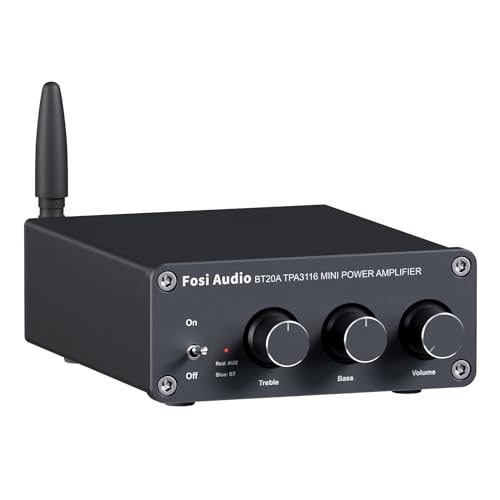
- Compact two-channel Class D design
- Bluetooth and RCA inputs
- Bass and treble controls
Best For: Simple passive-speaker setups in small rooms
Best Audiophile Upgrade
AIYIMA A20 Balanced Stereo Amplifier

- Balanced XLR/RCA connectivity
- Adjustable high-pass filter and sub out
- 12V trigger and swappable op-amps
Best For: Flexible stereo and 2.1 enthusiast systems
Best Subwoofer Add-On

- 100W mono subwoofer amplifier
- Built-in low-pass filter
- Selectable subwoofer or full-range mode
Best For: Dedicated passive-subwoofer expansion
Best High-Power Rack Option

- Two-channel rack-mount design
- TRS, XLR, Bluetooth, and USB-A inputs
- Bridgeable 2000W peak output
Best For: Large systems needing pro-style connections
Best Compact Power

- 300W per channel from a TPA3255 Class D design
- Bass and treble controls for sound tailoring
- Compact RCA-equipped amp for passive speakers
Best For: Desktop stereo, bookshelf speakers, and bass-shaker setups
Best Feature Value

- Bluetooth, FM, USB, SD, and AUX playback
- 40W per channel for 4–16-ohm speakers
- Remote control with bass and treble adjustment
Best For: Casual home audio, bars, and multi-source playback
Best for Karaoke

- 750W peak six-channel audio system
- Two mic inputs with echo and talk-over
- Bluetooth, USB, microSD, AUX, FM, and RCA
Best For: Karaoke, parties, announcements, and PA-style home audio
Best for Immersive Home Theater
3000W Peak 5.1-Channel Amplifier

- 5.1-channel surround sound with subwoofer output
- Three microphone inputs for karaoke
- USB/SD playback and remote control
Best For: Home theaters, karaoke, and small gatherings
Best Compact Stereo Value
Pyle 200W Bluetooth Stereo Amplifier

- 100W RMS and 200W peak power
- Bluetooth, USB, SD, FM, and RCA inputs
- Bass, treble, microphone, and master controls
Best For: Home and computer stereo audio
Best for Multi-Input Entertainment
Pyle 4-Channel Bluetooth Amplifier

- 500W peak power across four channels
- Bluetooth, USB, microSD, AUX, and FM
- Dual mic inputs with echo and talk-over
Best For: Karaoke, home entertainment, and announcements
Best Compact Pick – Fosi Audio BT20A
The Fosi Audio BT20A is a straightforward choice among power amplifiers for home use when you need a compact two-channel amp for passive speakers. Bluetooth and RCA inputs support simple streaming and wired connections, while bass and treble controls let you make quick sound adjustments.
Best For: Bedrooms, offices, living rooms, garages, patios, and bookshelf-speaker setups.
Pros:
- Compact Class D design with up to 100W x 2 maximum output.
- Bluetooth and RCA inputs support flexible connections.
- Simple controls, one-touch power switch, and included power supply.
- 24-month manufacturer warranty.
Cons:
- Designed for basic stereo use rather than advanced system integration.
- Its maximum output rating may not reflect continuous operating power.
The BT20A focuses on convenient everyday listening without adding unnecessary complexity. It is a practical fit for passive bookshelf or ceiling speakers where a small footprint and wireless streaming matter most.
Best Audiophile Upgrade – AIYIMA A20 Balanced Stereo Amplifier
The AIYIMA A20 is a feature-rich option among power amplifiers for home use, built for listeners who want balanced connectivity and more control over a stereo or 2.1 system. Its XLR/RCA input options, adjustable high-pass filter, subwoofer output, and 12V trigger support more involved home audio configurations.
Best For: Audiophile stereo systems, 2.1 setups, external preamp integration, and users who want upgrade flexibility.
Pros:
- Fully balanced design with XLR and RCA input options.
- Adjustable 60–200Hz high-pass filter and subwoofer output.
- Includes bypass mode, gain switch, swappable op-amps, and 12V trigger.
- Uses a cooling design and premium listed components.
Cons:
- Its advanced controls may be more than a basic system needs.
- Requires compatible source and speaker equipment to use its full feature set.
With its system-integration features and claimed 116dB SNR and 0.002% THD+N, the A20 is aimed at enthusiasts rather than plug-and-play buyers. It is especially compelling when paired with a subwoofer, preamp, or other compatible AIYIMA components.
Best Subwoofer Add-On – Fosi Audio M04
The Fosi Audio M04 is a focused mono amplifier for home use when your system needs dedicated passive-subwoofer power. Its selectable subwoofer or full-frequency mode, built-in low-pass filter, and sub-frequency control make it useful for shaping low-frequency output in a compact setup.
Best For: Adding or upgrading a passive subwoofer in a home theater or stereo system.
Pros:
- 100W mono output for a 2-ohm subwoofer or speaker.
- Built-in low-pass filter and adjustable sub-frequency control.
- Selectable subwoofer bass amplifier or full-frequency mono mode.
- Small, efficient Class D chassis designed to remain cool.
Cons:
- Single-channel design is not suitable as a main stereo amplifier.
- Its listed frequency range is limited to 20Hz–120Hz in the specification.
The M04 is best viewed as a specialized system component rather than an all-purpose receiver. Its compact form and bass-focused controls make it a sensible choice for improving low-frequency performance with a compatible passive subwoofer.
Best High-Power Rack Option – Pyle PTA1000BT
The Pyle PTA1000BT is a rack-mountable choice among power amplifiers for home use when you need substantial output and broad connection support. It offers two-channel stereo operation, bridged mode, Bluetooth, TRS and XLR inputs, multiple speaker outputs, and front-panel level monitoring.
Best For: Large home audio systems, multi-speaker installations, and users who need rack-mounted connectivity and high stated output.
Pros:
- Rated up to 1000W per channel in stereo or 2000W peak in bridged mode.
- Supports Bluetooth, two TRS inputs, and two XLR inputs.
- Offers Speakon, binding-post, and bridged output connections.
- Cooling fan and LED indicators help with monitoring and heat management.
Cons:
- Large and heavy compared with compact desktop amplifiers.
- Its 2000W figure is specified as maximum or peak output.
- Best suited to speakers and installations compatible with its higher-power format.
The PTA1000BT brings pro-style connectivity and monitoring to a high-output chassis, but it is not the most discreet option for a small living room. Consider it when rack mounting, multiple input types, and bridgeable power are more important than minimal size.
Best Compact Power – Fosi Audio TB10D
If you need power amplifiers for home use that fit neatly into a desktop, living room, or small listening setup, the Fosi Audio TB10D is a strong option. Its Class D design delivers up to 300 watts per channel, while RCA input, passive speaker outputs, and adjustable bass and treble make it flexible for everyday stereo listening.
Best For: Driving passive bookshelf speakers, adding a bass shaker to a gaming setup, or building a compact home audio system.
Pros:
- High-output TPA3255-based design rated at 300 watts per channel.
- Bass and treble controls allow convenient sound adjustment.
- Compact enclosure with RCA input and built-in protection circuits.
- Compatible with sources including phones, computers, TVs, CD players, and laptops.
Cons:
- Designed for passive speakers and does not provide the broader source selection of a full receiver.
- Its feature set is centered on two-channel stereo rather than multi-channel home theater.
The TB10D is a practical choice when clean, adjustable stereo power matters more than a large number of built-in inputs. Its small footprint and 24-month manufacturer warranty add appeal for straightforward home audio installations.
Best Feature Value – AK-380 Bluetooth Stereo Amp
The AK-380 is one of the more versatile power amplifiers for home use, combining Bluetooth 5.0, FM radio, USB, SD card, and AUX playback in a compact two-channel unit. It provides 40 watts per channel of rated output and includes separate bass, treble, and volume controls.
Best For: Home bars, small rooms, casual stereo listening, and users who want multiple playback options in one inexpensive amplifier.
Pros:
- Supports Bluetooth 5.0, USB drives, memory cards, AUX, and FM radio.
- Separate bass and treble controls provide basic sound customization.
- Works with 4–16-ohm speakers and includes a remote control.
- Compact design includes an LCD display and supplied 12V 5A power adapter.
Cons:
- Rated output is 40 watts per channel, so it is better suited to modest speaker systems than demanding high-power installations.
- It must use the included 12V 5A adapter for safe operation.
- Ventilation is required, and the unit should not be covered during use.
Choose the AK-380 if connectivity and convenience are priorities. Its built-in tuner and media playback support make it especially useful in flexible, casual listening spaces, though its power rating is more modest than the product’s peak-power wording suggests.
Best for Karaoke – Pyle PTA62BT.5 Home Amplifier
For buyers seeking power amplifiers for home use with karaoke and announcement features, the Pyle PTA62BT.5 offers a broad control and input package. Its six-channel system has 750 watts of peak power, Bluetooth streaming, USB and microSD playback, FM radio, and two microphone inputs with echo and talk-over functions.
Best For: Home karaoke, parties, announcements, and multi-source entertainment systems using 4–8-ohm speakers.
Pros:
- 750-watt peak output supports multi-speaker setups with 4–8-ohm impedance.
- Two microphone inputs include echo and talk-over functionality.
- Offers Bluetooth, USB, microSD, AUX, FM radio, and RCA connections.
- Includes a remote control and adjustable master, microphone, and equalizer controls.
Cons:
- The 9.6-pound, 13.8-inch-wide chassis is less compact than mini stereo amplifiers.
- Its extensive karaoke and PA features may be unnecessary for simple two-channel listening.
- The supplied specifications emphasize peak output rather than a continuous per-channel rating.
The PTA62BT.5 is best viewed as a home entertainment and PA-style receiver rather than a minimalist stereo amp. It makes sense when microphone mixing, talk-over, and varied media inputs are more important than a compact footprint.
Best for Immersive Home Theater – 3000W Peak 5.1-Channel Amplifier
For shoppers comparing power amplifiers for home use, this Viprh model focuses on 5.1-channel home theater sound, with a dedicated subwoofer connection and multiple playback options. It also adds three microphone inputs for karaoke and small gatherings.
Best For: Home theaters, karaoke nights, and small parties where surround sound and microphone mixing are useful.
Pros:
- 5.1-channel surround configuration with an independent subwoofer channel.
- Supports TV, computer, and CD-player connections through standard audio inputs.
- Includes USB/SD playback, three microphone inputs, an equalizer, and remote control.
- Built-in protection features are designed to support stable operation.
Cons:
- Audio output is intended for active subwoofers or active speakers only.
- The unit is relatively large at 9.06 by 14.96 by 9.06 inches.
- Its feature set may be more than needed for simple two-speaker listening.
This is the most feature-rich option here for a home entertainment setup that combines surround audio with karaoke functions. Verify your speaker and subwoofer requirements before buying, especially because the listed output design is for active equipment.
Best Compact Stereo Value – Pyle 200W Bluetooth Stereo Amplifier
This Pyle is a compact choice among power amplifiers for home use, offering two-channel stereo output with Bluetooth, USB, SD, FM radio, and RCA connectivity. Its straightforward controls also accommodate microphones for karaoke or announcements.
Best For: Home and computer audio users who want a small stereo amplifier with wireless streaming and flexible inputs.
Pros:
- Provides 100 watts of RMS continuous power and 200 watts of peak power.
- Bluetooth supports wireless playback from phones, tablets, and computers.
- Includes RCA, USB, SD, microphone, AUX, and FM radio input options.
- Front-panel controls adjust microphone volume, bass, treble, and master volume.
Cons:
- It is a two-channel stereo amplifier rather than a surround-sound receiver.
- The listed power is intended for two stereo speakers, not a multi-speaker home theater.
- Its 1/4-inch microphone inputs may require an adapter for some microphones.
Choose this model when compact size and source flexibility matter more than surround sound. It is a practical fit for a desk, small room, or basic karaoke setup, with a one-year limited warranty listed in the supplied details.
Best for Multi-Input Entertainment – Pyle 4-Channel Bluetooth Amplifier
For buyers seeking power amplifiers for home use with extra source and microphone options, this Pyle receiver combines four-channel operation with Bluetooth, USB, microSD, AUX, FM radio, and a subwoofer output. It also includes echo and talk-over features for karaoke and announcements.
Best For: Home entertainment, karaoke, paging, and setups using multiple speakers rated from 4 to 8 ohms.
Pros:
- Offers 500 watts of peak power across four channels for multiple speakers.
- Bluetooth supports wireless streaming from smartphones, tablets, laptops, and computers.
- Includes seven listed input options, plus USB-A MP3 playback and AM/FM radio.
- Two microphone inputs include echo, volume, and talk-over controls.
Cons:
- The supplied specifications describe stereo output mode despite the four-channel design.
- At 13 by 9.84 by 3.54 inches and 4.31 kg, it is less compact than a mini amplifier.
- The talk-over feature temporarily halts the music when activated.
This model makes sense when connectivity and microphone functions are priorities. Its subwoofer output and support for 4- to 8-ohm speakers add flexibility, while the four-channel configuration can suit broader home or small-event audio setups.
How We Picked These Power Amplifiers for Home Use
We focused on amplifiers that serve common home-audio needs while covering a range of budgets and system types. Our selection includes compact Class D stereo models, Bluetooth receivers, dedicated subwoofer amplifiers, multi-channel karaoke units, and higher-output rack-style designs.
We considered connection options, channel count, advertised power, controls, portability, installation flexibility, and compatibility with passive speakers. Because manufacturers may measure power differently, wattage is treated as a comparison point rather than a guarantee of real-world volume or sound quality.
Quick Comparison
| Best For | What to Prioritize | Useful Features |
|---|---|---|
| Desktop or small-room stereo | Compact Class D design and clean two-channel output | Bluetooth, RCA, tone controls |
| TV and home theater | Speaker compatibility and suitable channel configuration | Subwoofer output, multiple inputs |
| Subwoofer or bass shaker | Mono power and low-frequency support | Adjustable crossover, dedicated subwoofer controls |
| Karaoke and parties | Inputs, microphone controls, and channel count | Echo, USB, SD, FM radio |
| Large systems or installations | Continuous power, cooling, and rack compatibility | XLR, TRS, Speakon, bridge mode |
Key Buying Factors for Power Amplifiers for Home Use
Power and Speaker Compatibility
Check your speakers’ impedance and recommended power range before buying. An amplifier should be stable at the speaker’s rated load, and you should leave reasonable headroom without relying on maximum or peak wattage figures. Excessive clipping can damage speakers even when an amplifier’s headline rating looks appropriate.
Inputs and Everyday Convenience
Bluetooth is useful for phones and tablets, while RCA and AUX connections suit older sources. USB and SD playback can be convenient for parties, but they should not replace the inputs you need for a TV, turntable preamp, streamer, or CD player. XLR and TRS connections are more relevant to pro-style equipment and longer cable runs.
Channels, Bass Control, and Placement
A two-channel amplifier is usually the simplest choice for passive stereo speakers. Choose a mono subwoofer amplifier for a dedicated passive subwoofer or bass shaker, and consider a multi-channel unit when you need microphones, several speaker zones, or karaoke functions. Verify ventilation requirements, especially for rack-mount designs.
Realistic Use and Sound Levels
Room size, speaker sensitivity, listening distance, and music type all affect the power you need. A modest amplifier can be more than enough for a desk or apartment, while larger rooms and demanding speakers may benefit from additional headroom. Avoid choosing solely by the highest advertised peak number.
Who Should Buy Which Power Amplifiers for Home Use?
- Choose a compact Bluetooth stereo amp for a desk, bedroom, office, or simple passive-speaker system.
- Choose a higher-output two-channel model when you want more headroom for larger speakers, bass shakers, or louder listening.
- Choose a dedicated subwoofer amplifier when your main goal is powering a passive subwoofer or low-frequency transducer.
- Choose a multi-channel karaoke receiver for microphones, parties, USB or SD playback, and flexible whole-room entertainment.
- Choose a rack-style or pro-oriented amplifier for installations that need bridge operation, balanced inputs, robust connections, or higher output capacity.
Before ordering, confirm the speaker impedance, input types, available ventilation, and whether the listed power is continuous, RMS, or peak. Those checks will usually matter more than selecting the largest number on the product page.
