Looking for sergers under 500 that can handle finishing, hemming, and stretch fabrics without slowing you down? The right machine can make home sewing look more polished with less effort.
We focused on affordable models that balance ease of use, speed, stitch options, and durability so you can choose with confidence.
Best 10 Sergers Under 500 Picks for 2026
Value Workhorse
Brother 1034D Serger Overlock Sewing Machine

- Metal frame for durable everyday use
- 3- or 4-thread serging with color-coded threading
- Up to 1,300 stitches per minute
Best For: everyday sewists who want a simple, fast, and dependable serger
Threading Simplifier
Janome MOD-8933 Serger with Lay-In Threading
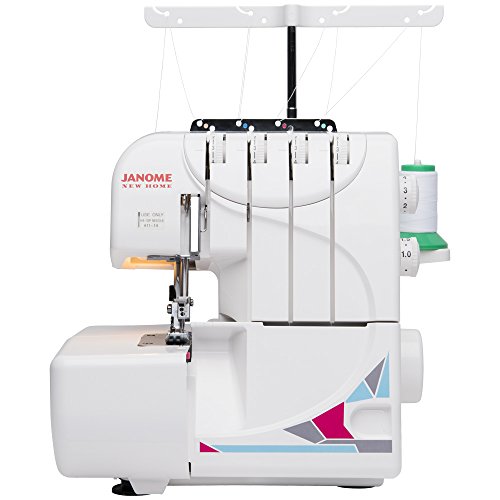
- Lay-in threading with color-coded guides
- 3- and 4-thread convertible with differential feed
- Quick-change rolled hem and easy-access lower looper
Best For: users who want simpler threading and fabric-control features
Tough Project Pick
Brother ST4031HD Strong & Tough Serger

- Metal frame and extra-hard carbon steel blade
- Up to 1,300 stitches per minute
- Includes large extension table and 3 feet
Best For: heavy-duty projects that need a sturdier serger with more workspace
Compact Precision

- Automatic lower looper threader
- Lay-in tensions with built-in rolled hem
- Adjustable differential feed and retractable upper knife
Best For: sewists who want a compact, feature-focused serger
Heavy-Duty Pick
VEVOR 2-3-5 Thread Overlock Serger
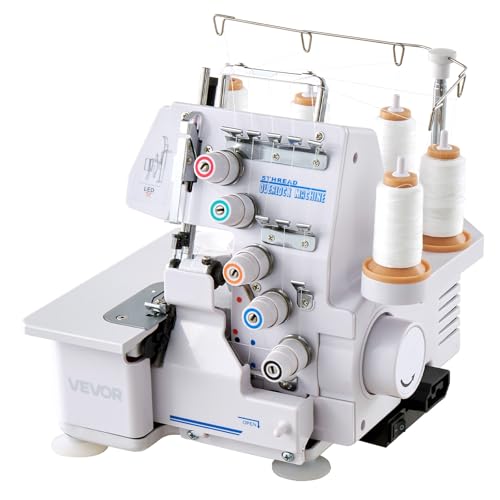
- 2/3/5-thread versatility
- 1,250 stitches per minute
- LED light and adjustable presser foot
Best For: Fast, heavy-duty serging with flexible thread options
Beginner-Friendly Portable Pick
American Home AH100 Portable Serger

- 4/3/2-thread serging with rolled hemming
- Differential feed and color-coded threading
- Lightweight 14.6-pound design
Best For: Beginners who want a portable, easy-to-learn serger
Fast Garment Pick
SINGER S0230 Navy Blue Overlock Serger
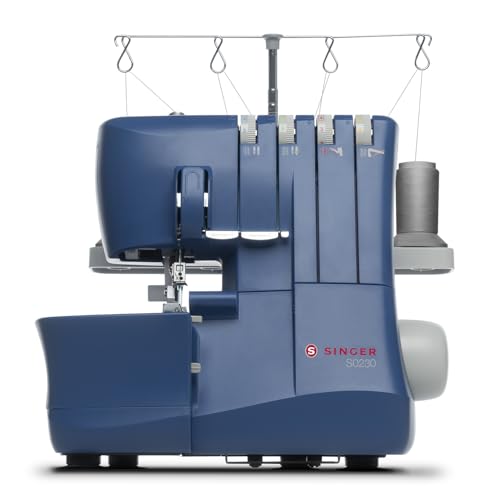
- 2/3/4-thread versatility
- Up to 1,300 stitches per minute
- Differential feed and free arm
Best For: Garment sewing, hemming, and fast seam finishing
Budget-Friendly 2/3/4-Thread Serger
FEIYUE FY503 Multi-Thread Overlock

- Supports 2/3/4-thread stitching
- Color-coded threading guides simplify setup
- Differential feed helps on knits and bias cuts
Best For: Home sewists wanting versatile everyday overlock features
Heavy-Duty Speed Pick

- Up to 1,300 stitches per minute
- LED-assisted threading improves visibility
- Handles 2-3-4 thread with 6 stitch options
Best For: Frequent sewists who want speed and thicker-fabric performance
Easy-Setup Starter Serger
SINGER S0100 High-Speed Overlock
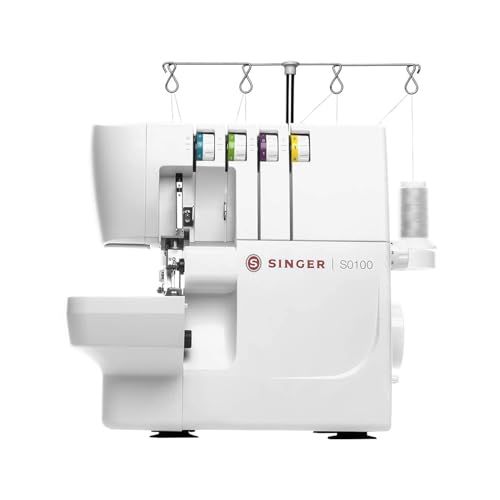
- Arrives pre-threaded for quick setup
- Color-coded threading guides reduce confusion
- Differential feed helps prevent wavy seams
Best For: Beginners wanting an easy-start serger for basic finishing
Value Workhorse – Brother 1034D Serger Overlock Sewing Machine
If you’re comparing sergers under 500, the Brother 1034D is a straightforward pick for everyday finishing and heavier fabrics. It pairs a metal frame with 3- or 4-thread sewing, simple color-coded threading, and a fast 1,300 stitches per minute output, making it a practical option for home sewists who want dependable performance without a steep learning curve.
Best For: Sewists who want an easy-to-thread, general-purpose serger for everyday projects and heavier layers.
Pros:
- Metal frame and interior components for durable everyday use
- 3- or 4-thread capability for flexible finishing options
- Up to 1,300 stitches per minute for faster sewing
- Includes standard, gathering, and blind stitch feet
Cons:
- US-only 120V product, so it’s not intended for other regions
- No advanced threading automation listed beyond the color-coded guides
- Basic accessory set compared with more feature-packed machines
The 1034D stands out as a reliable, no-frills serger for shoppers who want solid fundamentals and fast stitching. If ease of use and proven value matter most, it’s one of the safer buys in this price range.
Threading Simplifier – Janome MOD-8933 Serger with Lay-In Threading
Janome MOD-8933 Serger with Lay-In Threading, 3 and 4 Thread Convertible with Differential Feed
Check Price On AmazonFor shoppers browsing sergers under 500, the Janome MOD-8933 is appealing if threading convenience is a top priority. Its lay-in threading system with color-coded guides, quick-change rolled hem, and easy-access lower looper are all aimed at making setup and day-to-day use less frustrating.
Best For: Sewists who want a user-friendly serger with simplified threading and differential feed.
Pros:
- Lay-in threading system with color-coded thread guides
- 3- and 4-thread convertible design for versatile finishing
- Differential feed helps reduce stretching and puckering
- Quick-change rolled hem adds convenience for edge finishing
Cons:
- Only screwdrivers are listed among included components
- No sewing speed is provided in the supplied notes
- Less accessory-rich than some competing models
The MOD-8933 is a sensible choice if you want straightforward serging features that help keep setup manageable. It’s especially attractive for home users who value easier threading and fabric control over extra extras.
Tough Project Pick – Brother ST4031HD Strong & Tough Serger
If you need sergers under 500 that are built for tougher jobs, the Brother ST4031HD is the heavy-duty option in this group. It uses a sturdy metal frame, extra-hard carbon steel blade, and a wide extension table, while still offering the same 1,300 stitches per minute speed and easy color-coded threading approach.
Best For: Heavy-duty home sewing projects that need a sturdier machine and a larger work area.
Pros:
- Strong metal frame for durability on heavier projects
- Extra-hard carbon steel blade for a smoother cut edge
- Up to 1,300 stitches per minute for efficient serging
- Includes a large extension table plus standard, blind stitch, and gathering feet
Cons:
- Larger and heavier than more compact sergers
- US-only 120V product, so it’s not intended for other regions
- May be more machine than casual mending or light use requires
The ST4031HD makes sense if you want a tougher-feeling serger with a bigger setup area for bulkier work. It’s a strong fit for sewists who expect to handle more demanding projects and want a machine that feels built for it.
Compact Precision – Juki MO-50E 3/4 Thread Serger
Among sergers under 500, the Juki MO-50E stands out for practical controls in a compact build. It offers lay-in tensions, an automatic lower looper threader, adjustable differential feed, a built-in rolled hem, and a retractable upper knife, which gives you a focused set of useful features for clean edge finishing.
Best For: Sewists who want a compact serger with helpful threading and edge-finishing features.
Pros:
- Automatic lower looper threader for easier setup
- Lay-in tensions and built-in rolled hem for convenience
- Adjustable differential feed helps manage fabric behavior
- Retractable upper knife and adjustable calibrated knife add control
Cons:
- No accessory feet are listed in the supplied notes
- Smaller work footprint than machines with extension tables
- Light on extras compared with some competing sergers
The MO-50E is a smart pick if you want a compact machine with the key serger features most home sewists actually use. It favors efficient functionality over a long list of add-ons, which can make it a nice fit for focused sewing spaces.
Heavy-Duty Pick – VEVOR 2-3-5 Thread Overlock Serger
If you’re comparing sergers under 500 and want a machine built for speed and versatility, this VEVOR overlock model is worth a look. It offers 2/3/5-thread capability, color-coded threading, and multiple stitch styles, so it can handle everything from simple edge finishing to heavier fabric projects.
Best For: Sewers who want a fast, heavy-duty serger with flexible thread options and strong fabric support.
Pros:
- 2/3/5-thread setup supports repairs, finishing, and a wider range of sewing tasks
- Up to 1,250 stitches per minute with a 112W motor for fast, consistent stitching
- Bright LED light and adjustable presser foot help with visibility and control
- Supports overlock, rolled hem, edging, and lettuce hem stitches
Cons:
- At 18 pounds, it is less portable than lighter tabletop sergers
- Heavy-duty build may be more machine than a very casual user needs
Overall, this VEVOR serger stands out for buyers who want speed, stitch flexibility, and a sturdy build in the under-$500 range. It’s a practical choice for finishing garments and working across different fabric weights.
Beginner-Friendly Portable Pick – American Home AH100 Portable Serger
For shoppers searching for sergers under 500 that are easy to learn and easy to move, the American Home AH100 is a practical option. Its 4/3/2-thread setup, color-coded threading, and included guides make it a straightforward pick for hemming, sewing, and everyday finishing.
Best For: Beginners or hobby sewists who want a lightweight serger with helpful setup support.
Pros:
- 4/3/2-thread capability with rolled hemming for flexible everyday use
- Color-coded threading helps simplify setup
- Differential feed helps reduce stretching and puckering on tricky fabrics
- Lightweight 14.6-pound design with a carrying handle for portability
Cons:
- Lower-speed, portable design may not suit high-volume sewing
- More beginner-focused than heavy-duty or advanced production work
In the budget serger category, this model is appealing because it combines portability with learning support. It’s a solid fit if you want a machine that is easier to set up and store without giving up useful serging features.
Fast Garment Pick – SINGER S0230 Navy Blue Overlock Serger
If you want one of the more capable sergers under 500 for garment work, the SINGER S0230 brings high-speed overlock performance and beginner-friendly threading. Its 2/3/4-thread setup, differential feed, and free arm make it well suited to finishing seams, hems, and sleeves.
Best For: Garment sewists and DIY makers who want speed, easy threading, and clean seam finishes.
Pros:
- 2/3/4-thread capability covers seams, rolled hems, and decorative edges
- Color-coded threading is designed to be quick and beginner-friendly
- Up to 1,300 stitches per minute for fast project completion
- Differential feed helps avoid stretching and puckering on knits and sheers
Cons:
- Accessory set is useful but relatively basic
- Best suited to sewing and finishing rather than specialized heavy-duty tasks
This SINGER model is a strong all-around choice if you focus on clothes, hems, and stretch fabrics. It balances speed, usability, and fabric control in a way that fits many home serging needs.
Budget-Friendly 2/3/4-Thread Serger – FEIYUE FY503 Multi-Thread Overlock
If you want sergers under 500 that can handle everyday garment finishing, the FEIYUE FY503 is a practical multi-thread option. Its 2/3/4-thread capability supports overlock seams, rolled hems, flatlock stitches, and stretch mock safety stitches, while the color-coded threading guides and independent tension dials help simplify setup.
Best For: Sewers who want a straightforward serger for garment construction, hemming, and finishing on a mix of light to medium fabrics.
Pros:
- 2/3/4-thread flexibility for multiple seam and edge-finishing tasks
- Color-coded threading guides and independent tension dials for easier setup
- Adjustable differential feed helps improve results on knits, elastic fabrics, and bias cuts
- Built-in cutting system trims edges as you sew for cleaner seams
Cons:
- Best suited to household sewing rather than heavy commercial use
- Less feature-rich than some higher-priced heavy-duty sergers
- Requires correct adjustment to get the best results on challenging fabrics
This model stands out if you want a capable, budget-conscious serger with the core features most home sewists need. It pairs versatility with a stable metal-frame build and a compact footprint.
Heavy-Duty Speed Pick – SINGER HD0500S Fast Serger
Among sergers under 500, the SINGER HD0500S is built for sewists who want speed, power, and easier threading in one machine. It reaches up to 1,300 stitches per minute, uses a higher-wattage motor for thicker fabrics, and adds an LED-assisted threading system to make setup more manageable.
Best For: Sewers who work with denim, canvas, stretch fabrics, or frequent projects that benefit from a fast, sturdy serger.
Pros:
- Up to 1,300 stitches per minute for fast project turnaround
- Higher-wattage motor improves piercing power on thicker fabrics
- Easy View Threading and Lower Looper LED help with visibility during setup
- Includes 2-3-4 thread options, 6 stitch types, free arm, and differential feed
Cons:
- Heavier-duty focus may be more machine than casual beginners need
- More features can mean a steeper learning curve at first
- Bulkier than some simpler entry-level options
This is a strong pick if you care most about performance and durability in an affordable serger. The combination of speed, metal-frame stability, and helpful threading aids makes it especially appealing for frequent home use.
Easy-Setup Starter Serger – SINGER S0100 High-Speed Overlock
If you’re comparing sergers under 500 and want a machine that’s easy to get running, the SINGER S0100 is designed with setup in mind. It arrives pre-threaded, uses color-coded threading guides, and includes the core serger features needed for clean seams, hems, and decorative edges.
Best For: Beginners and home sewists who want a lighter, easy-start serger for basic finishing tasks.
Pros:
- Arrives pre-threaded for faster first-use setup
- Color-coded threading system reduces setup confusion
- Adjustable differential feed helps smooth out wavy or puckered seams
- Includes accessories and a front storage compartment for convenience
Cons:
- Not as heavy-duty as more power-focused sergers
- Fewer standout extras than some higher-end models
- Best for basic finishing rather than specialized advanced use
The S0100 is a sensible choice if you want a manageable, user-friendly serger without overspending. Its lighter weight, included accessories, and fast sewing speed make it a practical entry point for everyday sewing.
How We Picked the Best Sergers Under 500
To narrow down the strongest Sergers Under 500, we looked for machines that offer dependable threading systems, adjustable differential feed, solid stitch quality, and enough speed for everyday projects. We also gave preference to models with practical features like rolled hem settings, free-arm convenience, and stronger frames for more stable sewing.
Because buyers in this price range often want a machine that can do more than one job, we also considered thread versatility, setup simplicity, and whether the serger is suited for beginners, hobby sewists, or heavier-duty home use.
Quick Comparison: What Matters Most
At a glance, the biggest differences usually come down to thread capability, speed, and build quality. A 2/3/4-thread machine is often the most flexible choice for most households, while 3-thread-only models can be simpler and better for basic finishing. If you sew thick denim, knitwear, or layered seams, look closely at motor power, metal frame construction, and whether the machine is designed for heavier work.
Key Buying Factors for Sergers Under 500
Thread Options
More thread configurations usually mean more versatility. A 2-3-4 thread serger can cover basic edge finishing, stretchy seams, and decorative or narrow applications better than a more limited machine.
Ease of Threading
Threading is one of the biggest frustrations for new serger owners. Lay-in threading, color-coded guides, and automatic or simplified lower looper systems can make a major difference in day-to-day use.
Differential Feed
This feature helps control stretching and puckering on knits and lightweight fabrics. If you sew T-shirts, activewear, or slippery materials, differential feed is especially valuable.
Speed and Stability
Higher stitches-per-minute ratings help with efficiency, but stability matters too. A strong frame, good foot control, and suction or rubber feet can reduce vibration and improve accuracy.
Included Convenience Features
Extension tables, LED lighting, rolled hem settings, and easy stitch adjustments may not sound essential, but they can improve comfort and flexibility for regular sewing.
Who Should Buy Which Sergers Under 500?
If you are new to sergers, choose a model with straightforward threading and clear guides. If you mainly sew knits or fashion basics, prioritize differential feed and a versatile 2/3/4-thread setup. For thicker fabrics or frequent use, look for heavier-duty construction and faster stitching. Shoppers who want a budget-friendly all-rounder should focus on the best balance of simplicity, stability, and stitch flexibility rather than the longest feature list.
The best Sergers Under 500 are the ones that match your fabric types, skill level, and how often you sew. A well-chosen machine in this price range can deliver clean, professional-looking results without stretching your budget.
