The best voice recorders make it easier to capture lectures, interviews, meetings, and personal notes without relying on a phone. The models in this roundup range from simple playback devices to AI tools that transcribe and summarize recordings.
Use the guide below to compare storage, recording quality, battery life, transcription features, and ease of use before choosing the right recorder for your workflow.
Best 10 Voice Recorders Picks for 2026
Best All-Around Recorder
EVISTR L357 64GB Voice Recorder

- 64GB storage with MP3/WAV recording
- Noise reduction and seven gain levels
- Voice activation plus USB-C file transfer
Best For: Students, teachers, writers, and professionals needing flexible everyday recording
Best for AI Meeting Notes
soundcore Work AI Voice Recorder

- Coin-sized, 0.35-ounce wearable design
- AI transcription and structured summaries
- 300 free transcription minutes monthly
Best For: Professionals who want automated meeting notes and action items
Best AI Recorder with Large Storage

- 128GB capacity for extended audio storage
- AI transcription in 113 languages
- Smart summaries, mind maps, and speaker ID
Best For: Users wanting high capacity and app-based AI note organization
Best for Long Recording Sessions

- Up to 9,800 hours at 32kbps
- Claimed 100-hour recording battery life
- Triple noise reduction and one-touch recording
Best For: Frequent recorders needing extensive storage and long battery life
Best AI Voice Recorder
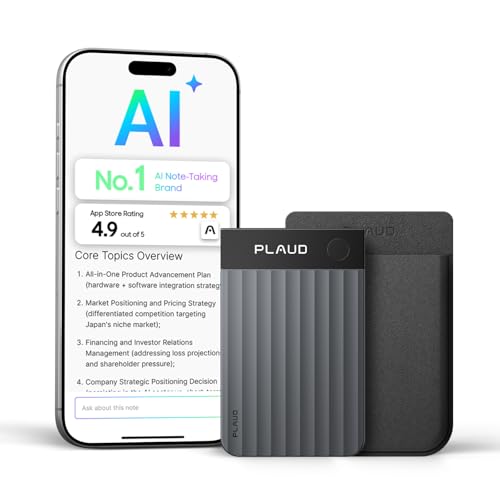
- Records calls and in-person conversations
- Transcribes in 112 languages with AI summaries
- Ultra-slim design with 64GB storage
Best For: Professionals who need automated meeting notes
Best Simple Voice Recorder

- One-button recording and built-in playback
- Voice activation and noise reduction
- 16GB storage with USB file transfer
Best For: Students and everyday lecture recording
Best Long-Recording Voice Recorder

- Up to 89 days of audio recording
- Three stereo microphones for distant speakers
- Remote control and Sembly speech-to-text trial
Best For: Meetings, lectures, and extended recording sessions
Best High-Capacity Pick
Tonfarb 136GB Digital Voice Recorder

- Up to 9775 hours of MP3 recording storage
- 1536 kbps PCM audio with noise reduction
- Up to 68 hours of continuous recording
Best For: Students, journalists, and frequent long-session recording
Best Simple Budget Option
HoTiyan 8GB Digital Voice Recorder

- Simple three-button recording and playback
- Voice activation with stereo recording and noise reduction
- Up to 20 hours of continuous recording
Best For: Casual lecture, meeting, and interview recording
Best for Organized Recordings

- 128GB storage with up to 9296 hours of recording
- 1536 kbps PCM plus selectable MP3 modes
- Four-folder file management and adjustable voice activation
Best For: Users managing recordings across classes, meetings, and interviews
Best All-Around Recorder – EVISTR L357 64GB Voice Recorder
For shoppers comparing voice recorders for lectures, meetings, and interviews, the EVISTR L357 offers a practical balance of storage, recording control, and straightforward operation. Its noise-reduction features, voice activation, and playback tools make it suitable for everyday recording without an overly complicated interface.
Best For: Students, teachers, writers, and professionals who want a durable recorder with ample storage and flexible playback.
Pros:
- 64GB storage can hold up to 4,660 hours at 32Kbps, according to the supplied specifications.
- PCM noise reduction, a built-in microphone, and seven recording-gain levels support clearer capture.
- Voice activation, scheduled recording, A-B repeat, variable-speed playback, and MP3/WAV support add useful flexibility.
- USB-C connectivity, time-stamped file names, and Windows/Mac compatibility simplify file management.
Cons:
- The extensive menu and recording options may take some time to learn.
- Voice activation can omit quiet portions when conversations include pauses.
The L357 is a strong traditional digital voice recorder for buyers who prioritize capacity and hands-on controls over app-based transcription. Its metal construction and stated long recording and playback times also make it a practical choice for frequent use.
Best for AI Meeting Notes – soundcore Work AI Voice Recorder
Among voice recorders designed for modern workflows, soundcore Work stands out for combining compact recording hardware with app-based transcription and summaries. It is built for users who want recordings turned into key points, decisions, and action items rather than simply stored for later playback.
Best For: Sales representatives, consultants, business professionals, and iPhone users who want AI-assisted meeting notes.
Pros:
- Weighs 0.35 ounces and can be clipped to clothing, worn as a necklace, or attached to a phone.
- Supports transcription in more than 150 languages, speaker identification, and claimed accuracy of up to 97%.
- Creates structured summaries with key points, decisions, and follow-ups through the app and web portal.
- Includes 300 free transcription minutes per month and AES-256 encryption by default.
Cons:
- Additional transcription capacity and advanced AI features require optional paid plans.
- Initial setup requires logging into the app, and USB export of audio files is not supported.
- It is not supported on iPhone 7 or earlier models.
Soundcore Work is less of a conventional standalone dictaphone and more of a connected meeting assistant. Choose it if automated summaries and searchable insights matter more than direct USB file access or completely app-free operation.
Best AI Recorder with Large Storage – EVISTR L359 128GB AI Recorder
The EVISTR L359 is one of the more feature-rich voice recorders for buyers who want recording, transcription, and summarization in one workflow. Its 128GB capacity, one-button operation, and wired phone connection make it useful for handling long-term recordings while keeping transfers straightforward.
Best For: Students and professionals who need high storage capacity plus transcription, summaries, speaker identification, and AI-assisted notes.
Pros:
- 128GB storage is rated for up to 9,216 hours at 32kbps.
- AI DVR Link supports transcription in 113 languages, smart summaries, mind maps, speaker identification, and Ask AI insights.
- Up to 33 hours of continuous recording, voice activation, and 3072Kbps recording support varied use cases.
- Password encryption, a HOLD switch, and included OTG accessories add security and connection flexibility.
Cons:
- AI processing depends on the AI DVR Link app and a wired OTG connection rather than Bluetooth.
- The feature set may be more than needed for buyers who only want basic recording and playback.
The L359 is a good fit when storage and AI organization are equally important. Its one-button recording is approachable, while the app-based tools give users a way to turn lengthy audio into more manageable notes.
Best for Long Recording Sessions – Elasound 132GB Voice Recorder
For buyers comparing voice recorders for lengthy lectures, meetings, or interviews, the Elasound NZ007 emphasizes storage endurance and battery life. Its voice activation, triple noise reduction, and included connection accessories make it a practical package for recording on the go.
Best For: Professionals, journalists, and students who need very high storage capacity and extended continuous recording.
Pros:
- The included 128GB TF card is rated for up to 9,800 hours of audio at 32kbps.
- AI DSP 4.0 and triple intelligent noise reduction are designed to improve vocal clarity.
- One-touch recording, voice activation, and time-and-date-stamped files simplify everyday use.
- Up to 100 hours of continuous recording and included USB-C, OTG, microphone, and headphone accessories support extended use.
Cons:
- The supplied details list MP3 as the recording format, offering less format flexibility than some competing models.
- The large storage figures depend on recording at the stated low 32kbps setting.
The NZ007 is especially compelling for users who record frequently and do not want to manage storage or recharge after every session. It also doubles as an MP3 player and USB flash drive, adding utility beyond basic audio capture.
Best AI Voice Recorder – Plaud Note Pro
If you want voice recorders that do more than save audio, the Plaud Note Pro combines recording with automatic transcription and meeting summaries. Its dual-mode recording is designed for in-person conversations and phone calls, while Plaud Intelligence can add speaker labels, decisions, action items, and follow-ups.
Best For: Professionals and teams who want compact recording hardware plus AI-assisted notes for meetings, calls, and online conversations.
Pros:
- Captures in-person and phone conversations with automatic dual-mode switching.
- Transcribes in 112 languages and structures recordings into summaries, decisions, and follow-ups.
- Ultra-slim 1.06-ounce design includes an AMOLED display, magnetic case, and ring.
- Includes 64GB of storage, 30 hours of recording time, and a free plan with 300 AI transcription minutes per month.
Cons:
- AI transcription and summaries depend on Plaud’s app and service plans.
- There is no headphones jack.
The Plaud Note Pro is a strong choice when the main goal is turning conversations into usable notes rather than simply storing audio. Its small, phone-friendly design and connected desktop, web, and mobile workspace make it especially practical for frequent meeting use.
Best Simple Voice Recorder – Sunlan 16GB Digital Recorder
For shoppers seeking straightforward voice recorders for lectures, interviews, or meetings, this Sunlan model keeps the controls simple. One-button recording, built-in playback, noise reduction, and voice activation cover the essentials without requiring an app or subscription.
Best For: Students and everyday users who want an affordable, compact recorder for clear voice capture and easy USB file transfer.
Pros:
- Simple REC, STOP, and PLAY controls make recording easy to start and review.
- Noise-reduction technology and a sensitive microphone help capture spoken words clearly.
- Voice activation can begin recording when sound is detected and reduce idle recording time.
- Offers 16GB storage, up to 30 hours of recording, and USB use as removable data storage.
Cons:
- Playback is rated for about 7 hours, shorter than its stated recording time.
- It records in WAV and does not list advanced transcription or AI note features.
This is a practical pick for buyers who prioritize uncomplicated operation over connected features. The built-in speaker, 3.5mm headphone jack, voice activation, and USB file access make it useful for routine recording and playback.
Best Long-Recording Voice Recorder – Philips VoiceTracer DVT4115
The Philips VoiceTracer DVT4115 is one of the more capable voice recorders for extended meetings, lectures, and interviews. Three specialized stereo microphones are designed for distant speakers, while stereo MP3 and PCM recording support clear playback and convenient file handling.
Best For: Users who need long recording capacity, remote control from a smartphone, and optional speech-to-text support for meetings or lectures.
Pros:
- Three stereo microphones are designed to capture speakers from a distance.
- Provides up to 89 days of recording time with 8GB of internal memory.
- Smartphone remote control lets you manage recordings from a distance.
- Includes Sembly AI speech-to-text trial features and multi-speaker meeting transcription.
Cons:
- The recorder weighs 93 grams and is larger than compact card-style models.
- Speech-to-text features include a trial rather than a stated permanently included service.
- The supplied details list MP3 as the format, while the product also supports PCM recording.
The DVT4115 makes the most sense for buyers who value recording endurance and meeting-focused tools. Its remote control and transcription workflow add convenience, while the stereo microphone setup is suited to larger rooms and distant speakers.
Best High-Capacity Pick – Tonfarb 136GB Digital Voice Recorder
For shoppers comparing voice recorders, the Tonfarb stands out for its generous storage, high-resolution PCM recording, and extended battery life. Its one-click recording control, voice activation, and USB-C transfer make it practical for lectures, interviews, meetings, and long recording sessions.
Best For: Students, journalists, and frequent users who need substantial storage and up to 68 hours of continuous recording.
Pros:
- Includes 8GB built-in storage plus a 128GB TF card, supporting up to 9775 hours in MP3 format.
- 1536 kbps PCM recording, dual noise-reduction microphones, and voice-activated recording help capture clearer audio.
- 1100mAh battery provides up to 68 hours of continuous recording.
- One-click recording, USB-C file transfer, A-B repeat, and password protection add convenience.
Cons:
- The included TF card must be managed alongside the recorder’s built-in storage.
- Its feature-rich design may be more than occasional users need.
Choose this model when capacity and recording endurance matter most. The metal casing and 97-gram design also make it a practical portable option for regular use.
Best Simple Budget Option – HoTiyan 8GB Digital Voice Recorder
Among voice recorders designed for straightforward everyday use, this HoTiyan model offers simple three-button operation, voice activation, and stereo recording. Its 8GB capacity is suitable for lectures, meetings, and interviews, while the MP3-player function adds a useful extra.
Best For: Casual users who want an uncomplicated recorder for classes, meetings, and short recording sessions.
Pros:
- Higher-sensitivity microphone, noise reduction, and a professional recording chip support high-definition stereo recording.
- Voice-activated recording can reduce silent sections and conserve storage.
- Supports up to 128 hours at 192 kbps, with additional lower-quality recording modes for longer storage.
- A-B repeat, variable playback speed, password protection, and file timestamps improve review and organization.
Cons:
- Its 8GB storage is substantially lower than the larger-capacity models in this roundup.
- Battery life is rated for up to 20 hours of continuous recording.
- File transfer uses the supplied Micro USB cable rather than USB-C.
This is a sensible choice if ease of operation matters more than maximum capacity or premium recording specifications. It also doubles as an MP3 player for added flexibility.
Best for Organized Recordings – EVIDA 128GB Voice Recorder
The EVIDA is one of the more versatile voice recorders for users who want high-capacity storage and flexible file management. It supports 1536 kbps PCM recording, adjustable voice-activation sensitivity, four storage folders, and up to 54 hours of continuous recording.
Best For: Students, teachers, business users, writers, and bloggers who need organized recordings and multiple recording-quality choices.
Pros:
- 128GB storage supports up to 9296 hours of recording or up to 40,000 songs.
- Offers MP3 recording at 128 or 192 kbps and WAV recording at 1536 kbps.
- Six voice-activation sensitivity levels help limit blank or whispering segments.
- Four-folder organization, password protection, A-B repeat, bookmarks, and auto recording support efficient file management.
Cons:
- The listed design does not include a headphone jack.
- Battery life is rated for up to 54 hours, shorter than the Tonfarb’s stated maximum.
- The supplied details identify the microphone operation as mono with noise cancellation.
The EVIDA is a strong fit when storage organization and recording flexibility are priorities. Its multiple formats and adjustable activation levels make it adaptable across classes, meetings, speeches, and interviews.
How We Picked the Best Voice Recorders
We compared these Voice Recorders by focusing on the features that matter during real-world recording: audio clarity, storage capacity, battery performance, recording formats, playback controls, microphone design, and portability. We also considered useful extras such as voice activation, password protection, USB charging, noise reduction, AI transcription, and meeting summaries.
Simple digital recorders can be a better choice than a smartphone when you want a dedicated device, longer recording time, or fewer distractions. AI-enabled models may cost more, but they can save time by converting speech into searchable text and summaries.
Quick Comparison
| Best For | Look For | Typical Advantage |
|---|---|---|
| Lectures and classes | Voice activation, long battery life, playback | Easy hands-free recording |
| Meetings and interviews | Noise reduction, reliable microphones, ample storage | Clearer voices in busy rooms |
| AI notes and summaries | Transcription, speaker recognition, app support | Faster review and organization |
| Phone calls | Call-recording compatibility and privacy controls | Convenient conversation capture |
| Occasional use | Simple controls and rechargeable battery | Lower cost and easier setup |
Key Buying Factors for Voice Recorders
Storage and Recording Time
More storage is useful for long lectures, repeated interviews, or keeping files on the device. Capacity claims can depend on recording quality and file format, so treat advertised hour counts as estimates. A recorder with expandable storage or easy USB transfer offers additional flexibility.
Audio Quality and Noise Control
Look for a sensitive microphone, adjustable recording quality, and noise-reduction features if you record in classrooms, offices, or public spaces. Stereo microphones can help capture a wider soundstage, while directional pickup may be preferable for a speaker directly in front of you.
AI Transcription and Privacy
AI transcription can turn recordings into notes and summaries, but check whether it requires a subscription, smartphone app, internet connection, or account. For confidential meetings and interviews, review how recordings and transcripts are stored before enabling cloud-based services.
Controls, Battery, and File Transfer
Physical buttons, a readable display, and quick access to record and playback are valuable when you need to operate the device discreetly. Also check charging time, battery claims, supported file formats, and whether files transfer directly over USB.
Who Should Buy Which Voice Recorders?
Choose a basic 8GB or 16GB recorder if you mainly need dependable recording and playback for occasional lectures or reminders. A higher-capacity 64GB, 128GB, or 136GB model is better for frequent users who store many recordings before transferring them.
Students and interviewers should prioritize voice activation, clear microphones, long battery life, and simple file management. Professionals who attend recurring meetings may benefit most from AI transcription and summary tools, provided the service fits their privacy and budget requirements. For calls, verify device compatibility and local recording laws before buying. Whichever model you choose, get consent when required and test the microphone and storage workflow before an important recording.
