The best XLR dynamic microphones can deliver focused, broadcast-ready sound while helping reduce room noise, computer fans, and unwanted background distractions. They are a practical choice for singers, podcasters, streamers, and home recording setups.
We compared 10 popular models across vocal clarity, pickup pattern, connectivity, durability, handling, and overall value so you can choose the right microphone for your setup and budget.
Best 10 Xlr Dynamic Microphones Picks for 2026
Classic Stage Vocal Pick
Shure SM58 Pro XLR Dynamic Vocal Microphone

- Cardioid pickup helps limit background noise and feedback.
- Built-in pop protection supports clean vocal capture.
- Rugged metal body suits live and touring use.
Best For: Live vocals, rehearsals, podcasting, and basic recording
Broadcast Desk Specialist
RØDE PodMic Cardioid Dynamic Broadcast Microphone

- Speech-tuned dynamic capsule suits podcasting and streaming.
- Internal pop filter and shock mounting simplify desk recording.
- All-metal body includes an integrated swing mount.
Best For: Podcasting, streaming, and desk-based broadcast recording
Studio Broadcast Standard
Shure SM7B Dynamic Vocal Microphone
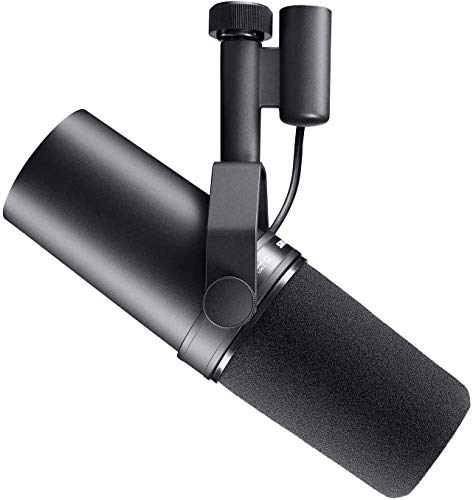
- Warm, balanced vocal capture suits studio and broadcast work.
- Cardioid pickup and air suspension reduce unwanted interference.
- Requires a strong gain-equipped XLR recording chain.
Best For: Professional podcasting, voiceover, streaming, and studio vocals
Feedback-Resistant Stage Choice
sE ELECTRONICS V7 Dynamic Microphone

- Supercardioid pickup supports isolation and high gain before feedback.
- Aluminum voice coil delivers crisp, natural vocal clarity.
- Rugged handheld design includes useful mounting accessories.
Best For: Live vocals, stage speech, and feedback-sensitive performances
Best Budget Pick

- Cardioid dynamic design for focused pickup
- Durable metal housing
- Includes an XLR cable
Best For: Affordable singing, speaking, streaming, and recording setups
Best for Podcasting

- Focused cardioid voice isolation
- Rugged all-metal construction
- XLR output for interfaces and mixers
Best For: Podcasting, broadcasting, and controlled vocal recording
Best Hybrid Setup

- USB and XLR connectivity
- USB mute and headphone controls
- RGB lighting for gaming setups
Best For: Gamers and streamers planning a future XLR upgrade
Pro Stage Vocal Pick

- Vocal-focused cardioid dynamic design
- Rugged grille with internal filtering
- Integrated on/off switch
Best For: Live singers, speakers, and stage setups
Flexible Home Recording Pick

- XLR and USB connectivity
- USB mute, gain, and headphone controls
- Windscreen and shock mount included
Best For: Podcasters, streamers, and home creators
Budget Cable-Included Pick

- 15-foot cable included
- Cardioid dynamic handheld design
- Built-in pop filter and rugged body
Best For: Karaoke, entry-level vocals, and basic stage use
Classic Stage Vocal Pick – Shure SM58 Pro XLR Dynamic Vocal Microphone
The Shure SM58 remains a practical choice among xlr dynamic microphones for singers, presenters, and creators who want focused vocal pickup and a durable handheld design. Its cardioid pattern helps reduce background noise and feedback, while the built-in grille and filter help control plosives and breath noise.
Best For: Live vocals, rehearsals, podcasting, and straightforward vocal recording with an audio interface.
Pros:
- Cardioid pickup focuses on the vocalist and helps minimize feedback.
- Built-in pop protection reduces plosives, breath, and wind noise.
- Rugged metal construction is suited to touring and frequent use.
- Includes a swivel stand adapter and storage bag.
Cons:
- Its handheld format is less specialized for desk-based broadcasting.
- Requires an XLR connection and compatible interface or mixer.
The SM58 is a dependable all-purpose option when durability, familiar vocal voicing, and simple setup matter more than extra broadcast-specific features.
Broadcast Desk Specialist – RØDE PodMic Cardioid Dynamic Broadcast Microphone
The RØDE PodMic is one of the more purpose-built xlr dynamic microphones for podcasting and spoken-word recording. Its broadcast-tuned capsule, internal pop filter, and shock mounting help produce controlled speech in untreated rooms, but you will need an XLR interface, mixer, or RØDECaster.
Best For: Podcasting, streaming, voice recording, and desk-based broadcast setups.
Pros:
- Broadcast-quality dynamic capsule is tuned for speech.
- Cardioid pickup helps reject room noise.
- Internal pop filtering and shock mounting reduce plosives and desk thumps.
- All-metal build and integrated swing mount provide a robust desk setup.
Cons:
- Requires an XLR interface or mixer; it is not a USB microphone.
- Its table-array form factor is less convenient for handheld singing.
Choose the PodMic when spoken-word clarity and a compact broadcast workflow are the priority, particularly if you already own compatible XLR equipment.
Studio Broadcast Standard – Shure SM7B Dynamic Vocal Microphone
The Shure SM7B is a studio-oriented option among xlr dynamic microphones, designed for warm, balanced vocals in podcasting, voiceover, streaming, and recording. Its cardioid pattern, air-suspension isolation, shielding, and included windscreens help keep close-mic audio focused and clean.
Best For: Professional podcasting, broadcast, voiceover, streaming, and close-mic vocal recording.
Pros:
- Wide-range dynamic design captures warm, balanced vocals.
- Cardioid pickup and air suspension help reduce room interference and handling vibration.
- Built-in pop filtering and included windscreens help manage plosives.
- Rugged metal construction includes electromagnetic shielding.
Cons:
- At least 60 dB of gain is recommended for its commonly associated tone.
- It is heavier and less portable than a typical handheld microphone.
- Does not include a USB connection.
The SM7B makes sense for buyers building a serious XLR recording chain and wanting extensive control over gain, EQ, and vocal tone, provided the interface or preamp has sufficient gain.
Feedback-Resistant Stage Choice – sE ELECTRONICS V7 Dynamic Microphone
The sE ELECTRONICS V7 is a flexible handheld option among xlr dynamic microphones, with a supercardioid pattern built for isolation and high gain before feedback. Its aluminum voice coil, shockmount system, internal windscreen, and rugged metal housing make it well suited to demanding stage use while remaining useful for speech and recording.
Best For: Live singers, stage presenters, speech, and recording situations where feedback control is important.
Pros:
- Supercardioid design provides strong isolation and gain before feedback.
- Custom aluminum voice coil supports crisp, natural vocal clarity.
- Shockmount helps reduce rumble and handling noise.
- Includes a swivel clip, thread adapter, and carrying pouch.
Cons:
- Supercardioid positioning requires more careful microphone technique.
- It is primarily a handheld microphone rather than a dedicated broadcast desk model.
The V7 is a strong fit for performers who need a durable handheld microphone with focused pickup, useful feedback resistance, and accessories for mobile stage setups.
Best Budget Pick – NEEWER NW-040
The NEEWER NW-040 is a practical entry point for shoppers comparing xlr dynamic microphones. Its cardioid pickup pattern focuses on sound from the front, while the included XLR cable makes it ready to connect to compatible mixers, interfaces, amplifiers, or other equipment.
Best For: Singing, public speaking, podcasting, streaming, karaoke, and basic instrument recording.
Pros:
- Cardioid pattern helps minimize sound from the rear and sides.
- Metal housing is designed to resist rust, scratches, and vibration-related noise.
- Includes a 3-pin XLR male-to-female cable.
- Extended 20 Hz–20 kHz frequency range for warm, balanced audio.
Cons:
- Its handheld design may require a separate stand or boom setup.
- It uses an XLR connection, so compatible audio equipment is needed.
Choose the NW-040 if you want a straightforward, durable microphone with useful accessories included. It is especially appealing for first-time XLR users who need one microphone for several voice and performance applications.
Best for Podcasting – Shure MV7X
The Shure MV7X is a focused choice among xlr dynamic microphones for spoken-word recording. It combines a cardioid dynamic design, integrated shock mount, and XLR-only output to help creators manage room noise and connect directly to an interface or mixer.
Best For: Podcasting, broadcasting, livestreaming, voice recording, and vocal performance.
Pros:
- Voice-isolation design helps reduce room noise and background distractions.
- Integrated shock mount helps limit unwanted vibrations.
- All-metal construction with adjustable yoke mount.
- Includes a 3/8-inch-to-5/8-inch thread adapter and two-year warranty.
Cons:
- XLR-only connectivity requires an audio interface or mixer.
- Its 50 Hz–16 kHz frequency range is narrower than some general-purpose microphones.
The MV7X is well suited to users who prioritize clear, controlled spoken-word capture over extra connectivity features. Its broadcast-inspired build and mounting flexibility make it a strong fit for a dedicated podcast or vocal workspace.
Best Hybrid Setup – FIFINE AmpliGame AM8
The FIFINE AmpliGame AM8 stands out among xlr dynamic microphones because it supports both USB and XLR connections. USB provides convenient plug-and-play controls for gaming and streaming, while XLR offers an upgrade path to an audio interface or mixer.
Best For: Gamers, streamers, and creators who want USB convenience with the option to move to XLR equipment.
Pros:
- Offers both USB and XLR connectivity.
- USB mode includes tap-to-mute, headphone monitoring, volume, and gain controls.
- Cardioid pickup helps reject unwanted off-axis noise.
- RGB lighting, built-in stand threads, and a windscreen support gaming setups.
Cons:
- An XLR cable is not included.
- RGB lighting and the function controls are inactive in XLR mode.
- USB features require USB connection and are not available through XLR.
The AM8 is a flexible option for creators who are not ready to commit exclusively to an interface. Use USB for a simple desktop setup today, then switch to XLR later; just remember that the cable and interface must be supplied separately for XLR operation.
Pro Stage Vocal Pick – Shure SM58S
For singers and speakers comparing xlr dynamic microphones, the Shure SM58S is a proven wired option with a focused cardioid pattern, a vocal-oriented response, and an integrated on/off switch. Its rugged grille and internal filtering are designed for demanding live use.
Best For: Live vocals, presentations, rehearsals, houses of worship, and users who want quick mute control.
Pros:
- Cardioid pickup helps reject off-axis noise from monitors, instruments, and crowds.
- Vocal-tuned sound is designed to provide clear, warm, present vocals.
- Hardened grille and internal filtering help reduce plosives, breath noise, and handling sounds.
- Integrated on/off switch makes muting convenient between songs or speakers.
Cons:
- It is a wired XLR microphone, so a mixer, PA, or compatible audio device is needed.
- The switch may be unnecessary for users who prefer uninterrupted microphone control from a mixer.
The SM58S is a sensible choice when dependable stage performance and straightforward vocal handling matter more than extra connectivity features.
Flexible Home Recording Pick – FIFINE AmpliTank K688
The FIFINE K688 stands out among xlr dynamic microphones by offering both XLR and USB connections. It combines a cardioid pattern with a metal build, while USB mode adds mute, gain, headphone monitoring, and volume controls for convenient computer recording.
Best For: Podcasts, streaming, voice-over work, home recording, and users who want both computer and mixer connectivity.
Pros:
- Dual XLR/USB outputs support connection to an audio interface, mixer, Windows computer, or Mac.
- USB mode provides tap-to-mute, gain control, headphone monitoring, and headphone volume adjustment.
- Cardioid pickup helps reduce background noise from sources such as computer fans.
- Included windscreen and shock mount help address plosives and low-frequency desk vibration.
Cons:
- Mute, gain, headphone, and monitoring controls are available only through USB connection.
- An XLR cable, boom arm, and microphone stand are not included.
The K688 is a versatile pick for creators who want an easy USB workflow now but may also use a mixer or audio interface later.
Budget Cable-Included Pick – Pyle PDMIC58
For buyers seeking affordable xlr dynamic microphones with a cable included, the Pyle PDMIC58 offers a unidirectional cardioid design and rugged zinc-alloy construction. Its built-in pop filter and 15-foot cable make it ready for straightforward stage, karaoke, or studio connections.
Best For: Entry-level live vocals, karaoke, amplified instruments, and basic stage or studio setups.
Pros:
- Includes a 15-foot XLR-to-1/4-inch cable for convenient setup.
- Cardioid pickup helps isolate the sound source and minimize background noise and feedback.
- All-metal zinc die-cast body and steel mesh windscreen are designed for durability.
- Built-in pop filter and windscreen help reduce breath and plosive noise.
Cons:
- Its 600-ohm impedance may require attention to compatibility with the connected equipment.
- It has a basic passive design without the extra USB features found on some recording microphones.
- The supplied cable uses a 1/4-inch connection at one end rather than XLR at both ends.
The PDMIC58 is a practical value option when you want a durable handheld dynamic microphone and a long cable in one package.
How We Picked the Best Xlr Dynamic Microphones
We focused on microphones with an XLR output and dynamic capsule, then considered the features that matter most in everyday use. Our comparisons include vocal intelligibility, off-axis noise rejection, polar pattern, build quality, mounting requirements, included accessories, and compatibility with mixers, audio interfaces, and microphone preamps.
Because intended use varies, the lineup includes stage vocal microphones, broadcast-style podcast models, USB/XLR hybrids, and affordable options for first-time buyers. A good microphone is not automatically the best fit for every room or recording chain.
Quick Comparison
| Best For | What to Look For |
|---|---|
| Live vocals | Strong handling, feedback resistance, and a comfortable handheld design |
| Podcasting | Clear close-range speech, a controlled pickup pattern, and low room sensitivity |
| Streaming and gaming | Simple positioning, USB/XLR flexibility, and compatibility with your desk setup |
| Home recording | Natural vocal detail, reliable gain performance, and good off-axis rejection |
| Budget setups | Included accessories, durable construction, and sensible preamp requirements |
Key Buying Factors for Xlr Dynamic Microphones
Pickup Pattern and Room Noise
Cardioid and supercardioid designs generally emphasize sound from the front while reducing pickup from the sides and rear. This makes them useful in untreated rooms, though placement still matters. Keep speakers behind the microphone and speak toward the front of the capsule.
Gain and Audio Interface Compatibility
Dynamic microphones often produce less output than condenser microphones. Check whether your interface, mixer, or preamp can provide sufficient clean gain. Some lower-output models may benefit from an inline booster or a preamp with extra headroom.
USB/XLR Flexibility
A traditional XLR microphone is ideal when you already use an interface or mixer. USB/XLR models offer an easier upgrade path: USB can simplify direct computer recording, while XLR allows integration with more advanced audio equipment later.
Handling, Mounting, and Accessories
Consider whether you need a desk stand, boom arm, shock mount, pop filter, or included cable. A heavier microphone may feel more substantial but can require a sturdier arm. For handheld singing, low handling noise and a secure grille are especially important.
Who Should Buy Which Xlr Dynamic Microphones?
Choose a classic handheld vocal model if you need a dependable microphone for live singing, rehearsals, announcements, or general speech. Choose a broadcast-style model if your priority is close-mic podcasting, streaming, or spoken-word recording in a less-than-perfect room.
Choose a USB/XLR hybrid if you are starting with direct computer recording but want the option to add an audio interface later. Choose a budget cardioid microphone for basic calls, practice recordings, or a first XLR setup, provided you understand that cable quality, gain, and positioning still affect the final result.
For any of these Xlr Dynamic Microphones, use a stable stand or boom arm, maintain a consistent distance, and angle the microphone slightly off-axis to reduce plosives. Those simple habits can improve results as much as changing microphones.
