Choosing the right citrus juicer can improve drink consistency, reduce prep time, and help a small food-service operation handle busy periods with less effort.
This roundup compares 10 commercial-minded manual and electric models for cafés, bars, restaurants, markets, and juice counters, with attention to capacity, durability, cleanup, and operating cost.
Best 10 Citrus Juicers for Small Businesses Picks for 2026
Classic Commercial Workhorse
Hamilton Beach 932 Manual Citrus Juicer

- Up to 2,000 pounds of pressing force
- Sure Grip feet help stabilize the unit
- NSF certified with removable strainer parts
Best For: Commercial kitchens needing powerful manual citrus pressing
Powered Pressing Pick
Eurolux 300W Electric Citrus Juicer

- 300-watt motor for powered pressing
- One-hand arm helps reduce effort
- Two filters offer pulp-control options
Best For: Small counters seeking convenient electric citrus juicing
Stable Pomegranate Specialist
Commercial Grade Can-Can Juicer

- Clamping system supports intensive use
- Designed for low-force manual pressing
- Dishwasher-safe stainless steel construction
Best For: Small commercial setups juicing citrus and pomegranates
Heavy-Duty Crank Choice
Nemco 55850 Manual Citrus Juicer

- Rack-and-pinion system supports consistent pressure
- Heavy-duty metal construction for commercial use
- 0.65-liter capacity with removable strainer cone
Best For: Restaurants and cafés needing a durable manual citrus press
Best Compact Electric Pick
Waring BJ120C Citrus Bar Juicer

- Compact footprint for small counters
- Universal reamer for assorted citrus
- Rated for up to 120 oranges per hour
Best For: Small bars, restaurants, and service counters
Best Manual Heavy-Duty Press
Zaksenberg Commercial Citrus Juicer

- Presses citrus and pomegranates
- Heavy base resists tipping
- Includes a three-year warranty
Best For: Juice stands, bars, and commercial kitchens
Best High-Volume Electric Option
Hamilton Beach FreshMark HCJ967R
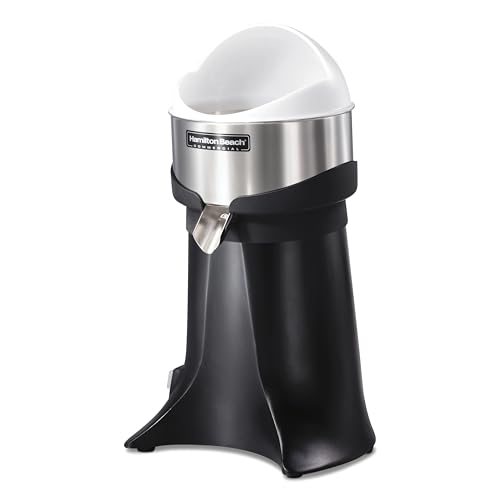
- Fills a glass in under 30 seconds
- Three reinforced reamer sizes
- Quiet motor and easy-clean parts
Best For: Busy cafes, bars, restaurants, and juice stations
Heavy-Duty Manual Pick
Zulay Kitchen Cast Iron Juicer

- Manual lever press needs no electricity
- Handles limes through grapefruits
- Stable cast-iron design for repeated use
Best For: Bars, juice stands, and small restaurant kitchens
Best Heavy-Duty Pick
VEVOR Commercial Orange Juicer

- Processes up to 132–176 pounds per hour
- Electric pressing with over 80% stated yield
- Basket and peel-collection system support workflow
Best For: Busy beverage shops and commercial foodservice settings
Versatile Professional Press
Zaksenberg Commercial Citrus Juicer

- Handles citrus and pomegranates
- Long 16-inch handle reduces pressing effort
- Heavy base and dishwasher-safe parts support service
Best For: Bars, restaurants, and lemonade stands needing fruit versatility
Classic Commercial Workhorse – Hamilton Beach 932 Manual Citrus Juicer
For small businesses seeking dependable citrus juicers for small businesses, the Hamilton Beach 932 emphasizes high extraction force, stable operation, and food-service certification. Its manual design suits juice bars, cafés, and restaurants that want control without relying on a motor.
Best For: Commercial kitchens and juice bars that need forceful manual pressing for lemons, limes, oranges, and grapefruits.
Pros:
- Up to 2,000 pounds of pressing force is designed to maximize juice output.
- Sure Grip feet help prevent tipping during use.
- Removable stainless steel strainer cone and ABS funnel simplify cleaning.
- NSF certified for food-service applications.
Cons:
- Manual operation requires staff to press each fruit.
- Hand-wash-only care may take more time than dishwasher-safe alternatives.
- Its 8-fluid-ounce capacity may require repeated emptying during busy service.
The Hamilton Beach 932 is a strong choice when extraction power, stability, and commercial-oriented construction matter more than automation or high-volume batch processing.
Powered Pressing Pick – Eurolux 300W Electric Citrus Juicer
The Eurolux is a practical option among citrus juicers for small businesses when staff need faster, lower-effort pressing. Its 300-watt motor, one-hand lever, stainless construction, and two filter sizes support streamlined service with adjustable pulp control.
Best For: Cafés, breakfast counters, and small juice operations that prioritize powered pressing and convenient pulp adjustment.
Pros:
- 300-watt motor supports powered citrus pressing.
- One-hand pressing arm can reduce manual effort.
- Two stainless steel filter sizes provide pulp-control options.
- Suction cups and a locking no-drip spout help promote cleaner, steadier operation.
Cons:
- Requires access to a corded electrical outlet.
- Its electric components add complexity compared with a manual press.
- The supplied notes specify citrus use rather than broader fruit versatility.
Choose the Eurolux when convenience and powered operation are central to the workflow. Its compact footprint and dishwasher-safe care details may also appeal to smaller service counters.
Stable Pomegranate Specialist – Commercial Grade Can-Can Juicer
The Can-Can is one of the citrus juicers for small businesses to consider when long-term durability and stable manual pressing are priorities. Its clamping system, stainless steel construction, and low-force squeezing design are suited to repeated commercial use.
Best For: Small commercial juicing setups that handle citrus and pomegranates and value a stable, portable manual appliance.
Pros:
- Clamping system is designed for intense, repeated use.
- Pressing requires relatively little force according to the supplied product notes.
- Construction uses stainless steel and includes a stable, non-destabilizing pressing design.
- Dishwasher-safe care can simplify cleanup.
Cons:
- Manual pressing may be slower than an electric model for continuous service.
- Its 0.24-liter capacity is relatively modest for busy batches.
- The tall 21.65-inch profile may need suitable counter clearance.
The Can-Can stands out for businesses that want a durable manual press with clamping stability and broader stated use across citrus and pomegranate juicing.
Heavy-Duty Crank Choice – Nemco 55850 Manual Citrus Juicer
The Nemco 55850 is built for businesses comparing citrus juicers for small businesses with an emphasis on repeatable manual extraction. Its rack-and-pinion system, durable metal construction, ergonomic handle, and NSF listing target restaurant and café service.
Best For: Restaurants, cafés, and juice bars that need a heavy-duty manual citrus press with a relatively generous 0.65-liter capacity.
Pros:
- Rack-and-pinion mechanism is designed to apply consistent pressure.
- Aluminum, stainless steel, and high-strength steel components support durability.
- Removable strainer cone facilitates cleaning and maintenance.
- Ergonomic handle and NSF listing suit commercial use.
Cons:
- Manual crank operation requires staff input.
- Hand-wash-only care may add cleanup time.
- Its 11.9-pound weight may make relocation less convenient.
For a small business that prefers mechanical simplicity and consistent lever pressure, the Nemco offers a durable commercial profile without the need for electrical power.
Best Compact Electric Pick – Waring BJ120C Citrus Bar Juicer
For small businesses needing citrus juicers for small businesses, the Waring BJ120C offers electric operation in a compact 7.25-inch footprint. Its universal reamer handles different citrus fruits and is rated for up to 120 oranges per hour.
Best For: Bars, restaurants, and compact service counters that need steady citrus output without taking up much space.
Pros:
- Compact design suits small workspaces.
- Universal reamer works with various citrus fruits.
- Rated for up to 120 oranges per hour.
- Die-cast base and vibration-dampening feet support quiet, stable operation.
Cons:
- Its 1-quart capacity may require frequent emptying during heavier service.
- Only one speed is available.
- The 150-watt motor is less powerful than the larger commercial model in this roundup.
The BJ120C is a practical choice when counter space matters most. It combines a small footprint with useful commercial capacity, though businesses serving larger volumes may prefer a larger bowl and multiple reamers.
Best Manual Heavy-Duty Press – Zaksenberg Commercial Citrus Juicer
For operations that value durability and manual control, this Zaksenberg press is a strong option among citrus juicers for small businesses. Its heavy food-grade steel and iron construction, long handle, and large filter are designed for frequent use across several fruit types.
Best For: Juice stands, bars, restaurants, and commercial kitchens that want a manual press for oranges, lemons, limes, grapefruits, and pomegranates.
Pros:
- Handles multiple fruits, including pomegranate.
- Heavy base helps prevent tipping and movement.
- Long 16-inch handle reduces the effort needed for pressing.
- Three-year warranty provides added purchase support.
Cons:
- Manual operation requires staff effort for every serving.
- At 21.3 pounds and nearly 21 inches tall, it needs substantial counter space.
- Manual pressing may be slower than an electric juicer during rush periods.
This press makes sense for businesses seeking a sturdy, versatile machine without relying on a motor. Its size and manual workflow are trade-offs, but the broad fruit compatibility and heavy construction suit demanding small-business environments.
Best High-Volume Electric Option – Hamilton Beach FreshMark HCJ967R
The Hamilton Beach FreshMark HCJ967R is built for businesses that need fast, consistent citrus service. Among citrus juicers for small businesses, it stands out with a quiet brushless induction motor, three reinforced reamers, and a tall spout that can accommodate glasses, pitchers, and storage containers.
Best For: Cafes, bars, restaurants, and juice stations serving multiple citrus varieties throughout the day.
Pros:
- Fills a glass of juice in less than 30 seconds.
- Three reamers cover lemons, limes, oranges, and grapefruits.
- Quiet brushless induction motor supports a calmer service area.
- Dishwasher-safe reamers and bowl simplify cleanup.
Cons:
- Its 28.1-pound weight makes it less portable.
- The 18.11-inch height and 10.23-inch width require more counter clearance.
- It has a higher wattage and larger footprint than the compact Waring model.
With its reinforced components, tall open spout, and fast output, the HCJ967R is suited to busy small businesses that can accommodate its larger footprint. It is especially useful when switching between citrus sizes is part of daily service.
Heavy-Duty Manual Pick – Zulay Kitchen Cast Iron Juicer
For small businesses seeking citrus juicers, the Zulay Kitchen Cast Iron Juicer offers a straightforward, electricity-free way to press lemons, limes, oranges, and grapefruits. Its 5-inch bowl, leverage-driven arm, and rubberized feet are suited to repeated countertop use.
Best For: Bars, juice stands, lemonade businesses, and small restaurant kitchens that need manual citrus pressing.
Pros:
- Cast-iron construction and a lever mechanism provide strong pressing power.
- Handles citrus ranging from small limes to large grapefruits.
- Designed to minimize seeds and pulp while extracting substantial juice.
- Rubberized feet help keep the press stable during operation.
Cons:
- Hand-wash-only care may require more cleanup time.
- Manual operation is less suitable than an electric machine for very high-volume production.
- The 0.6-liter capacity is better suited to batch pressing than continuous large-scale service.
This is a practical choice when durability, quiet operation, and control matter more than automation. It can support regular small-business service, but operators with sustained high throughput may prefer a commercial electric model.
Best Heavy-Duty Pick – VEVOR Commercial Orange Juicer
Among citrus juicers for small businesses, the VEVOR Commercial Orange Juicer stands out for operators prioritizing throughput. Its 100-watt electric system uses four rotating shaft assemblies and is rated to process 132–176 pounds of citrus per hour, with a stated juice yield above 80%.
Best For: Beverage shops, restaurants, supermarkets, fruit stores, and other businesses with steady citrus demand.
Pros:
- Rated capacity of 132–176 pounds, or 60–80 kilograms, of citrus per hour.
- Large top basket supports refilling during operation.
- Adjustable fitting accommodates different fruit sizes.
- Filter plate separates juice from pulp, while separate outlets support peel collection.
Cons:
- At 51.4 pounds and over 21 inches tall, it requires substantial counter or floor space.
- Fruit must be washed, peeled, pitted, and cut to suitable sizes before processing.
- Hand-wash-only care may make cleanup more involved than the detachable cover suggests.
This machine is the strongest throughput option in the group. Its preparation requirements and large footprint should be considered, but the electric operation and high stated capacity make it a logical fit for businesses serving citrus juice continuously.
Versatile Professional Press – Zaksenberg Commercial Citrus Juicer
The Zaksenberg Commercial Citrus Juicer is a manual option for small businesses that want to press more than standard citrus. Its heavy metal construction, long 16-inch handle, and large filter are designed for oranges, lemons, limes, grapefruits, pomegranates, and other fruit.
Best For: Bars, restaurants, lemonade stands, and kitchens needing versatile manual juice extraction.
Pros:
- Supports citrus and pomegranates with a broad fruit-use range.
- Long handle helps reduce effort during repeated pressing.
- Heavy base is designed to resist tipping or movement.
- Dishwasher-safe parts and a filter designed to keep seeds out simplify service.
Cons:
- At 21.3 pounds, it is less portable than lighter manual presses.
- Manual operation may not match an electric machine for sustained high-volume demand.
- Its large footprint and 20.9-inch height require dedicated workspace.
This press is a compelling middle ground for businesses that value durability and fruit versatility without adding a motor. The long handle and heavy base support repeated service, while dishwasher-safe parts can help with end-of-shift cleanup.
How We Picked the Best Citrus Juicers for Small Businesses
We evaluated these Citrus Juicers for Small Businesses according to the demands of daily food-service use rather than occasional home juicing. Key considerations included extraction speed, construction quality, stability, ease of operation, cleanup, fruit compatibility, and the amount of counter space required.
Manual presses can be economical and dependable for low-to-moderate volume, while electric models are usually better suited to continuous service or businesses that need faster output. We also considered removable strainers, acid-resistant finishes, comfortable handles, and components that are simple to wash between shifts.
Quick Comparison
| Type | Best for | Main advantage | Potential limitation |
|---|---|---|---|
| Manual press | Bars, cafés, and light service | Quiet operation and low running cost | Requires physical effort |
| Electric juicer | Busy counters and drink stations | Faster, more consistent throughput | Needs power and routine motor care |
| Heavy-duty commercial press | Frequent citrus or pomegranate service | Strong leverage and durable construction | Usually larger and heavier |
| Compact electric model | Small counters with moderate demand | Balances speed and footprint | May have lower continuous capacity |
Key Buying Factors for Citrus Juicers for Small Businesses
Volume and Speed
Estimate how many drinks or juice orders you handle during your busiest hour, not your average day. A manual press may be sufficient for a café adding fresh juice to a small menu, but a breakfast shop or bar with frequent orders will benefit from an electric unit and a stated hourly capacity.
Fruit Range and Extraction
Check whether the juicer accepts the fruit sizes you use most. Lemons and limes require a different cone and workflow than oranges or grapefruits. If pomegranate juice is part of the menu, confirm that the design is intended for that fruit and that the strainer can handle seeds and pulp.
Build Quality and Stability
Look for cast metal or stainless-steel components, corrosion-resistant surfaces, secure feet, and a strong handle or press mechanism. A stable base matters because movement slows service and increases spill risk. Electric buyers should also verify motor power, duty expectations, and whether replacement parts are available.
Cleaning and Workflow
Removable cones, strainers, and drip components make end-of-shift cleaning easier. Consider where the juicer will sit, how juice will drain into a glass or container, and whether staff can operate it without interrupting other prep work.
Who Should Buy Which Citrus Juicers for Small Businesses?
Choose a manual press if you prioritize affordability, quiet operation, and dependable occasional-to-moderate use. A heavy-duty manual model is the better choice when you want leverage and durability without adding another appliance motor.
Choose a compact electric juicer for a small counter that needs quicker service but has limited room. For high-volume cafés, juice bars, restaurants, and breakfast operations, select a commercial electric model with a suitable hourly capacity and a design built for repeated use.
Before ordering, compare the unit’s footprint, voltage, warranty, replacement-part support, and cleaning requirements with your actual workspace. The best choice is the one that matches peak demand without adding unnecessary cost or complexity.
