Fresh pasta is easier to make when an electric motor handles the repetitive rolling, mixing, or extrusion. The right machine can shorten preparation time while giving you more control over noodle thickness, shapes, and batch size.
We compared 10 electric pasta machines across automatic makers, motorized roller-and-cutter systems, and versatile 3-in-1 designs to help you choose a model that fits your kitchen and cooking habits.
Best 10 Electric Pasta Machines Picks for 2026
Best Italian-Made Manual-Electric Hybrid
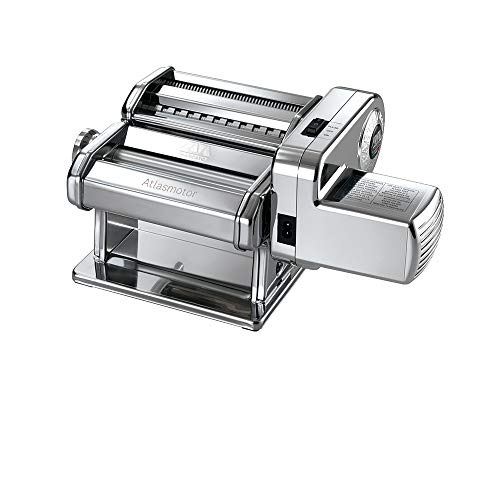
- Includes handcrank, clamp, and Pastadrive motor
- 10 thickness positions for sheets up to 6 inches wide
- Compatible with 11 optional Marcato accessories
Best For: Cooks wanting manual control with electric assistance
Best Large-Batch Automatic

- Makes up to eight portions in one batch
- Includes eight shaping discs and mixing functionality
- Dishwasher-safe, non-stick parts ease cleanup
Best For: Families making fresh pasta for groups
Best 4-in-1 Noodle Versatility

- Cuts four round and flat noodle styles
- Makes dumpling and wonton skins
- 135W motor rated up to 22 pounds per hour
Best For: Noodles, pasta sheets, and dumpling skins
Best Compact Everyday Option
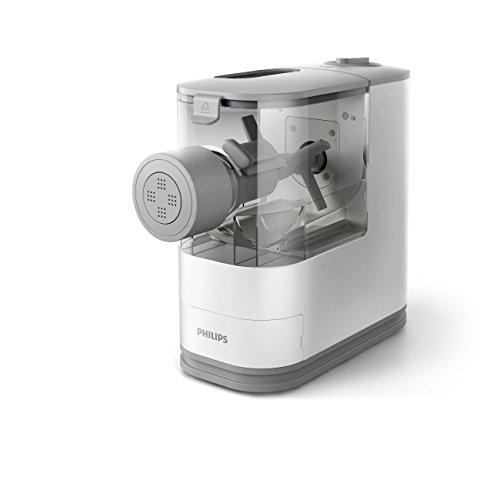
- Makes two to three servings automatically
- Includes spaghetti, penne, and fettuccini discs
- Stores shaping discs inside the machine
Best For: Small households making pasta regularly
Best Compact Sheeter
135W Pasta Roller and Noodle Cutter
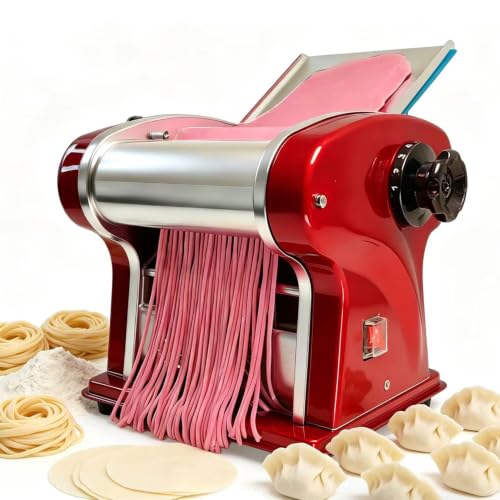
- 9 settings from 0.3 to 4mm
- Built-in 2.5mm noodle cutter
- Rated output up to 5kg/h
Best For: Pasta sheets, noodles, wonton wrappers, and dumpling skins
Best Automatic Variety
260W Pasta Maker With 13 Discs

- 13 interchangeable shaping discs
- Automatic mixing, kneading, and extrusion
- 500g flour capacity per batch
Best For: Beginners and families wanting varied homemade noodles
Best Lightweight Roller

- Eight settings from 0.4 to 2mm
- Two speeds plus reverse
- Lightweight 5.2-pound design
Best For: Small kitchens making spaghetti, fettuccine, and lasagna sheets
Best Automatic Extruder
VEVOR 8-Shape Electric Pasta Maker

- 500g flour capacity for family-size batches
- Eight discs offer varied pasta shapes
- Four automatic modes and dishwasher-safe parts
Best For: Beginners and families seeking easy, varied pasta making
Best Roller-and-Cutter Design

- Five thickness settings from 0.6–2.5 mm
- Includes spaghetti and fettuccine cutters
- Designed for sheets, noodles, and dumpling wrappers
Best For: Cooks wanting adjustable sheets and classic noodle cuts
Best Stainless-Steel Workhorse
WICHEMI 3-in-1 Electric Pasta Maker

- Three-in-one pressing and noodle-cutting functions
- 304 stainless-steel body for durability
- Listed efficiency of up to 22 pounds per hour
Best For: Frequent batch making at home or in small food-service settings
Best Italian-Made Manual-Electric Hybrid – Atlasmotor 150
For shoppers comparing electric pasta machines, the MARCATO Atlasmotor 150 offers a flexible hybrid setup: use the included handcrank for manual rolling or attach the Pastadrive motor for electric operation. Its 10-position adjustment system creates pasta sheets up to 6 inches wide.
Best For: Home cooks who want Italian construction and the option to switch between manual and electric pasta making.
Pros:
- Made and assembled in Italy with a chrome-steel design.
- Includes the Atlas 150, handcrank, clamp, Pastadrive motor, and manual.
- Offers 10 thickness positions and compatibility with 11 separately available accessories.
- Resin scrapers help clean the rollers during use.
Cons:
- Additional Marcato pasta accessories are sold separately.
- It produces sheets up to 6 inches wide rather than extruded pasta shapes out of the box.
- Cleaning requires letting residue sit for at least 30 minutes before brushing.
This is a strong choice if you value control and versatility more than fully automatic operation. The included motor adds convenience while preserving the hands-on feel of a traditional roller.
Best Large-Batch Automatic – Philips 7000 Series
Among electric pasta machines, the Philips 7000 Series is designed for fast, low-effort preparation. Its 150W system can make up to eight portions, and the included eight shaping discs support a range of pasta options while the mixing function also handles dough preparation for other foods.
Best For: Families and hosts who want automatic pasta making with a large capacity and app-based recipe guidance.
Pros:
- Prepares fresh pasta in under 10 minutes according to the supplied product information.
- Can make up to eight portions in one batch.
- Includes eight discs and a versatile mixing function for cookies, pizza, and bread preparation.
- Non-stick, dishwasher-safe parts simplify cleanup.
Cons:
- At 20 pounds, it is heavier than several compact countertop alternatives.
- The HomeID app is needed for the listed step-by-step recipe guidance.
- It has a taller footprint at 12.68 inches high.
The 7000 Series stands out when speed and batch size matter. It is less suited to shoppers seeking a lightweight machine, but its automatic operation and cleanup-friendly parts make it practical for frequent family use.
Best 4-in-1 Noodle Versatility – WICHEMI Electric Pasta Maker
This WICHEMI model expands the usual electric pasta machines format with four built-in noodle options. Its automatic system presses dough and cuts round or flat noodles, while also handling dumpling and wonton skins from dough between 0.3 and 3 millimeters thick.
Best For: Home cooks or small food businesses that want noodles, pasta sheets, and dumpling skins from one machine.
Pros:
- Four cutting options include 2.5mm round and 2mm, 4mm, and 9mm flat noodles.
- Can make dumpling and wonton skins from 0.3–3mm dough.
- Food-grade 304 stainless steel body and blades resist rust and aging.
- 135W motor is rated for speeds up to 22 pounds per hour.
Cons:
- The supplied information lists only one machine setting, with functions selected by a mode knob.
- Its approximately 22-pound weight may limit portability despite the countertop design.
- It is focused on noodle and sheet formats rather than a broad set of shaped pasta dies.
Choose this machine for practical noodle-making range rather than traditional Italian-style rolling. The stainless-steel construction and high stated output also make it worth considering for heavier household or light commercial use.
Best Compact Everyday Option – Philips Viva Collection
For shoppers seeking compact electric pasta machines, the Philips Viva Collection automatically kneads and extrudes two to three servings in about 18 minutes. Its space-saving design, built-in disc storage, and three included shaping discs make it suited to regular countertop use.
Best For: Small households that want straightforward automatic pasta making without a large-capacity machine.
Pros:
- Automatically kneads and extrudes two to three servings.
- Includes discs for spaghetti, penne, and fettuccini.
- Double extrusion is designed to provide smooth, consistent pasta and noodles.
- Space-saving design and built-in shaping-disc storage support everyday use.
Cons:
- Its two-to-three-serving capacity is smaller than the Philips 7000 Series.
- Only three shaping discs are included.
- The supplied information lists a plastic body and a relatively long 15.5-inch length.
This is a sensible entry point for smaller servings and routine homemade pasta. It trades batch capacity and disc variety for a more approachable, counter-friendly automatic design.
Best Compact Sheeter – 135W Pasta Roller and Noodle Cutter
If you want electric pasta machines for rolling dough and cutting fresh noodles without a large countertop footprint, this 135W model is a practical option. Its 9 thickness settings cover very thin sheets through 4mm dough, while the built-in 2.5mm cutter adds straightforward noodle-making versatility.
Best For: Home cooks who want one machine for pasta sheets, noodles, wonton wrappers, and dumpling skins.
Pros:
- Offers 9 thickness settings from 0.3 to 4mm.
- Combines dough sheeting and noodle cutting in one unit.
- Rated for up to 5kg/h output and includes a 5.5-inch roller.
- Stainless steel roller and blade materials support routine pasta preparation.
Cons:
- The single 2.5mm cutter provides less shape variety than extrusion-style machines with multiple discs.
- Its semi-automatic operation still requires managing the dough and mode control.
- The manufacturer advises brushing it clean rather than rinsing it directly with water.
This model is most appealing when adjustable sheet thickness matters more than a wide selection of noodle shapes. Use firm, relatively dry dough and flour it lightly for smoother rolling and cleaner results.
Best Automatic Variety – 260W Pasta Maker With 13 Discs
Among electric pasta machines, this 260W automatic model stands out for its mix-and-extrude design and broad selection of shaping discs. Add flour and liquid, choose the appropriate mode, and let the machine handle mixing, kneading, and pressing for a simpler homemade noodle routine.
Best For: Families and beginners who want multiple noodle styles with minimal manual kneading.
Pros:
- Includes 13 interchangeable discs for different pasta and noodle shapes.
- Automatically mixes, kneads, and extrudes dough.
- Handles up to 500g of flour per batch for small to medium family portions.
- Detachable food-contact parts make hand washing more convenient.
Cons:
- The plastic construction may feel less substantial than a stainless steel sheeter.
- Its 16-by-13-inch footprint requires more storage space than compact roller-style machines.
- It is designed for up to 500g of flour per batch, which may not suit very large gatherings.
This is a strong choice if convenience and shape variety are your priorities. The one-touch workflow and included measuring cups simplify preparation, while the cleaning spatula helps remove remaining dough from the molds.
Best Lightweight Roller – GVODE 3-in-1 Pasta Maker
This GVODE model is one of the more portable electric pasta machines, weighing about 5.2 pounds and using a compact plastic housing. It combines rolling and cutting functions with eight thickness settings, two speeds, and reverse, making it suited to kitchens where easy storage matters.
Best For: Space-conscious home cooks who want electric help with spaghetti, fettuccine, and lasagna sheets.
Pros:
- Eight settings roll sheets from 0.4 to 2mm.
- Two speeds and reverse can help manage dough that bunches.
- Lightweight design is easier to move and store.
- Metal drive gears and stainless steel blades are used in key working components.
Cons:
- The 0.4-to-2mm range is narrower than models that roll to 4mm.
- The machine should run in 15-minute batches with a 5-minute cooldown.
- The plastic housing may be less substantial than an all-metal pasta machine.
This is a sensible fit for regular home batches rather than extended continuous production. For cleaner cuts, gradually thin the dough through the roller several times before using the cutter, and keep the motor vents unobstructed during operation.
Best Automatic Extruder – VEVOR 8-Shape Electric Pasta Maker
For shoppers comparing electric pasta machines, the VEVOR stands out as an automatic extruder with a 500g flour capacity, four operating modes, and eight shaping discs. It can produce enough pasta for about four people in roughly 14 minutes, though accurate flour-to-water ratios are important for smooth operation.
Best For: Beginners and families who want automatic, varied pasta shapes with minimal hands-on work.
Pros:
- Eight discs support a range of pasta shapes.
- 500g flour capacity can make pasta for about four people.
- Includes measuring cups, a spatula, cleaning brush, and instructions.
- Dishwasher-safe parts simplify cleanup.
Cons:
- Incorrect water measurements can cause sticking or prevent dough from extruding.
- At 11 pounds, it is heavier than some compact options.
The VEVOR is a practical choice when convenience and pasta variety matter most. Follow the included ratio guide carefully, and its automatic modes can make fresh noodles approachable for first-time users.
Best Roller-and-Cutter Design – GEFT Electric Pasta Maker
Among electric pasta machines, the GEFT model is suited to cooks who prefer rolling dough into sheets and cutting it into familiar noodles. Five thickness settings span 0.6 to 2.5 mm, while the included cutters make 2 mm spaghetti and 6 mm fettuccine.
Best For: Home cooks who want adjustable pasta sheets for spaghetti, fettuccine, lasagna, ravioli, or dumpling wrappers.
Pros:
- Five thickness settings provide control from 0.6 to 2.5 mm.
- Includes separate spaghetti and fettuccine cutters.
- Food-grade, odor-free materials are designed for regular use.
- Compact 6.6-pound design is relatively easy to position on a counter.
Cons:
- Attachments should not be washed with water or placed in a dishwasher.
- It focuses on rolling and cutting rather than fully automatic dough extrusion.
The GEFT is a good fit for users who want thickness control and classic pasta formats. Its cleaning routine requires more care, but the roller-and-cutter setup offers useful flexibility for different recipes.
Best Stainless-Steel Workhorse – WICHEMI 3-in-1 Electric Pasta Maker
If you need electric pasta machines for frequent or higher-volume preparation, the WICHEMI offers three functions for pressing dough and cutting noodles. Its 135W motor and stainless-steel body support round and flat noodle styles, plus dough sheets for dumpling or wonton wrappers.
Best For: Households or small food-service settings that prioritize sturdy construction and higher production capacity.
Pros:
- Three-in-one design presses dough and cuts noodles.
- 304 food-grade stainless-steel body resists rust and aging.
- Makes 2.5 mm round noodles and 4 mm or 9 mm flat noodles.
- Listed efficiency reaches up to 22 pounds per hour.
Cons:
- At 17.6 pounds, it is substantially heavier than the other listed models.
- Its stated sheet-thickness range is narrower than the GEFT’s.
- The supplied notes list only the pasta machine among included components.
The WICHEMI is the most production-oriented option in this group. Its stainless-steel construction and multiple noodle formats make it appealing for repeated batches, although its heavier weight is worth considering for occasional home use.
How We Picked the Best Electric Pasta Machines
We focused on the features that matter most in everyday pasta making: motor power, automation, shaping options, capacity, included accessories, control settings, cleanup, and overall versatility. The selection includes established options such as the MARCATO Atlasmotor and Philips machines, along with more affordable roller, cutter, and automatic models.
Because these machines use different approaches, we did not judge them by wattage alone. A fully automatic extruder may be more convenient, while a motorized sheeter can provide better control over dough thickness and cutting. We also considered whether each machine is best suited to small portions, family-size batches, or cooks who want multiple pasta styles.
Quick Comparison
| Machine type | Best for | What to look for |
|---|---|---|
| Motorized roller and cutter | Traditional sheets and noodles | Adjustable thickness, stable clamp, removable cutters |
| Automatic extruder | Hands-off preparation | Mixing performance, shaping discs, portion capacity |
| Multi-function model | Versatility on a budget | Included attachments, speed settings, storage |
Key Buying Factors for Electric Pasta Machines
Machine Style and Automation
Choose a roller-and-cutter machine if you already enjoy making and portioning dough but want to eliminate hand cranking. Automatic pasta makers mix ingredients and press dough through shaping discs, making them more convenient but generally more dependent on accurate ingredient ratios.
Power, Capacity, and Batch Size
Higher wattage can help with thicker dough, but it is only one part of performance. Check the stated flour or portion capacity and match it to your usual cooking. A compact machine is practical for one or two servings, while a larger hopper is better for families or meal preparation.
Shapes, Thickness, and Controls
Look for adjustable rollers if you make lasagna sheets, fettuccine, or different noodle thicknesses. Automatic models are more appealing when they include several shaping discs and useful programs. Multiple modes can simplify mixing, kneading, extrusion, and portioning, but they may also increase cleanup.
Cleaning and Storage
Pasta dough can dry in cutters, rollers, and extrusion discs. Removable parts and accessible surfaces make maintenance easier. Before buying, confirm which components can be removed and whether the machine is compact enough for your counter or cabinet.
Who Should Buy Which Electric Pasta Machines?
Choose the MARCATO Atlasmotor if you want a traditional Italian-style roller with powered operation and strong control over sheets and noodles. It is a natural fit for cooks who already understand fresh dough and value a familiar workflow.
Choose a Philips automatic model if convenience, guided preparation, and multiple shapes matter more than hands-on control. These machines suit busy households that want fresh pasta with less manual work.
Choose a 3-in-1 or roller-and-cutter machine if you want flexibility without committing to a premium appliance. These models are useful for occasional pasta makers who want standard sheets, noodles, and a manageable price.
Choose a high-capacity automatic model if you regularly cook for several people. Prioritize flour capacity, included discs, reliable mixing, and easy cleanup over the largest advertised wattage.
