The best portable RAID enclosures make it easier to combine multiple SATA drives into a faster, safer, or more flexible external storage system without buying a complete NAS.
Our 2026 shortlist includes compact two-bay models, high-capacity five-bay enclosures, USB DAS options, and Thunderbolt storage designed for demanding creative workflows.
Best 10 Portable Raid Enclosures Picks for 2026
Best High-Speed Two-Bay Pick

- USB 3.2 Gen 2 up to 10Gbps
- Hardware RAID 0, 1, JBOD, and SINGLE
- Two bays support up to 44TB total
Best For: Fast two-drive DAS storage and backups
Best Four-Bay Thunderbolt Option

- Four-drive Thunderbolt 3 enclosure
- Up to 1527MB/s sustained performance
- Supports RAID 0, 1, 4, 5, and 10
Best For: High-throughput Thunderbolt desktop storage
Best Compact 2.5-Inch Enclosure

- Slim dual-bay 2.5-inch design
- USB 3.0 up to 5Gbps
- Supports Individual, RAID 0, and RAID 1
Best For: Portable SSD or 2.5-inch HDD setups
Best Four-Bay USB RAID Value
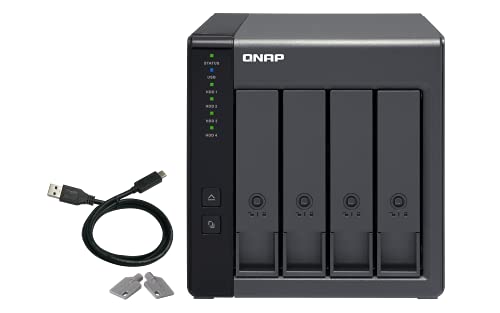
- Four-bay USB Type-C DAS
- Hardware RAID 0, 1, 5, JBOD, and individual
- Works with computers and compatible QNAP NAS devices
Best For: Flexible four-drive USB storage and NAS expansion
Maximum-Capacity Pick
ORICO 5-Bay Hardware RAID Enclosure

- Hardware RAID with eight listed operating modes
- Up to 110TB across five SATA drives
- 150W built-in power supply and 80mm fan
Best For: Large backups, video editing, and media libraries
Security-Focused Pick
TERRAMASTER D5-310 5-Bay RAID Enclosure
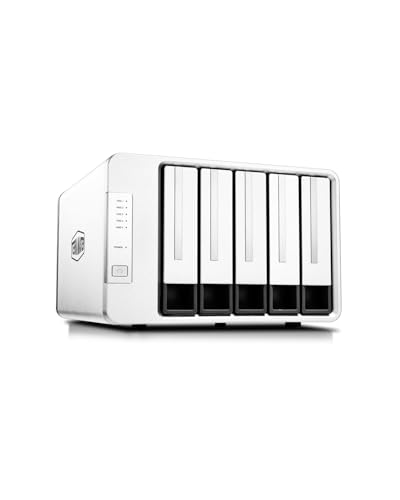
- Hardware RAID includes RAID 5 and hot spare support
- Supports up to 120TB across five SATA drives
- Works with Windows, macOS, and Linux
Best For: Expandable multi-platform storage and backups
Compact Two-Bay Pick
CENMATE Aluminum RAID Enclosure

- Four modes: RAID 0, RAID 1, Normal, and JBOD
- Supports two SATA drives up to 20TB each
- Includes USB-A and USB-C 3.0 connectivity
Best For: Compact personal or small-business storage
Best for 3.5-Inch Drives
MAIWO Dual-Bay SATA RAID Enclosure

- Supports two 3.5-inch drives up to 48TB total
- Four RAID modes for backup or expansion
- Fan cooling and 48W power supply included
Best For: High-capacity desktop SATA hard-drive storage
Best High-Capacity Four-Bay Option
CENMATE 2x2-Bay RAID Enclosure

- Supports four 2.5- or 3.5-inch SATA drives
- Up to 80TB total capacity
- USB-A/C 3.0 and four RAID modes
Best For: Large desktop or small-business storage arrays
Best High-Speed Two-Bay Pick – TERRAMASTER D2-320
The TERRAMASTER D2-320 is a practical choice among portable RAID enclosures when you need fast USB-C-attached storage without setting up a NAS. Its hardware RAID modes, two-drive capacity, and tool-free trays make it well suited to desktop storage and backup workflows.
Best For: Users who want fast two-drive DAS storage with RAID 0, RAID 1, JBOD, or individual-disk operation.
Pros:
- USB 3.2 Gen 2 supports data transfer rates up to 10Gbps.
- Supports RAID 0, RAID 1, JBOD, and SINGLE configurations.
- Accepts two 3.5-inch or 2.5-inch SATA drives, with up to 44TB total capacity.
- Tool-free trays and temperature-controlled cooling simplify installation and operation.
Cons:
- Diskless design requires purchasing compatible drives separately.
- It is direct-attached storage, not a network-attached NAS.
Choose the D2-320 if you want a modern two-bay enclosure with strong USB performance and flexible hardware RAID. Its larger desktop form factor is less suited to users seeking a very small travel enclosure.
Best Four-Bay Thunderbolt Option – OWC ThunderBay 4
The OWC ThunderBay 4 is a premium choice among portable RAID enclosures for Thunderbolt-equipped Macs and PCs. Its four bays, dual Thunderbolt 3 ports, and aluminum chassis make it a strong option for higher-capacity, high-throughput desktop storage.
Best For: Thunderbolt users who need four-drive expansion and configurable software RAID.
Pros:
- Thunderbolt 3 connectivity delivers up to 40Gb/s bandwidth.
- Supports four 3.5-inch or 2.5-inch drives without an adapter.
- Configurable RAID options include 0, 1, 4, 5, and 1+0.
- Aluminum chassis is designed for quiet operation and heat dissipation.
Cons:
- Diskless enclosure requires separate drive purchases.
- Thunderbolt connectivity limits compatibility to systems with Thunderbolt support.
- Its four-bay desktop design is less convenient for lightweight travel.
The ThunderBay 4 makes sense when performance, four-drive flexibility, and Thunderbolt compatibility matter more than compactness. Verify that your computer supports Thunderbolt before buying.
Best Compact 2.5-Inch Enclosure – Vantec NexStar GX
Vantec Nexstar GX USB 3.0 Dual 2.5" SATA SSD/HDD RAID Enclosure, Black (NST-272S3-BK)
Check Price On AmazonThe Vantec NexStar GX is one of the more compact portable RAID enclosures, using two 2.5-inch SATA SSDs or hard drives in a slim aluminum housing. Its USB 3.0 connection and straightforward RAID choices suit users who want portable dual-drive storage.
Best For: Compact two-drive setups using 2.5-inch SATA SSDs or HDDs.
Pros:
- Small 4.72-by-3.15-by-0.98-inch enclosure weighs 10.56 ounces.
- Supports Individual, RAID 0, and RAID 1 modes.
- USB 3.0 offers speeds up to 5Gbps and supports UASP.
- Aluminum housing with front vents helps dissipate heat.
Cons:
- USB 3.0 is slower than newer USB 3.2 and Thunderbolt interfaces.
- Supports only two 2.5-inch drives.
- Requires the included AC adapter for power.
The NexStar GX is a sensible pick when portability and a small footprint are priorities. It is best paired with 2.5-inch SATA SSDs if you want to make the most of its compact design.
Best Four-Bay USB RAID Value – QNAP TR-004
QNAP TR-004 4 Bay USB Type-C Direct Attached Storage (DAS) with hardware RAID (Diskless)
Check Price On AmazonThe QNAP TR-004 is a versatile four-bay DAS for Windows, macOS, and Linux systems that connect over USB Type-C. For shoppers comparing portable RAID enclosures, it combines hardware RAID, lockable bays, and support for both direct computer storage and compatible QNAP NAS expansion.
Best For: Users who need four-bay USB storage, hardware RAID, or QNAP NAS expansion support.
Pros:
- Hardware RAID supports RAID 0, 1, 5, JBOD, and individual disks.
- Four bays accept 3.5-inch SATA drives, with 2.5-inch mounting screws included.
- USB Type-C connection works with Windows, macOS, and Linux computers.
- Lockable drive bays add physical security and the enclosure includes a Type-C-to-Type-A cable.
Cons:
- Diskless design requires separate drives.
- USB transfer speed is listed at 5Gbps, below newer USB 3.2 Gen 2 enclosures.
- QNAP NAS compatibility has specific model and QTS version limitations.
The TR-004 is a good fit for users who want four bays and hardware RAID without moving to a networked storage system. Check QNAP compatibility carefully if NAS expansion is part of your plan.
Maximum-Capacity Pick – ORICO 5-Bay Hardware RAID Enclosure
For shoppers comparing portable raid enclosures for large desktop storage projects, the ORICO 5-bay model combines hardware RAID flexibility with support for both 2.5-inch and 3.5-inch SATA drives. Its built-in power supply and cooling system make it suited to demanding, multi-drive workloads.
Best For: Large backup projects, video editing, and media libraries requiring up to five drives.
Pros:
- Supports RAID 0, 1, 3, 5, 10, JBOD, Clone, and Clear modes through hardware controls.
- Supports up to five drives and a stated total capacity of 110TB.
- 150W built-in power supply and an 80mm cooling fan support multi-disk operation.
- Works with Windows, Mac, and Linux through USB 3.0 without additional drivers.
Cons:
- USB 3.0 connectivity is older than newer USB standards.
- The enclosure is designed for desktop use rather than highly mobile setups.
The ORICO stands out when capacity and RAID-mode choice matter most. Its five-bay design, built-in power supply, and airflow features make it a practical workstation-oriented option, though users seeking the latest interface may prefer a newer connection standard.
Security-Focused Pick – TERRAMASTER D5-310 5-Bay RAID Enclosure
The TERRAMASTER D5-310 is one of the more versatile portable raid enclosures for users who want hardware RAID, broad operating-system support, and room to expand. It accepts five SATA drives and adds features such as hot spare support, backup software, and drive sleep mode.
Best For: Multi-platform users who need expandable storage with RAID 5 and hot spare support.
Pros:
- Hardware RAID supports RAID 5, 0, 1, 10, and Single modes.
- Hot spare functionality can help reduce downtime after a drive failure in supported RAID configurations.
- Supports up to 120TB using five drives of up to 24TB each.
- Includes USB 3.1 Gen 1 connectivity, Windows backup software, and tool-free drive bays.
Cons:
- It is diskless, so compatible drives must be purchased separately.
- The listed transfer rate is up to 5Gbps, with actual read/write speeds stated at 220MB/s.
With its five-drive capacity and RAID 5 support, the D5-310 is a strong choice for users balancing storage expansion and data protection. Hot spare support and included Windows backup software add practical value for ongoing backup workflows.
Compact Two-Bay Pick – CENMATE Aluminum RAID Enclosure
For a smaller desktop setup, the CENMATE two-bay enclosure offers a straightforward way to build portable raid enclosures around 2.5-inch or 3.5-inch SATA drives. Its ASM1156R chip, four operating modes, and USB-A/C connectivity cover common personal and small-business storage needs.
Best For: Individuals and small businesses seeking a compact two-drive RAID enclosure.
Pros:
- Supports RAID 0, RAID 1, Normal, and JBOD modes.
- Accepts two 2.5-inch or 3.5-inch HDDs or SSDs, with up to 20TB per drive.
- Includes USB-A and USB-C 3.0 cables and supports Windows, Mac, and Linux.
- Aluminum construction and a built-in fan help manage heat during operation.
Cons:
- The fan is rated around 40–50 decibels, which may be noticeable in quiet spaces.
- Changing RAID settings requires holding the Reset button for five seconds after resetting the array.
- Mac systems do not support the enclosure’s RAID software, according to the supplied notes.
The CENMATE is a practical choice when two drive bays are enough and desk space matters. Its broad drive-size support and included USB-A/C connectivity are useful, but prospective buyers should account for the audible fan and the stated Mac RAID-software limitation.
Best All-Flash Pick – ORICO 4-Bay 2.5-Inch RAID Enclosure
For shoppers comparing portable raid enclosures, the ORICO 4-bay model stands out for its compact all-flash design, flexible RAID options, and expansion-focused connectivity. It accepts 2.5-inch SSDs or HDDs and is designed to fit easily into a backpack or camera bag.
Best For: Video editors, photographers, and mobile workflows using 2.5-inch drives.
Pros:
- Supports RAID 0, 1, 3, 5, 10, JBOD, and CLEAR modes.
- Offers USB 3.2 Gen 2 connectivity, two 10Gbps USB ports, and SD/TF card slots.
- Supports up to 40TB across four bays, with single-drive capacity up to 8TB.
- Compact, shock-resistant all-solid-state design for easier travel.
Cons:
- Supports 2.5-inch drives only; 3.5-inch drives are not compatible.
- Actual performance depends on the connected drive and interface; SATA operation is rated at up to 5Gbps.
This is the most travel-friendly option here for users who prioritize compact storage, memory-card access, and advanced RAID flexibility. Its 2.5-inch limitation makes it less suitable for existing 3.5-inch desktop-drive collections.
Best for 3.5-Inch Drives – MAIWO Dual-Bay SATA RAID Enclosure
If your portable raid enclosures shortlist includes large desktop hard drives, the MAIWO dual-bay unit offers a practical balance of capacity, RAID control, and cooling. It supports two 3.5-inch SATA HDDs and provides independent power for the enclosure and installed drives.
Best For: Users expanding storage with two high-capacity 3.5-inch SATA hard drives.
Pros:
- Supports two 3.5-inch SATA HDDs, with up to 24TB per drive and 48TB total.
- Provides RAID 0, RAID 1, JBOD, and Normal modes.
- Includes a switch-controlled adjustable cooling fan and aluminum-alloy construction.
- Includes USB-C and USB-A cables plus a 48W power supply.
Cons:
- Mechanical drives may not reach the enclosure’s 10Gbps interface limit; the notes cite up to 6Gbps for 3.5-inch SATA drives.
- 2.5-inch drives require a separate 2.5-to-3.5-inch bracket.
- Its dual-bay desktop-drive format is less compact than 2.5-inch alternatives.
The MAIWO is a sensible choice when capacity and 3.5-inch drive compatibility matter more than minimum size. The fan and dedicated power supply are useful for sustained two-drive operation, while four RAID modes cover common backup and expansion needs.
Best High-Capacity Four-Bay Option – CENMATE 2×2-Bay RAID Enclosure
The CENMATE combines two 2-bay RAID units in one enclosure, making it one of the more capacious portable raid enclosures for users who need several 2.5- or 3.5-inch SATA drives. Its aluminum body, built-in fans, and USB-A/C connectivity support a straightforward desktop storage setup.
Best For: Home-office or small-enterprise users building up to 80TB of external SATA storage.
Pros:
- Accepts both 2.5-inch and 3.5-inch SATA HDDs and SSDs.
- Supports up to 80TB total, with a stated 20TB limit per drive.
- Offers RAID 0, RAID 1, Normal, and JBOD modes.
- Includes USB-A/C 3.0 connectivity and plug-and-play support for Windows, Mac, and Linux.
Cons:
- USB 3.0 performance is rated at up to 5Gbps.
- Fans produce around 40–50 decibels and may bother noise-sensitive users.
- Resetting the RAID array requires holding the Reset button for five seconds, and RAID changes can cause data loss.
CENMATE is the strongest capacity-focused pick in this group and accommodates both common SATA drive sizes. Its lower 5Gbps interface and audible cooling fans are worth considering if you need a quieter or faster setup.
How We Picked These Portable Raid Enclosures
We focused on enclosures that offer practical drive flexibility, useful RAID modes, reliable host connectivity, and clear advantages for backup, media storage, or desktop expansion. The selection includes diskless models so you can choose the drive capacity, speed, and redundancy level that fits your budget.
We also considered bay count, support for 2.5-inch and 3.5-inch SATA drives, cooling, tool-free installation, hardware RAID controls, USB performance, and Thunderbolt compatibility. Because enclosure specifications can vary by configuration, verify the manufacturer’s supported drive capacities and RAID limitations before purchasing.
Quick Comparison
| Best For | Recommended Type | What to Look For |
|---|---|---|
| Portable backups | Two-bay USB enclosure | Compact design, simple RAID 1, quiet cooling |
| Large media libraries | Four- or five-bay enclosure | High capacity, active cooling, flexible RAID modes |
| Video editing | Thunderbolt enclosure | High sustained bandwidth and compatible host ports |
| Mixed drive collections | USB DAS with hardware RAID | Broad SATA support and independent RAID controls |
| SSD arrays | Multi-bay 2.5-inch enclosure | Low noise, fast USB connection, adequate thermal management |
Key Buying Factors for Portable Raid Enclosures
Bay Count and Drive Size
Two-bay enclosures are easier to place and commonly suit mirrored backups. Four- and five-bay models provide more capacity and RAID options but need more desk space and stronger cooling. Check whether the enclosure accepts both 2.5-inch and 3.5-inch SATA drives if you plan to mix SSDs and hard drives.
RAID Modes and Data Protection
RAID 0 can improve capacity and performance but provides no drive failure protection. RAID 1 mirrors data across two drives, reducing usable capacity while improving redundancy. JBOD and independent-drive modes are useful when you want each disk to remain separately accessible. RAID is not a substitute for an external backup.
Connection Speed
USB 3.0 and USB 3.2 enclosures are suitable for general backups and large-file storage, while Thunderbolt models are better suited to high-bitrate video editing and demanding workflows. Actual speeds depend on the host computer, cable, drives, RAID mode, and workload.
Cooling, Noise, and Installation
Mechanical drives benefit from active cooling during long transfers. Look for a fan that can move air without becoming distracting, plus tool-free trays or mounting that simplify drive installation. Confirm the enclosure’s power requirements and operating-system support.
Who Should Buy Which Portable Raid Enclosures?
Choose a compact two-bay model if you need straightforward mirrored backups or a small desktop archive. Pick a four-bay enclosure for a balanced mix of capacity, redundancy, and expandability. A five-bay unit is better for large media libraries and users who want multiple RAID configurations. For professional video work, prioritize Thunderbolt bandwidth. If your priority is low-noise flash storage, choose a multi-bay 2.5-inch enclosure with strong USB connectivity and sensible thermal management.
