The best RAID enclosures for Mac add capacity, drive protection, and faster file access without requiring a full network-attached storage system. The right model depends on your Mac’s ports, desired RAID level, drive count, and workflow.
We compared 10 diskless enclosures ranging from compact dual-bay designs to five-bay and Thunderbolt systems. Use the guide below to narrow your options by speed, expandability, noise, compatibility, and value.
Best 10 Raid Enclosures for Mac Picks for 2026
Best Thunderbolt RAID Pick

- Four SATA bays for 3.5-inch or 2.5-inch drives
- Multiple RAID modes with SoftRAID Premium included
- Up to 1527MB/s sustained performance
Best For: Mac users needing flexible four-drive Thunderbolt storage
Best USB-C Four-Bay Value
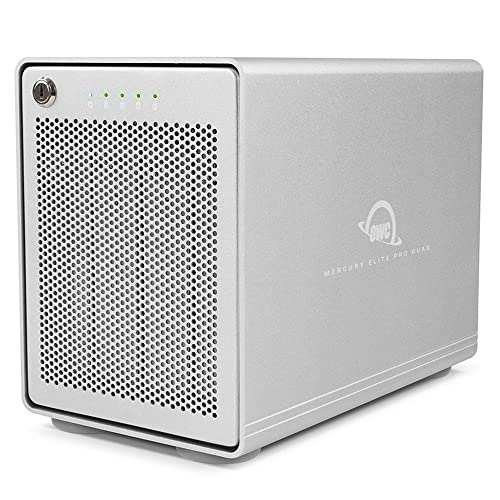
- Four universal bays for 2.5-inch or 3.5-inch SATA drives
- USB-C 10Gb/s connection for Mac or Windows
- Supports software RAID but SoftRAID is not included
Best For: Users wanting flexible USB-C four-bay storage
Best Hybrid USB4 Enclosure

- Combines two SATA bays with two NVMe bays
- USB4 40Gbps with Thunderbolt compatibility
- Supports HDD RAID 1 and NVMe software RAID 0
Best For: Creative workflows mixing fast SSDs with high-capacity HDDs
Best Two-Bay RAID Starter

- Hardware RAID 0, 1, JBOD, and Single modes
- Two SATA bays support HDDs and SSDs
- Tool-free trays with temperature-controlled cooling
Best For: Compact Mac backup and mirrored-storage setups
Flexible Four-Bay Pick

- Eight RAID and storage modes
- Up to 88TB across four 3.5-inch drives
- 150W supply and 80mm cooling fan
Best For: Mac users needing flexible RAID and large desktop storage
Hardware RAID Choice
TerraMaster D5-310 5-Bay Enclosure
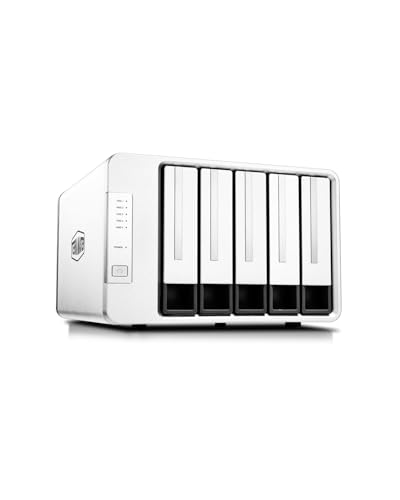
- Hardware RAID 5, 0, 1, 10, and Single modes
- macOS compatible without extra drivers
- Up to 120TB across five drives
Best For: Mac users prioritizing hardware RAID and five-bay expansion
High-Capacity USB-C Pick
UGREEN 5-Bay USB-C DAS Enclosure

- Eight RAID and storage modes
- Up to 160TB using five 2.5- or 3.5-inch drives
- USB-C with automatic fan control
Best For: Mac users needing maximum capacity and mixed drive support
High-Speed Dual-Bay Pick
MAIWO USB-C 3.1 RAID Enclosure

- Four RAID modes for storage and backup flexibility
- Supports two 3.5-inch SATA HDDs and up to 48TB total
- USB 3.1 Gen 2, adjustable fan, and 48W power supply
Best For: Mac users seeking a USB-C dual-bay enclosure for 3.5-inch drives
Maximum Capacity Pick
CENMATE Four-Bay RAID Enclosure

- Holds up to four 2.5- or 3.5-inch SATA drives
- Four RAID modes and up to 80TB stated capacity
- Mac-compatible USB 3.0 with active cooling
Best For: Mac users needing high-capacity, multi-drive external storage
Compact Two-Bay Pick
CENMATE USB 3.0 RAID Enclosure

- Supports two 2.5- or 3.5-inch SATA drives
- Four RAID modes and up to 40TB stated capacity
- Mac-compatible USB-A/C connectivity with active cooling
Best For: Mac users wanting a flexible, everyday two-drive enclosure
Best Thunderbolt RAID Pick – OWC ThunderBay 4
For Mac users seeking flexible, high-speed raid enclosures for mac, the OWC ThunderBay 4 combines four SATA drive bays with dual Thunderbolt 3 ports and included SoftRAID Premium. It supports both 3.5-inch and 2.5-inch drives without adapters.
Best For: Mac users who want configurable RAID options and strong Thunderbolt performance for desktop storage, editing, or backups.
Pros:
- Supports up to four 3.5-inch or 2.5-inch SATA drives without adapters.
- Offers RAID 0, 1, 4, 5, 1+0, and JBOD configurations.
- Includes a three-year SoftRAID Premium subscription and dual Thunderbolt 3 ports.
Cons:
- Requires Thunderbolt 3-compatible connectivity for its advertised interface.
- SoftRAID Premium is included for three years rather than permanently.
The ThunderBay 4 is a versatile choice when you need four bays, multiple RAID levels, and Mac-friendly management software in one enclosure.
Best USB-C Four-Bay Value – OWC Mercury Elite Pro Quad
The OWC Mercury Elite Pro Quad is a practical option among raid enclosures for mac if you want four universal drive bays and broad USB-C compatibility. Its USB 3.2 10Gb/s interface works with USB-C and Thunderbolt 3-equipped Mac or Windows computers.
Best For: Users who want a flexible four-bay enclosure for 2.5-inch or 3.5-inch SATA drives and software RAID support.
Pros:
- Accepts up to four 2.5-inch or 3.5-inch SATA drives.
- Connects through USB-C and works with Thunderbolt 3-equipped systems.
- Offers performance up to 947MB/s and supports software RAID.
Cons:
- Drives are not included with this 0TB enclosure.
- SoftRAID is not included.
- Its listed warranty is one year.
This enclosure makes sense for buyers who already have drives and prefer USB-C convenience, but budget separately for RAID software if needed.
Best Hybrid USB4 Enclosure – ACASIS 4-Bay Hybrid RAID
The ACASIS hybrid enclosure stands out among raid enclosures for mac by combining two SATA bays with two NVMe bays. It supports hardware RAID 1 for HDDs, software RAID 0 for NVMe SSDs, and a LARGE mode that can merge the bays for high-capacity storage.
Best For: Creative users who want HDD capacity and NVMe performance in one USB4 enclosure, with compatibility across USB4 and Thunderbolt systems.
Pros:
- Combines 3.5-inch or 2.5-inch SATA storage with 2230–2280 NVMe SSD support.
- Provides USB4 40Gbps connectivity and supports Thunderbolt 3, 4, and 5.
- Includes active cooling, a 96W power supply, and 8K@60Hz video output.
Cons:
- Full 40Gbps performance requires compatible RAID mode, drives, and a USB4 or Thunderbolt port.
- RAID options differ between the HDD and NVMe sections.
- Maximum capacity and performance depend on the installed drives.
Choose the ACASIS when a mixed storage workflow matters more than a conventional all-SATA design. Its two storage technologies offer useful separation between active projects and archives.
Best Two-Bay RAID Starter – TerraMaster D2-320
The TerraMaster D2-320 is a straightforward two-bay choice for raid enclosures for mac, using USB 3.2 Gen 2 and hardware RAID. It supports RAID 0, RAID 1, JBOD, and Single modes with 3.5-inch or 2.5-inch SATA drives.
Best For: Mac users who need a compact two-drive enclosure for mirrored backups, expanded capacity, or a simple direct-attached storage setup.
Pros:
- Supports RAID 0, RAID 1, JBOD, and Single configurations.
- Accepts two 3.5-inch or 2.5-inch SATA HDDs or SSDs, up to 22TB per drive.
- Features tool-free trays and an intelligent temperature-controlled fan.
Cons:
- It is a two-bay enclosure rather than a four-bay model.
- Uses USB 3.2 Gen 2 instead of Thunderbolt.
- It is diskless, so drives must be purchased separately.
The D2-320 is a sensible entry point for mirrored storage or a compact RAID setup, especially if two bays meet your capacity needs.
Flexible Four-Bay Pick – ORICO 4-Bay RAID Enclosure
For Mac users seeking raid enclosures for mac, the ORICO 9848RU3 offers four 3.5-inch SATA bays and eight configuration modes. Its USB 3.0 connection, aluminum construction, and 150W power supply make it a practical option for expandable desktop storage and backups.
Best For: Mac users who need flexible RAID choices and up to 88TB of 3.5-inch storage.
Pros:
- Supports RAID 0, 1, 3, 5, 10, JBOD, CLONE, and CLEAR modes.
- Accepts four drives with up to 22TB per disk and 88TB total capacity.
- Includes an 80mm cooling fan, front and rear vents, and a built-in 150W power supply.
Cons:
- Uses USB 3.0 rather than a faster USB-C interface.
- Designed for 3.5-inch SATA disks, so it is less focused on compact drive setups.
The ORICO stands out when configuration flexibility matters more than the newest connection standard. Its broad RAID selection and large per-drive capacity make it a capable Mac-compatible DAS enclosure for centralized storage.
Hardware RAID Choice – TerraMaster D5-310 5-Bay Enclosure
The TerraMaster D5-310 is a strong candidate among raid enclosures for mac if you want five-bay expansion with dedicated hardware RAID. It supports macOS without additional drivers, offers USB 3.1 connectivity, and accommodates HDDs or SSDs in several RAID configurations.
Best For: Mac users who want hardware RAID, five drive bays, and up to 120TB of capacity.
Pros:
- Hardware RAID supports RAID 5, 0, 1, 10, and Single modes.
- Works with macOS, Windows, and Linux without additional drivers.
- Supports five drives up to 24TB each, with tool-free bays and hot-spare support.
- Includes temperature-controlled fans, power-on recovery, and a two-year warranty.
Cons:
- It has a 5Gbps USB interface, with stated real-world speeds around 220MB/s.
- The enclosure is diskless, so drives must be purchased separately.
Choose the D5-310 when hardware-managed RAID and a five-drive layout are priorities. Its macOS compatibility and hot-spare feature add convenience for users building a more resilient direct-attached storage setup.
High-Capacity USB-C Pick – UGREEN 5-Bay USB-C DAS Enclosure
UGREEN’s five-bay enclosure is worth considering when shopping for raid enclosures for mac with USB-C connectivity and broad drive compatibility. It accepts 2.5-inch or 3.5-inch SATA drives, supports eight modes, and provides up to 160TB of expansion for compatible Mac systems.
Best For: Mac users who need maximum capacity, USB-C connectivity, and support for mixed drive sizes.
Pros:
- Offers PM, RAID 0, 1, 3, 5, 10, Large, and Clone modes.
- Supports five 2.5-inch or 3.5-inch SATA HDDs or SSDs, up to 160TB total.
- Uses USB 3.2 Gen 1 Type-C and works with macOS, Windows, and Linux.
- Automatic fan control and drive sleep help manage heat and idle power use.
Cons:
- Changing RAID modes requires reformatting, so data must be backed up first.
- The 5Gbps interface is not intended for higher-speed Thunderbolt workflows.
- Its drives cannot be added to or managed as part of a NAS storage pool.
The UGREEN is a versatile choice for users who value capacity and USB-C convenience. Its support for both compact and full-size SATA drives makes it especially useful for reusing existing disks, provided its DAS limitations fit your workflow.
High-Speed Dual-Bay Pick – MAIWO USB-C 3.1 RAID Enclosure
For shoppers comparing raid enclosures for mac, the MAIWO dual-bay model offers four RAID modes, USB-C connectivity, and support for two 3.5-inch SATA hard drives. Its aluminum construction, adjustable fan, and 48W power supply make it a practical choice for desktop storage and backups.
Best For: Mac users who want a two-drive 3.5-inch enclosure with USB-C and flexible RAID options.
Pros:
- Supports RAID 0, RAID 1, JBOD, and Normal modes.
- Accepts two 3.5-inch SATA HDDs, with up to 48TB total capacity based on the supplied specifications.
- Uses USB 3.1 Gen 2 with a stated 10Gbps bandwidth and includes USB-C and USB-A cables.
- Adjustable cooling fan and 48W power supply help support sustained dual-drive operation.
Cons:
- Designed primarily for 3.5-inch drives; a bracket is required for 2.5-inch drives.
- Mechanical hard drives may top out at about 6Gbps despite the 10Gbps interface.
- The supplied platform details specifically list PC and Windows, so Mac support should be confirmed for the intended RAID setup.
The MAIWO stands out for its faster USB interface and useful cooling controls. It is a strong fit when dual 3.5-inch drive support matters, but buyers should verify macOS compatibility and account for mechanical-drive speed limits.
Maximum Capacity Pick – CENMATE Four-Bay RAID Enclosure
This CENMATE combines two two-bay RAID units in one enclosure, making it one of the more capacious raid enclosures for mac in this roundup. It supports 2.5- and 3.5-inch SATA HDDs or SSDs, includes USB-A/C connectivity, and offers four RAID modes.
Best For: Mac users who need up to four SATA drives and up to 80TB of stated storage capacity.
Pros:
- Supports up to four 2.5- or 3.5-inch SATA HDDs or SSDs.
- Offers RAID 0, RAID 1, Normal, and JBOD modes.
- USB 3.0 with USB-A/C cable support and compatibility listed for Windows, Mac, and Linux.
- Aluminum construction and two fans provide active cooling for the multi-drive enclosure.
Cons:
- USB 3.0 performance is rated up to 5Gbps, slower than newer USB 3.1 Gen 2 options.
- Fans are rated around 40–50 decibels and may be noticeable in quiet spaces.
- The notes warn that configuring RAID may result in data loss; the reset button must be held for five seconds after resetting the array.
Choose this model when drive count and capacity are more important than maximum interface speed. Its listed Mac compatibility and flexible drive support are useful, though users should plan carefully for fan noise and RAID setup.
Compact Two-Bay Pick – CENMATE USB 3.0 RAID Enclosure
For a simpler two-drive setup, this CENMATE is a practical option among raid enclosures for mac. It supports both 2.5- and 3.5-inch SATA HDDs or SSDs, includes USB-A/C connectivity, and provides four RAID modes in an aluminum enclosure with active cooling.
Best For: Mac users wanting a straightforward two-bay enclosure for up to 40TB of stated capacity.
Pros:
- Supports two 2.5- or 3.5-inch SATA HDDs or SSDs.
- Provides RAID 0, RAID 1, Normal, and JBOD modes.
- Lists compatibility with Windows, Mac, and Linux and includes a USB-A/C 3.0 cable.
- Aluminum construction and a built-in fan help manage heat during operation.
Cons:
- USB 3.0 is rated up to 5Gbps, limiting peak interface speed.
- The fan is rated around 40–50 decibels and may be audible.
- The product notes caution that RAID design may result in data loss and specify a five-second reset-button hold after resetting the array.
This CENMATE balances broad drive compatibility with a compact two-bay layout and Mac support. It is best suited to everyday expansion or backup needs where 5Gbps USB performance is sufficient.
How We Picked the Best Raid Enclosures for Mac
We focused on diskless enclosures that can work with macOS and support standard 2.5-inch or 3.5-inch SATA HDDs and SSDs. Our comparison considered connection speed, bay count, supported RAID modes, cooling, installation convenience, capacity potential, and the difference between hardware RAID and software-managed storage.
We also included a mix of Thunderbolt, USB-C, and USB 3.x models because Mac users have very different requirements. A video editor working with large files may benefit from Thunderbolt, while a backup drive or media library may not need anything beyond reliable USB-C performance.
Quick Comparison
| Type | Best For | Main Advantage | Trade-Off |
|---|---|---|---|
| Four- or five-bay enclosure | Large libraries and advanced RAID | More capacity and flexibility | Higher cost and larger footprint |
| Two-bay enclosure | Home backups and smaller workspaces | Compact and easier to configure | Less capacity and redundancy flexibility |
| Thunderbolt enclosure | Professional Mac workflows | Very high bandwidth and low latency | Usually costs more |
| USB-C DAS enclosure | General storage and backups | Broad compatibility and good value | Performance depends on the USB standard and host port |
Key Buying Factors for Raid Enclosures for Mac
Connection and Real-World Speed
Check the actual port on your Mac, not just the connector shape. USB-C describes the plug, while USB 3.2 and Thunderbolt describe different performance levels. A fast enclosure cannot reach its rated speed when connected through a slower hub, cable, or adapter. For demanding video, photo, and audio work, Thunderbolt models are often the strongest fit.
Bay Count and RAID Level
Two bays are usually enough for RAID 1 mirroring, which protects against a single drive failure, or RAID 0 when speed and capacity matter more than redundancy. Four- and five-bay enclosures provide more options, including larger redundant arrays and better expansion potential. RAID is not a backup, so keep a separate copy of important files.
Hardware RAID Versus Software RAID
Hardware RAID is managed by the enclosure and can be convenient across computers. Software RAID may offer more control and easier migration, but configuration and recovery depend more heavily on the operating system. Confirm how the enclosure handles disk replacement, rebuilding, and drive health before committing to a long-term array.
Drive Compatibility, Cooling, and Noise
Verify support for both 3.5-inch hard drives and 2.5-inch SATA SSDs if you plan to mix media. Active cooling is useful for sustained transfers, especially in multi-bay units, although fans can add noise. Tool-free trays and accessible drive bays make installation and replacement easier.
Who Should Buy Which Raid Enclosures for Mac?
Choose a compact two-bay enclosure if you need straightforward mirrored backups, a small media library, or a desktop-friendly design. A four- or five-bay model makes more sense for photographers, editors, creators, and professionals who need higher capacity or multiple RAID configurations.
Choose a Thunderbolt enclosure when your Mac workflow involves frequent large-file transfers and your computer supports the required Thunderbolt standard. For general backups, documents, media storage, and everyday expansion, a USB-C DAS enclosure can deliver better value. Whichever model you choose, use compatible drives, a quality cable, adequate ventilation, and an independent backup strategy.
